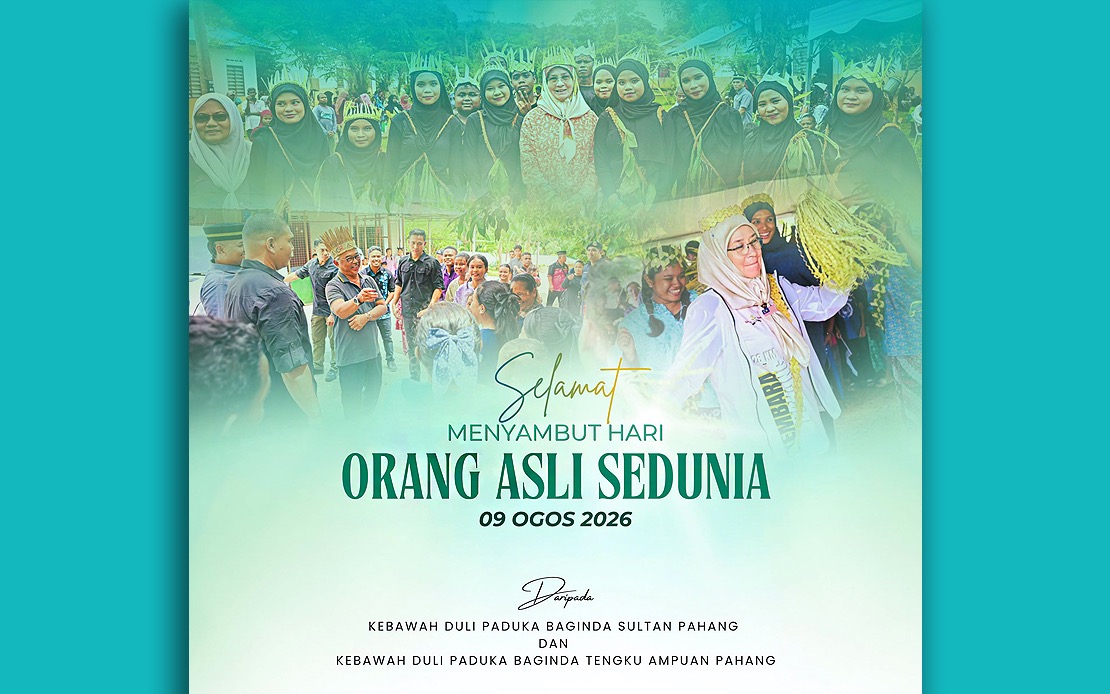
The Sultan of Pahang, Al-Sultan Abdullah Ri'ayatuddin Al-Mustafa Billah Shah, and Tengku Ampuan Pahang Tunku Azizah Aminah Maimunah Iskandariah have reaffirmed the state's commitment to the Orang Asli community, acknowledging their integral role in shaping Pahang's distinctive cultural landscape. In a statement marking the approach of the 2026 International Day of the World's Indigenous Peoples, the royal couple recognized how indigenous peoples have enriched the state's heritage through their customs, traditions, and living knowledge systems that distinguish the region within Malaysia's broader cultural tapestry.
The royal endorsement carries particular significance in Pahang, where Orang Asli settlements span vast forest territories and represent diverse ethnic groups with distinct languages and cultural practices. By publicly acknowledging these communities' contributions, the Sultan and Tengku Ampuan signal that indigenous heritage forms a core element of Pahang's identity rather than a peripheral concern. This positioning aligns with growing regional and international recognition of indigenous peoples' rights and their custodianship of biodiversity and traditional ecological knowledge.
Beyond symbolic recognition, the royal statement outlined a substantive development agenda targeting the Orang Asli population across multiple dimensions. Education emerged as a primary focus, reflecting longstanding disparities in school enrollment and literacy rates among indigenous children compared to national averages. Enhanced educational access would address both immediate skill gaps and longer-term capacity for economic participation, tackling a foundational barrier that has historically limited Orang Asli advancement.
The emphasis on economic development initiatives reflects understanding that cultural preservation requires viable livelihoods. Without sustainable income sources rooted in their territories and knowledge systems, younger Orang Asli face migration pressures toward urban centers or dependence on exploitative labor arrangements. The royal commitment suggests exploring models linking indigenous economic activities—from eco-tourism and forest-based enterprises to craft production and agricultural value chains—with market opportunities while maintaining community control and benefit-sharing.
Skills and human capital development featured prominently as a crosscutting priority, addressing the gap between potential and realized opportunities. Vocational training, digital literacy, and professional qualification pathways remain underutilized among Orang Asli communities, partly due to geographic remoteness and limited awareness of available programs. Strategic investments in skills development could unlock entrepreneurial capacity and reduce labor market discrimination.
A distinctive element of the royal statement lay its explicit commitment to protecting Orang Asli identity and cultural integrity alongside development initiatives. This framing rejects a false binary between modernization and tradition, instead insisting that progress need not require cultural erosion. Preserving heritage—whether language, artistic practices, spiritual beliefs, or customary governance systems—constitutes a legitimate development objective, not merely a museum concern. For Malaysia's indigenous populations, who face ongoing pressures from land development, resource extraction, and cultural assimilation, such royal validation provides institutional backing for resistance to homogenizing forces.
The timing of this statement, tied to the 2026 international observance, situates Pahang within global indigenous rights movements. Malaysia's Orang Asli, numbering roughly 180,000 people across the peninsula, remain among Southeast Asia's most marginalized populations, with land dispossession, health disparities, and educational underrepresentation remaining systemic challenges. By aligning with international indigenous advocacy frameworks, Pahang's leadership implicitly accepts scrutiny of indigenous conditions and contributes to normalizing indigenous rights discourse within Malaysian governance.
The royal call for unity, respect, and cooperation across Pahang suggests recognition that indigenous development cannot occur in isolation. Sustainable progress requires partnership between government agencies, private sector actors, civil society organizations, and non-indigenous Malaysians who occupy adjacent territories or control relevant resources. This inclusive framing potentially opens space for collaborative initiatives addressing shared interests—environmental conservation, cultural education for all citizens, and equitable resource management—rather than zero-sum competitions.
Implementation will ultimately determine whether this statement represents genuine policy reorientation or primarily symbolic gesture. Pahang's state government and federal agencies must translate royal rhetoric into budgetary allocations, regulatory changes, and institutional mechanisms. Key tests include whether education improvements address curriculum relevance to indigenous contexts, whether economic initiatives genuinely empower Orang Asli agency versus extractive partnerships, and whether cultural preservation efforts include Orang Asli voices in decision-making rather than top-down conservation.
The statement's implications extend beyond Pahang's borders. As one of Malaysia's most populous states with significant indigenous populations, Pahang's trajectory influences national discussions around indigenous affairs. Should the Sultan and Tengku Ampuan's commitments translate into measurable progress, they could pressure other state governments and federal authorities to elevate indigenous development priorities. Conversely, if implementation falters, the gap between royal aspiration and bureaucratic reality might fuel further indigenous activism and civil society pressure for substantive rights recognition.
Looking toward 2026, Pahang's indigenous communities will interpret this statement through the lens of tangible improvements in their children's educational outcomes, household incomes, and cultural vitality. Royal appreciation, while important symbolically, ultimately must manifest in decisions about land tenure, resource access, and institutional power. The challenge ahead involves translating political will into structural changes that acknowledge Orang Asli not merely as heritage custodians worthy of celebration, but as rights-bearing citizens with legitimate claims to self-determination and equitable development.

