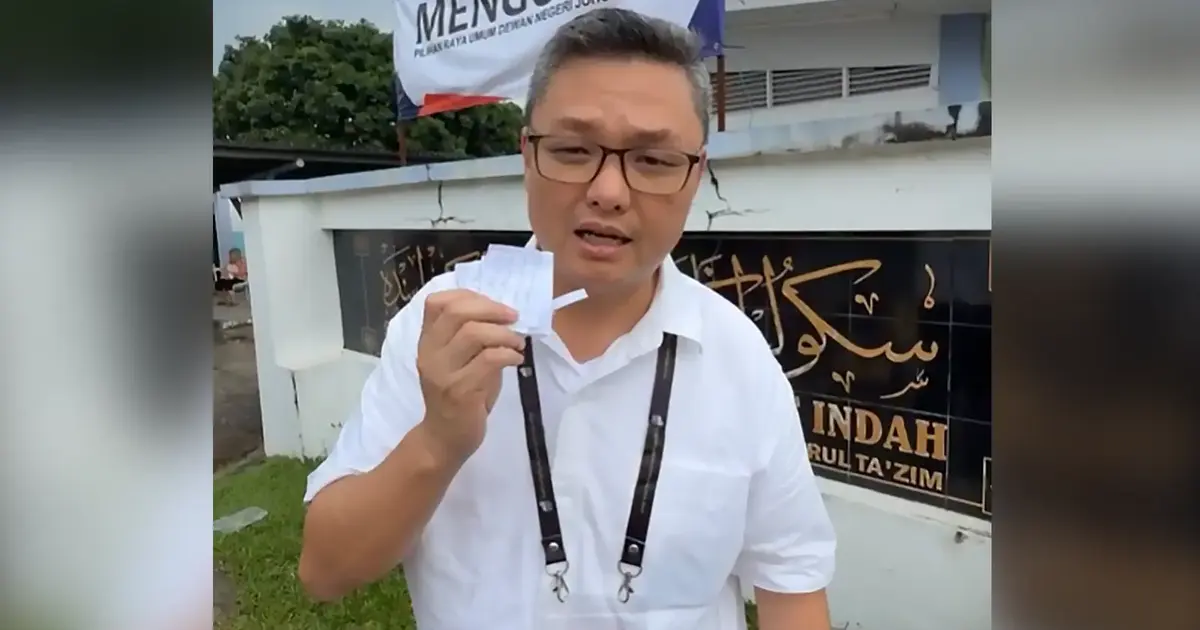
A Pakatan Harapan activist has filed an official complaint with Malaysia's Election Commission, asserting that a Barisan Nasional representative stationed at a polling station engaged in the improper documentation of voters' ballot selections. Tee Boon Tsong contends that the alleged recording of individual ballot choices during the counting process represents a serious breach of electoral integrity protocols that typically govern vote-tallying procedures nationwide.
The crux of the complaint centres on handwritten notes that Tee Boon Tsong claims were maintained by the Barisan Nasional counting agent to track how specific voters cast their ballots. Such documentation, if substantiated, would circumvent standard safeguards designed to ensure ballot secrecy—a cornerstone principle of democratic elections. The allegation raises concerns about whether procedural oversight at the polling station was sufficiently robust to prevent potential electoral irregularities.
In his submission to the Election Commission, Tee Boon Tsong has explicitly requested that the handwritten records in question be seized and preserved as material evidence. This request reflects the gravity with which he views the alleged breach, suggesting that such documentation could illuminate wider compliance issues during the vote-counting phase. The retention of these notes would allow electoral authorities to examine whether systematic recording of voter preferences occurred and to assess the scope of any potential misconduct.
The complaint illuminates an ongoing tension within Malaysia's electoral ecosystem regarding the balance between observer access and procedural transparency on one hand, and the protection of voter privacy on the other. Counting agents—representatives appointed by political parties to monitor fairness during vote tallying—occupy a delicate position; their presence is intended to ensure accountability, yet their activities must remain within clearly defined boundaries that respect electoral regulations.
This incident underscores the importance of rigorous training and oversight mechanisms for all personnel involved in the counting process. Election Commission officials, presiding officers, and appointed counting agents must all understand their respective roles and limitations. When allegations emerge that these boundaries have been crossed, they demand swift investigation to either confirm compliance or identify systemic weaknesses requiring remedial action.
For Malaysian voters, concerns about ballot secrecy strike at the heart of democratic confidence. The ability to cast votes without fear of retaliation or reprisal—whether direct or through surveillance of one's preferences—remains fundamental to the integrity of electoral outcomes. If voters suspect their choices are being documented, they may lose faith in the democratic process, even if no actual consequences follow from the documentation.
The timing and nature of the complaint may also reflect broader tensions between Pakatan Harapan and Barisan Nasional regarding electoral fairness. In recent years, Malaysia's two main political coalitions have frequently disputed procedures and outcomes, with each alleging misconduct by the other. While such disputes reflect healthy democratic contestation, they also highlight the need for the Election Commission to maintain perceived neutrality and decisiveness when investigating allegations from either side.
The Election Commission's response to this complaint will carry significant weight. A thorough investigation demonstrating commitment to electoral standards—regardless of which party's representative is implicated—would reinforce public confidence in the institution's independence. Conversely, any perception of selective enforcement or cursory review could fuel further allegations of partisan treatment in Malaysia's electoral administration.
The broader policy question raised by this complaint concerns how Malaysia can strengthen safeguards during vote counting without compromising legitimate observer access. Some jurisdictions employ video recording at counting stations, while others restrict note-taking entirely or permit only standardised recording sheets that focus on aggregate results rather than individual preferences. The Election Commission may need to revisit its guidelines for counting agent conduct to eliminate ambiguities that could enable circumvention of ballot secrecy principles.
Moving forward, this incident serves as a reminder that electoral integrity depends not only on formal regulations but also on the ethical conduct and vigilance of officials at every level. Both major political coalitions have a vested interest in ensuring that such alleged breaches are investigated thoroughly and that standards are enforced consistently. For Malaysian democracy to retain public trust, the Election Commission must demonstrate that electoral principles are protected impartially, regardless of which party's representative is under scrutiny.
Tee Boon Tsong's complaint also highlights the value of observers and party representatives willing to document potential irregularities. While the allegation itself concerns misconduct by a Barisan Nasional agent, the broader principle—that diligent monitoring helps safeguard electoral processes—applies equally to representatives of all political affiliations. The Election Commission should therefore view such complaints as opportunities to strengthen procedures, rather than merely as partisan challenges to be adjudicated.
As the investigation proceeds, Malaysia's electoral authorities face an opportunity to demonstrate that the system possesses sufficient checks and balances to detect and address breaches of electoral conduct standards. The handling of this complaint will send important signals about the Election Commission's commitment to impartial administration and its willingness to enforce the rules consistently across all political actors.

