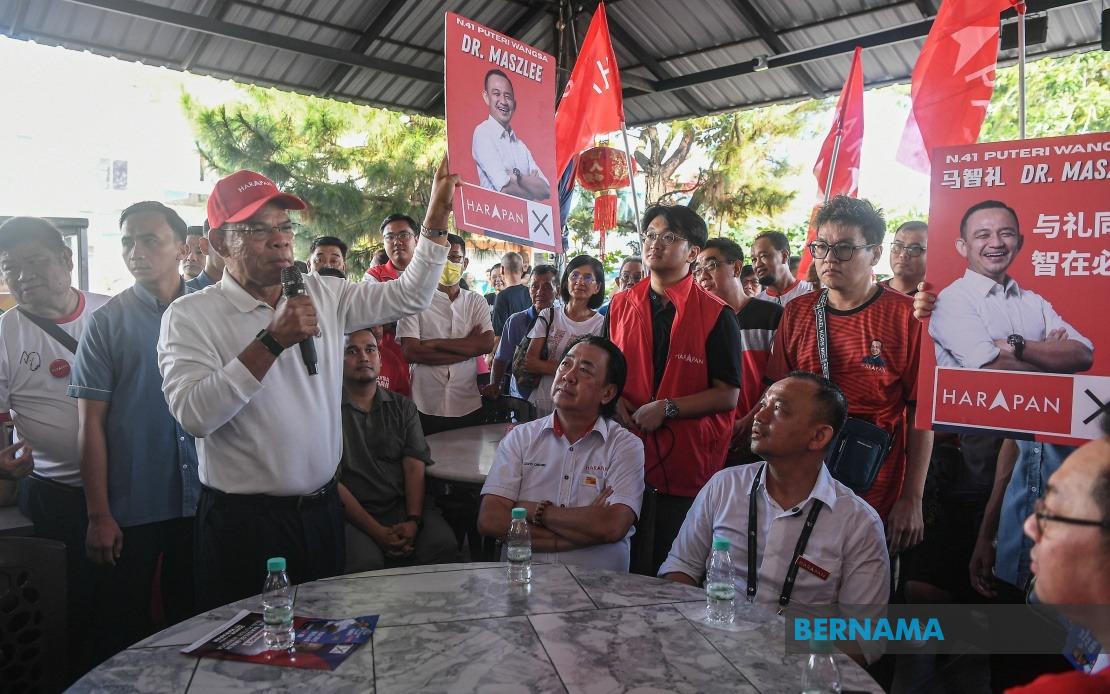
Pakatan Harapan is experiencing a notable surge in voter backing across Johor, a development that coalition leaders attribute to a carefully calibrated campaign apparatus focused on individual constituency dynamics rather than a one-size-fits-all approach. According to PH secretary-general Datuk Seri Saifuddin Nasution Ismail, the coalition's methodology involves segmenting the 56 state seats up for contest into distinct tiers according to prevailing support levels within each locality, allowing the campaign machinery to concentrate resources where they are likely to yield the greatest electoral returns.
The classification system employed by PH represents a departure from conventional statewide campaigns, recognising that voter concerns and political landscapes differ markedly across constituencies. Saifuddin Nasution illustrated this point by comparing constituencies such as Puteri Wangsa and Johor Lama, or Larkin and Endau, each presenting distinct demographic profiles and electoral challenges requiring tailored messaging and engagement strategies. This segmentation allows PH's campaign teams to allocate manpower, messaging intensity, and candidate attention proportionally to each seat's competitive status and strategic importance.
Beyond internal campaign mechanics, PH has benefited from tactical miscalculations by its rivals. The decision by PAS to contest only 11 seats whilst explicitly directing supporters to back Barisan Nasional in the remaining 45 constituencies has inadvertently advantaged Pakatan Harapan in many battlegrounds. By withdrawing from the majority of contests and essentially endorsing BN, PAS has fragmented the opposition's ability to present a unified anti-establishment narrative, allowing PH to position itself as the primary alternative to the incumbent government. Saifuddin Nasution framed this development as a strategic gift, noting that PAS's approach contrasts sharply with PH's more transparent and coherent campaign messaging.
PH's comparative transparency regarding seat allocation and policy commitments has resonated with voters fatigued by opaque political negotiations. The coalition published its seat distribution across its three component parties—PKR fielding 20 candidates, Amanah 19, and DAP 17—whilst simultaneously rolling out a pragmatic manifesto emphasising implementable policy objectives rather than sweeping rhetoric. This disciplined messaging approach has created what Saifuddin Nasution described as a convincing support pattern, one reinforced by the coalition's perceived credibility on governance matters.
The presence of Datuk Dr Mohd Puad Zarkashi, a former UMNO Supreme Council member, at recent dialogue sessions with Prime Minister Datuk Seri Anwar Ibrahim in Felda Ulu Tiram has provided additional momentum to PH's campaign narrative. The appearance of a respected former UMNO figure alongside Anwar signals potential elite-level realignment and suggests cracks within the Barisan coalition's traditional power base. For many voters, particularly those from UMNO's core constituencies, Puad Zarkashi's visible participation legitimises the notion that Pakatan Harapan represents a viable and inclusive governmental alternative.
The selection of candidates has similarly been deployed as a campaign asset. Saifuddin Nasution highlighted Dr Maszlee Malik, PH's Puteri Wangsa candidate, as an exemplar of the calibre of individuals the coalition is presenting to voters. By emphasising candidate credentials and positioning them as potentially key figures in a future PH-led state administration, the coalition is shifting voter focus from abstract coalition dynamics towards tangible leadership competence and local representation quality. This personalisation of the campaign extends beyond Maszlee to encompass PH's full slate, each candidate vetted and promoted according to their specific appeal within their constituency.
For Malaysian observers and particularly those within Johor, the Pakatan Harapan campaign offers a masterclass in modern electoral strategy adapted to the complex political terrain of a state that has historically been a BN stronghold. The granular approach reflects lessons learned from prior state-level contests and federal elections, where blanket messaging proved insufficient for navigating Malaysia's diverse socioeconomic and ethnic landscapes. By treating each of the 56 seats as a distinct micro-election with particular characteristics and voter requirements, PH has effectively multiplied its campaign's responsiveness.
The electoral stakes in Johor extend well beyond the state itself. As Malaysia's southernmost peninsula state and a traditional BN bastion, a Johor result that significantly advances PH's position would reverberate across national politics. A substantial PH performance would strengthen Anwar Ibrahim's position within his own government and provide momentum heading into potential future federal contests. Conversely, any setback would emboldened those within Barisan Nasional who question the viability of the current federal coalition arrangement.
With 172 candidates in total contesting across the 56 seats, the July 11 election day will provide definitive answers to whether PH's ground-level support translates into legislative seats. Early voting commenced on July 7, setting the stage for what senior PH officials clearly believe will be a validation of their campaign strategy and, by extension, their broader political positioning. The coalition's confidence in its targeting approach suggests internal polling has revealed substantive shifts in voter sentiment, though the ultimate test remains the ballot box in constituencies ranging from the industrial corridors surrounding Johor Bahru to the more rural and traditionally conservative areas of the state's interior.

