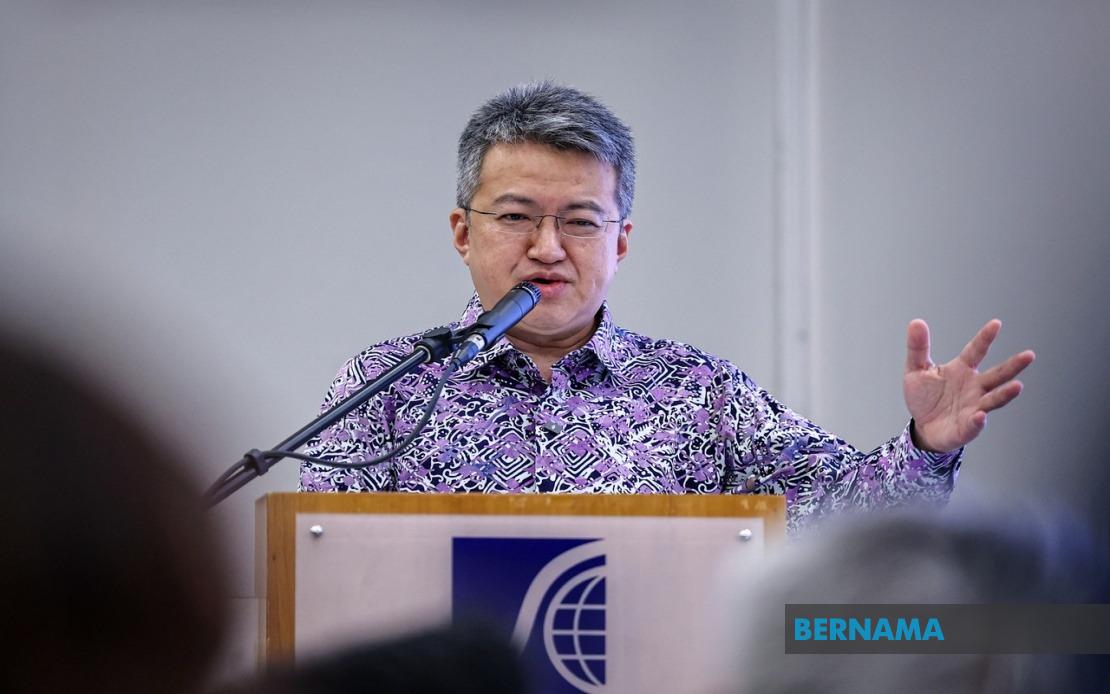
The Pakatan Harapan coalition is adopting a measured stance as it prepares for the Johor state election scheduled for July 11, acutely aware that Perikatan Nasional's withdrawal from 23 constituencies could create unpredictable voting patterns that may work against its own candidates. DAP Strategic Director and Deputy Finance Minister Liew Chin Tong has flagged what political analysts consider one of the most volatile elements of multi-way contests: the behaviour of voters whose preferred party is absent from the ballot. In electoral systems where three or more candidates compete, the movement of votes from non-participating coalitions can dramatically shift the calculus in marginal seats, potentially determining which coalition ultimately forms government.
Liew's concern cuts to the heart of coalition dynamics in Malaysian politics. When Perikatan Nasional fielded candidates across all or most Johor seats in previous contests, its supporters faced a binary choice of voting for their preferred party or abstaining. Now, with PN absent from nearly a quarter of constituencies, those voters must either cast ballots for other parties or stay home entirely. The unpredictability lies in whether they gravitate towards Barisan Nasional, consolidate behind independent candidates, or scatter across minor parties like Parti Bersama Malaysia. Each outcome carries different consequences for Pakatan Harapan's seat tally. In closely contested three-way races, even modest vote shifts of five to ten per cent can determine victory or defeat, particularly in constituencies where the incumbent coalition expects to prevail comfortably.
This strategic vulnerability reflects broader fragmentation within Malaysia's opposition landscape. Perikatan Nasional, comprising PAS and Bersatu, has historically commanded a significant voter base particularly in rural and semi-urban areas. The decision to contest selectively rather than across the board suggests internal calculations about resources, candidate quality, or strategic positioning that differ from Pakatan Harapan's all-in approach. For Pakatan Harapan, which has fielded what it describes as a carefully curated slate of young and credible candidates, the challenge is not merely winning but doing so with sufficient margins to absorb potential defections from Perikatan Nasional constituencies. Liew acknowledged this dynamic frankly, stating that vigilance, energetic campaigning, and offering fresh policy ideas remain the coalition's best defences against unforeseen voter behaviour.
The specific dynamics of the Perling state seat exemplify the broader complexity facing the coalition. With 109,992 registered voters, Perling will host a three-cornered contest between DAP's new candidate Alan Tee Boon Tsong, BN's P. Pannir Selvam, and Boo Wei Han of Parti Bersama Malaysia. Liew's decision to step aside after winning the seat in 2022 aligns with DAP's formal principle against elected representatives holding both parliamentary and state assembly positions simultaneously, a policy designed to prevent concentration of power and free up opportunities for emerging talent. By surrendering Perling, Liew opens space for Alan Tee, the former Senai assemblyman, though this transition necessarily creates uncertainty about whether Tee can replicate Liew's appeal or consolidate the winning coalition that delivered the seat to DAP two years ago.
The timing of Johor's contest introduces additional variables into the vote-leakage equation. State elections held in isolation from federal polls often produce different results than elections held concurrently, partly because voter turnout and mobilisation intensity differ. With early voting scheduled for July 7 and polling day on July 11, the campaign period is compressed, reducing time for Pakatan Harapan to reach and persuade potentially migrating Perikatan Nasional voters. Moreover, the absence of Perikatan Nasional candidates means those parties lack an organisational presence in those 23 constituencies, potentially leaving their supporters without familiar mobilisation networks. This could either suppress turnout among Perikatan Nasional supporters or cause them to coalesce around alternative options, neither scenario automatically favouring Pakatan Harapan.
From a regional perspective, the Johor election holds significance beyond the state itself. As Malaysia's second-largest state by population and a traditional political bellwether, Johor's results often signal broader trends affecting federal politics. A strong Pakatan Harapan showing despite the vote-leakage risk would suggest the coalition has successfully broadened its appeal beyond traditional strongholds and consolidated support across diverse constituencies. Conversely, if Perikatan Nasional's absence translates into Barisan Nasional gains rather than Pakatan Harapan gains, it would indicate that opposition voters still prefer the established ruling coalition when given that choice. Such outcomes would reverberate through federal politics and influence calculations for future national contests.
The coalition's decision to field younger candidates reflects a deliberate strategic pivot. Liew's replacement, Alan Tee, represents the type of emerging figure Pakatan Harapan is promoting. Such generational transition serves multiple purposes: it signals openness to new voices, potentially appeals to younger voters seeking change, and builds a pipeline of candidates for future contests. However, transition also introduces electoral risk, particularly in three-cornered fights where established opposition to Pakatan Harapan exists. New candidates lack incumbency advantage and constituent relationships that could absorb vote shifts.
Liew's public acknowledgement of uncertainty—that elections present risks and possibilities beyond anticipation—represents refreshing candour from a senior political figure. Rather than projecting false confidence, he framed Pakatan Harapan's challenge in realistic terms: remain vigilant, campaign effectively, present compelling ideas, and let voters decide. This messaging implicitly concedes that the coalition cannot completely control outcomes in constituencies where Perikatan Nasional is absent, only that it can optimise its own performance and hope that sufficient PN-inclined voters migrate towards Pakatan Harapan or abstain rather than voting for Barisan Nasional.
The structural advantage Barisan Nasional possesses in this election bears noting. As the incumbent federal government and the party with longest-standing presence in rural Johor, BN represents continuity and established governance. When Perikatan Nasional sits out, rural and semi-urban voters who might have split between PN and BN in a two-sided contest now face a choice largely between Pakatan Harapan and Barisan Nasional. In those dynamics, Barisan Nasional's institutional resources and traditional vote banks may prove decisive. Pakatan Harapan's path to offsetting this advantage lies in claiming that portion of Perikatan Nasional supporters disaffected with both major coalitions, plus maintaining performance in urban areas where it has traditionally performed strongly.
As the coalition hones its campaign strategy in the remaining weeks before July 11, the central question remains unresolved: how will the 23 constituencies where Perikatan Nasional is absent ultimately vote? Liew's cautious framing suggests Pakatan Harapan enters this contest without confident predictions about those seats. That uncertainty, while intellectually honest, also reflects the genuine difficulty coalitions face when opposition to their rule fragments across multiple parties. The election will reveal whether Pakatan Harapan's campaign intensity and fresh candidate slate can overcome the potential vote migrations that Liew rightly identifies as the election's central wildcard.

