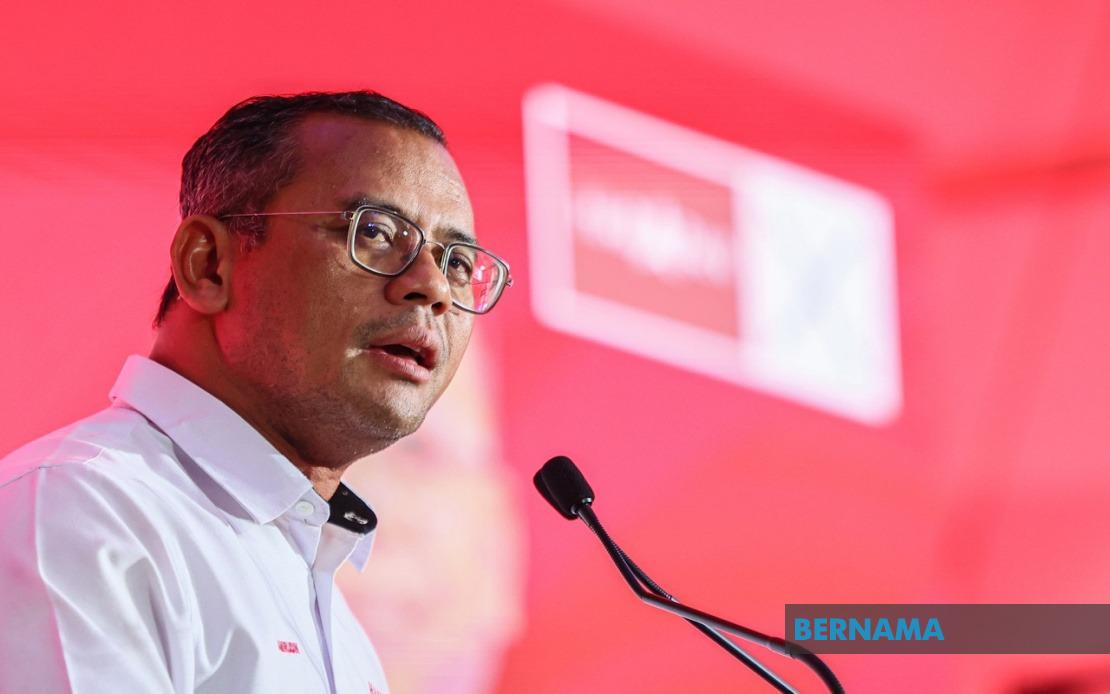
Datuk Seri Amirudin Shari, the PKR vice-president overseeing Pakatan Harapan's Johor campaign operations, has firmly rebutted suggestions that the coalition's policy platform for the 16th Johor State Election was derived from competitors. Speaking in Kluang on July 3, Amirudin insisted that the manifesto represented the genuine handiwork of PH's collective leadership following prolonged strategic deliberations in anticipation of the state poll.
The accusations of policy duplication have dogged PH's campaign in recent weeks, with critics questioning the originality of several flagship commitments. Amirudin, who simultaneously serves as Selangor's Menteri Besar, countered this narrative by emphasising the rigorous development process underlying key electoral promises. He pointed specifically to two cornerstone initiatives—affordable housing expansion and enhanced healthcare provision—as illustrations of thoughtful, evidence-based policy formulation rather than opportunistic borrowing.
The dispute over manifesto authenticity reflects broader campaign dynamics in Malaysian state elections, where differentiation between competing coalitions has become increasingly challenging given convergence around popular welfare-oriented pledges. For voters in Johor, a state where economic anxiety and housing affordability remain pressing concerns, the debate underscores whether such commitments genuinely reflect tailored local solutions or generic national templates applied across jurisdictions.
Amirudin's assertion about methodical policy development carries particular weight given PH's track record in Selangor, where the coalition has pursued substantial affordable housing programmes. He disclosed that the Selangor state government has greenlit construction of 174,000 affordable units, with 40,000 already completed. This demonstrable experience provides a foundation for the coalition's Johor promises, suggesting the manifesto emerges from practical governance knowledge rather than abstract positioning.
Critics have simultaneously questioned whether PH's housing targets for Johor represent realistic commitments or aspirational rhetoric divorced from fiscal and administrative capacity. Amirudin defended the ambitious figures as reflecting genuine population requirements rather than governmental capability constraints. He explained that the targets were calibrated through systematic surveying and grassroots consultation with party machinery, grounding them in documented demand rather than arbitrary projection.
This distinction between need-based and capability-based planning carries implications for Southeast Asian electoral politics more broadly. As urbanisation and migration intensify across the region, affordable housing has become central to electoral competition in Malaysia, Thailand, and Indonesia. Parties that can credibly link their policy promises to documented need and prior implementation experience gain credibility advantage over competitors offering similar pledges without demonstrated delivery capacity.
The campaign event in Kluang featured prominent PH representatives alongside state candidates, reflecting the coalition's mobilisation strategy for the contest spanning 56 state assembly seats. The presence of PKR vice-president R. Ramanan, Amanah secretary-general Faiz Fadzil, and multiple PH candidates underscored the coalition's intention to present a unified front despite internal tensions that have occasionally surfaced within the broader alliance structure.
Amirudin characterised the grassroots campaign response as encouraging, though he acknowledged that substantial voter segments had yet to publicly articulate backing for PH. This observation aligns with common patterns in Malaysian state elections, where silent voters—those leaning toward particular coalitions but reluctant to declare positions publicly—often determine final outcomes. Campaign professionals typically interpret early positive feedback as indicating deeper reservoirs of potential support awaiting crystallisation as polling day approaches.
The national leadership's involvement in Johor campaigning gained significance when Amirudin noted that Prime Minister Datuk Seri Anwar Ibrahim's attendance at PH rallies the following day would energise party workers and reinforce voter confidence in the coalition's viability. Prime ministerial visibility in state campaigns functions as powerful symbolic affirmation of the coalition's governing legitimacy and future direction, particularly important when state elections occur in jurisdictions where federal and state coalitions may diverge.
Johor holds strategic importance within Malaysia's political economy given its economic contribution and historical role as a PH stronghold, though recent years have witnessed increased electoral volatility. The 16th Johor State Election reflects broader realignment patterns across peninsular Malaysia, with voters demonstrating reduced automatic loyalty to traditional political homes and increasing willingness to shift support based on perceived performance and policy offerings.
The polling schedule—with early voting on July 7 and general polling on July 11—compresses the campaign window and intensifies pressure on all competing coalitions to crystallise voter intention rapidly. A total of 172 candidates contesting the 56 assembly seats indicates substantial choice availability for voters, with potential spoiler effects if smaller parties or independent candidates fragment opposition votes in critical constituencies.
Amirudin's insistence on the manifesto's authenticity reflects broader challenges facing opposition coalitions in Malaysia, where governing coalitions retain inherent messaging advantages through administrative action and resource deployment. For PH to rebuild electoral momentum in Johor after mixed recent performances, establishing genuine policy differentiation and demonstrable commitment to delivery becomes essential. The manifesto controversy, whatever its eventual resolution in voter assessments, illustrates the premium now placed on translating campaign promises into tangible grassroots results.

