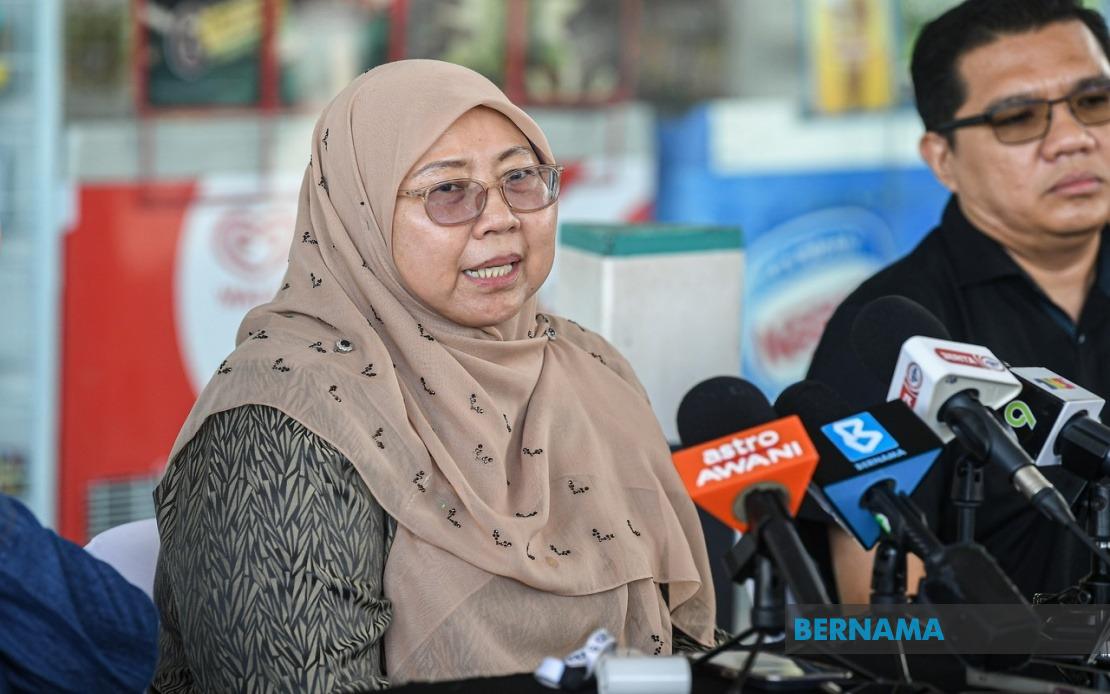
Pakatan Harapan officials have shrugged off what they characterize as isolated sabotage incidents during the Johor state election campaign, insisting that the ruling federal coalition's momentum remains intact despite reports of vandalism targeting party materials. PKR secretary-general Datuk Fuziah Salleh made the assertion while addressing reporters in Johor Bahru on July 2, emphasizing that the handful of incidents—involving damaged posters, defaced billboards, and burned flags—represent only minor disruptions that have failed to derail the broader campaign narrative.
The incidents, while dismissed by PH leadership, nonetheless point to the competitive intensity of the Johor race, where 172 candidates are contesting 56 state seats. Fuziah, who also serves as Deputy Minister of Domestic Trade and Cost of Living, acknowledged the existence of the vandalism but framed them within a context of overall campaign stability. This rhetorical strategy of acknowledging but minimizing such incidents is typical in Malaysian electoral contests, where both ruling and opposition parties regularly experience damage to campaign materials—a reality that neither side typically dwells upon in public statements.
The substance of Fuziah's remarks centered on PH's confidence in its grassroots organization and voter reception across Johor constituencies. She highlighted that the party's campaign schedule has intensified markedly, with each candidate maintaining what she described as a grueling daily itinerary encompassing up to ten separate programmes, stretching from early morning through midnight hours. This level of organizational commitment reflects PH's strategic focus on the Johor contest, where the state's economic importance and its historical role as a Barisan Nasional stronghold have made it a crucial test of the federal government's political standing outside its traditional Selangor-Kuala Lumpur base.
Feedback from the ground, according to Fuziah, has been decidedly positive, particularly among younger voters and those casting ballots for the first time. The apparent receptiveness of these demographic groups carries significant implications for PH's broader political trajectory, as youth engagement has become increasingly determinative in Malaysian elections. The fact that Fuziah chose to highlight youthful support specifically suggests that PH views generational voting patterns as a key battleground, potentially reflecting internal polling data that shows strength among voters under 40.
Fuziah also took the opportunity to clarify confusion surrounding candidate pledges that had been announced for the Skudai and Perlis state seats, distinguishing between individual campaign commitments and formal party policy platforms. This distinction, while somewhat technical, carries real importance in Malaysian electoral discourse, where the boundary between personal candidate promises and party-wide policy commitments can become blurred, potentially creating public misunderstandings about what a political party actually intends to implement. By separating local constituency pledges—such as commitments to address waste collection problems—from comprehensive state governance policies, Fuziah attempted to establish clearer expectations for voters.
The clarification emerged as PH prepared to release its official Johor state election manifesto on July 3, signaling that the party intended to present a comprehensive policy platform distinct from individual candidate commitments. This sequencing suggests a deliberate communications strategy wherein localized candidate pledges serve as campaign engagement tools while the formal manifesto articulates the party's state-level vision. For Malaysian voters accustomed to parsing party documents and campaign rhetoric, this layering of messaging can help PH reach different audience segments: those focused on hyperlocal issues through candidate pledges, and those concerned with broader governance through the manifesto.
The Johor state election represents a significant political test for the federal PH government, which has governed Malaysia since the 2022 general election. Johor, traditionally a Barisan Nasional bastion and home to former prime minister Najib Razak, presents particular challenges for a coalition seeking to consolidate power beyond its Selangor heartland. The campaign's apparent smoothness—despite minor vandalism incidents—may reflect PH's confidence heading into the July 11 polling day, or it may alternatively represent a carefully maintained public facade masking internal concerns about electoral competitiveness.
The polling schedule, with early voting on July 7 and main polling on July 11, compresses the campaign timeline considerably, placing emphasis on efficient organization and sustained momentum. PH's reported intensive campaign schedule aligns with best practices in modern electoral contests, where candidate visibility and voter contact frequencies correlate with turnout and persuasion metrics. The emphasis on high-frequency daily programming also serves to dominate local news cycles and social media landscapes, potentially crowding out opposition messaging in the information environment.
For Southeast Asian observers monitoring Malaysia's democratic health, the relative civility of the Johor campaign—notwithstanding vandalism incidents—stands in contrast to more acrimonious electoral contests in the region. The fact that PH leadership addresses vandalism primarily through dismissal rather than escalatory rhetoric suggests a confidence in institutional processes and electoral management that reflects Malaysia's comparatively stable democratic infrastructure. However, the persistence of such incidents, however minor, underscores the competitive pressures that Malaysian political parties experience during major electoral contests.
The involvement of the Ministry of Domestic Trade and Cost of Living in the campaign narrative, evident through Fuziah's simultaneous press conference on subsidy mechanisms, demonstrates how Malaysian electoral campaigns increasingly intertwine policy implementation with political messaging. By discussing economic assistance programmes during campaign activities, PH attempts to connect governance performance with electoral appeals, a strategy that may resonate with voters focused on cost-of-living concerns that have dominated Malaysian political discourse in recent years.
Ultimately, PH's insistence that sabotage incidents have not impacted campaign momentum reflects standard political positioning ahead of a significant electoral contest. Whether the actual voter response matches the optimism expressed by party leadership will become apparent when Johor voters cast their ballots. The election outcome will substantially influence perceptions of the federal PH government's political strength and its capacity to govern effectively across diverse Malaysian constituencies beyond its established support bases.

