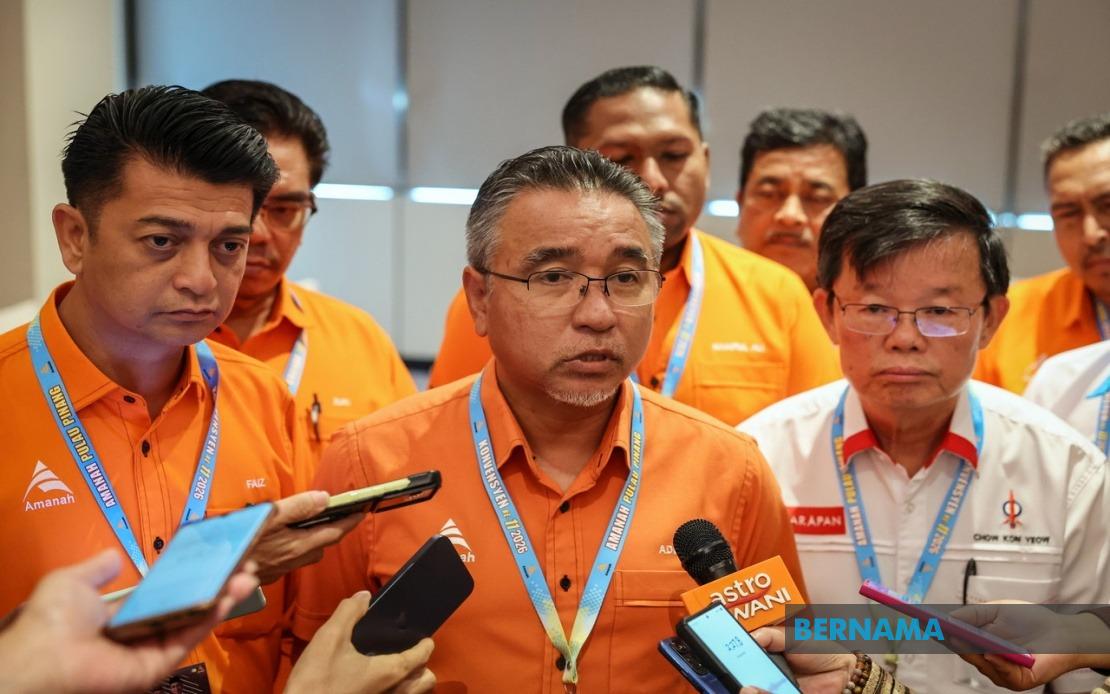
Pakatan Harapan is standing firm on its foundational principles of integrity and competent governance, even as the coalition grapples with declining electoral fortunes in recent state-level contests. Speaking at the Penang Amanah Convention in Bukit Mertajam, Amanah vice-president Adly Zahari articulated the coalition's determination to maintain its values-driven political framework while simultaneously conducting a thorough assessment of what went wrong at the ballot box. The statement represents an attempt to project stability within PH ranks at a moment when internal tensions and electoral disappointments threaten to unravel the alliance that returned to government following the 2022 general election.
Adly's framing of PH's political approach centres on the conviction that Malaysian voters ultimately respond to tangible improvements in their material circumstances rather than abstract campaign messaging. He identified cost of living pressures, economic growth trajectories, educational provision, and demonstrable government service delivery as the metrics by which the electorate judges political performance. This analysis implicitly acknowledges that despite PH's rhetorical emphasis on clean governance and anti-corruption credentials—themes that resonated powerfully in 2022—these principles alone have proven insufficient to translate into electoral success in subsequent contests. The coalition appears to be recognising that anti-incumbency sentiment, economic headwinds, and voter fatigue demand more than principled posturing.
The Negeri Sembilan state election held just before this convention delivered a sobering result for the ruling coalition. Barisan Nasional secured commanding control with 18 of 36 state assembly seats, while PH's representation shrank to just 11 seats and Perikatan Nasional claimed seven. These figures represent a dramatic reversal of PH's electoral momentum from 2022 and signal that the coalition's grip on power remains fragile despite holding the federal government. The party's performance has prompted serious soul-searching within its ranks about whether its messaging and strategic positioning remain aligned with voter priorities and aspirations.
Adly acknowledged that PH must conduct rigorous post-mortem analysis to identify specific weaknesses and miscalculations that contributed to these losses. Rather than attributing defeats solely to external factors or suggesting that the coalition's values remain sound despite the numbers, PH leadership is opening space for genuine strategic recalibration. This approach suggests humility about the coalition's current standing and recognition that incremental adjustments to campaign tactics will be insufficient to reverse current trajectories.
A critical gap the PH leadership has identified concerns communication and narrative framing. Adly argued explicitly that the coalition needs to strengthen its capacity to articulate government achievements, explain economic policy rationales, and demonstrate the connection between federal initiatives and improved living standards at the household level. This represents an implicit admission that PH has struggled in the competition for hearts and minds, perhaps losing control of the political narrative to competitors who have successfully portrayed the coalition as disconnected from ordinary Malaysians' concerns. The government's record on economic stimulus, infrastructure development, and poverty alleviation may be stronger than public perception suggests, indicating a failure in political communication rather than policy delivery.
Penang PH chairman Chow Kon Yeow signalled that the coalition is preparing for a potential snap general election, with party strategists scheduling a comprehensive review meeting for August 8 to assess the implications of defeats in both Negeri Sembilan and the earlier Johor state contest. This defensive posture suggests that PH recognises its federal majority could face challenge if voter sentiment continues deteriorating. Malaysian political observers have noted that state-level electoral losses often presage difficulties at national level, as they provide visible evidence of shifting support and offer momentum to opposition parties preparing for higher-stakes contests.
Chow's emphasis on refocusing voter attention on government performance, service quality, and employment creation reflects an understanding that PH must move beyond defensive posturing about its clean governance credentials and instead compete on the delivery front. This pivot toward results-oriented campaigning acknowledges that maintaining power requires more than surviving on the residual goodwill from 2022's anti-corruption mandate. The coalition must demonstrate that its stewardship translates into concrete improvements for ordinary Malaysians grappling with inflation, housing costs, and employment uncertainty.
The stated commitment to values-based politics must be understood within this pragmatic context. PH is not abandoning its emphasis on integrity and anti-corruption but rather recognising that these commitments must be anchored to demonstrable policy outcomes. For Malaysian readers observing from the peninsular heartland and Sabah-Sarawak periphery, this represents an important test of whether the federal government can bridge the gap between its ideological self-conception and the hard realities of governing a nation confronting serious economic and social pressures.
The coalition's willingness to conduct frank internal reviews rather than deflecting responsibility or blaming external circumstances may itself constitute important political capital. Voters increasingly demand that political leaders acknowledge shortcomings and commit to improvement rather than dismissing electoral setbacks as anomalies or the result of misinformation. PH's approach of combining steadfast attachment to foundational principles with honest assessment of strategic failures could resonate with moderate voters genuinely concerned about governance quality but frustrated by uneven policy delivery.
Looking ahead, the success of PH's recalibration efforts will depend on whether enhanced communication strategies and renewed emphasis on economic management can arrest further electoral deterioration before a general election is called. Regional observers will be watching closely to see whether the coalition can stabilise support in Peninsular Malaysia's heartland while maintaining its federal government status, or whether the combination of state-level losses and unresolved tensions within the alliance ultimately forces early national elections that could reshape Malaysia's political landscape significantly.

