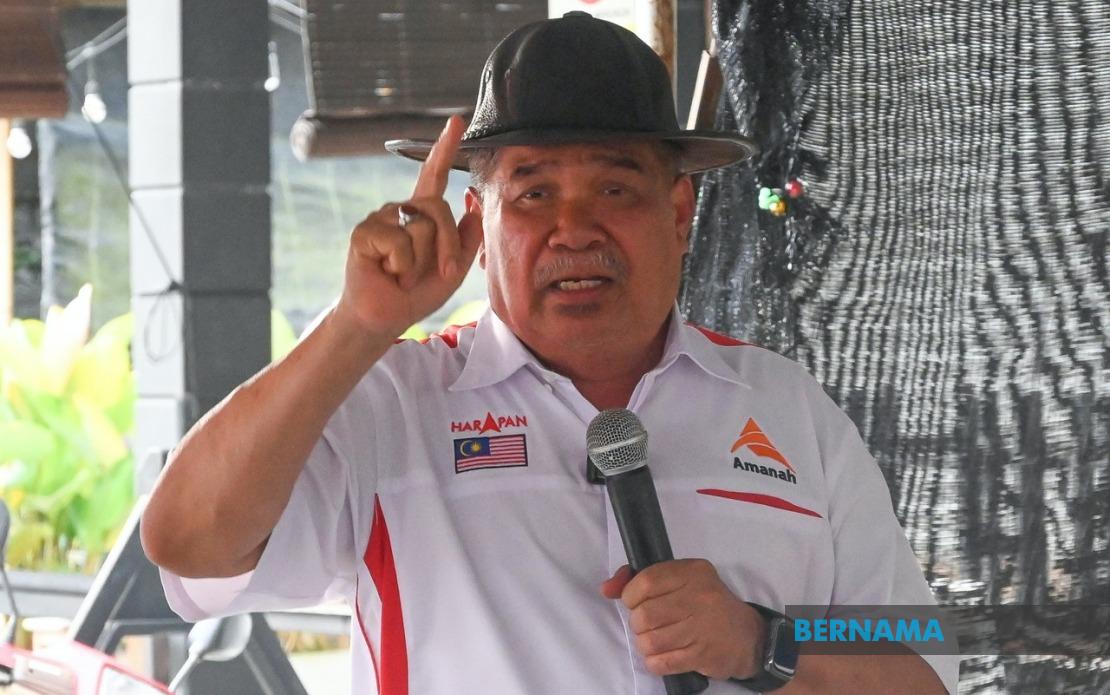
Pakatan Harapan will not be swayed by the emerging alliance between Barisan Nasional and Perikatan Nasional, instead maintaining unwavering commitment to policies that genuinely improve the lives of ordinary Malaysians, according to Amanah President Datuk Seri Mohamad Sabu. The coalition partner's message, delivered via social media on July 21, reflects a deliberate strategic positioning at a moment when Malaysia's political landscape has grown notably more fractured, with competing blocs vying for influence and credibility among voters.
The strengthening cooperation between BN and PN, two blocs that historically competed fiercely for dominance, represents a significant recalibration of Malaysia's political architecture. Rather than interpreting this development as a threat requiring defensive measures, Mohamad Sabu framed PH's response in terms of maturity and steady resolve. This rhetorical approach serves multiple purposes: it projects confidence in PH's electoral standing, it distances the coalition from what might be perceived as panic or reactive positioning, and it attempts to elevate the conversation above the technical mechanics of coalition-building toward broader questions about governance philosophy and outcomes for citizens.
At the core of Mohamad Sabu's message lies a reassertion of PH's commitment to constitutional frameworks that protect Islam's position, preserve Bumiputera provisions, and safeguard the institution of the Malay Rulers. These assurances are crucial in Malaysian politics, where anxieties about constitutional guarantees and communal rights persistently surface in electoral campaigns and public discourse. By explicitly reaffirming these commitments, the Amanah leader attempts to neutralise one avenue through which political opponents might erode PH's support among Malay-Muslim voters, a constituency that has historically oscillated between competing coalitions depending on perceived threats and promises.
Prime Minister Datuk Seri Anwar Ibrahim's personal commitment to defending Malay-Muslim interests features prominently in Mohamad Sabu's articulation of PH's platform. The framing emphasises that such defence operates through substantive policy mechanisms rather than through fear-mongering or the perpetuation of communal anxiety. This distinction carries weight in Malaysian politics, where competing narratives about protection and vulnerability have long shaped voter calculations. By positioning PH as building confidence rather than amplifying weakness, the coalition attempts to capture the political middle ground occupied by voters who desire both security regarding communal rights and forward-looking governance focused on economic advancement and international standing.
Central to Mohamad Sabu's argument is a provocative critique of what he characterises as divisive political narratives portraying Malays as perpetually under threat. His contention that such narratives ultimately undermine rather than strengthen the community reflects a significant philosophical divergence from political messaging that has dominated Malaysian campaigns for decades. By suggesting that confidence-building should supersede fear-mongering, Mohamad Sabu articulates a vision of Malay empowerment rooted in capability, self-reliance, and competitive prowess rather than defensive entrenchment. This represents a notable departure from established templates of communal political discourse.
The minister's emphasis on Malay economic advancement, technological mastery, and global competitiveness speaks to an emerging segment of the Malay-Muslim electorate increasingly concerned with questions of meritocratic achievement and economic opportunity. Younger voters and urban professionals within this demographic appear less motivated by zero-sum communal competition and more interested in policies facilitating upward mobility, skill development, and entrepreneurial success. By articulating a vision of Malays as economically robust, technologically capable, and internationally competitive, Mohamad Sabu attempts to align PH's messaging with the aspirations of this cohort, potentially differentiating the coalition from rivals perceived as relying on communal anxiety narratives.
The suggestion that contemporary Malay society has grown more mature and resistant to divisive political messaging reflects both optimism about electoral realignment and implicit criticism of competitors who might employ such tactics. This assessment, while difficult to verify comprehensively, nevertheless signals PH's confidence that demographic and educational changes have shifted electoral calculations in ways favourable to coalitions emphasising competence and policy substance over communal mobilisation. The notion that Malays are increasingly vocal about truth and increasingly self-reliant implies that traditional tools of political persuasion may hold diminishing sway with meaningful portions of this essential voter base.
For Southeast Asian observers and international stakeholders, Mohamad Sabu's statements illuminate how Malaysian political competitors are attempting to reshape voter coalitions in response to structural shifts within the electoral landscape. The emergence of a BN-PN alliance threatens PH's parliamentary position and necessitates strategic recalibration. By emphasising policy substance, constitutional fidelity, and long-term communal empowerment over short-term tactical advantage, PH attempts to project stability and principled governance—messaging designed to reassure both domestic voters and international observers concerned about Malaysian political volatility.
The coalition's strategy of avoiding what it characterises as political sentiment games while simultaneously emphasising substantive policy delivery reflects recognition that Malaysian voters, particularly urban and educated segments, have grown more discriminating about political claims. Repeated assertions about defending communal interests carry less automatic persuasive power when unaccompanied by concrete evidence of economic improvement, infrastructural development, or institutional reform. Mohamad Sabu's pivot toward discussing Malay technological capability and economic strength suggests PH recognises this shift and is attempting to recalibrate its political messaging accordingly.
The broader implications of this messaging extend beyond immediate coalition competition. Should PH successfully reorient political discourse around governance competence and policy delivery rather than communal anxiety and defensive positioning, the coalition might establish a durable political brand capable of attracting diverse voter segments united by preference for pragmatic, outcomes-focused governance. Conversely, if rival coalitions successfully argue that communal and religious interests remain under genuine threat, traditional patterns of electoral polarisation along ethnic and religious lines may reassert themselves. The coming electoral cycles will test whether voters respond more persuasively to PH's emphasis on confidence-building and capability or to competitors' emphasis on protection and communal security in an era of rapid social and economic change.

