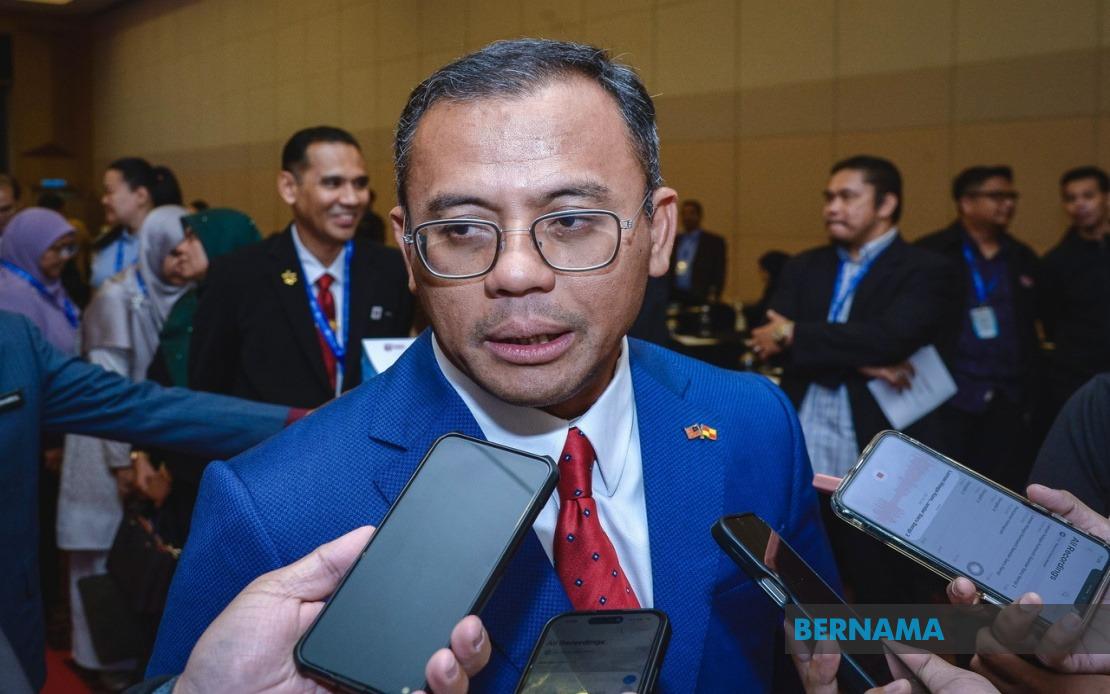
Pakatan Harapan has indicated a readiness to explore political cooperation with other parties and coalitions, though only under specific conditions that centre on maintaining political stability and advancing the people's welfare. Datuk Seri Amirudin Shari, a senior figure in PH's Presidential Council and vice-president of PKR, outlined this pragmatic approach during an appearance at the Ecology International Conference II in Bangi, underscoring that the coalition's appetite for alignment extends beyond any single rival group.
The Selangor Menteri Besar's remarks come as political commentators and observers continue to scrutinise potential realignments across Malaysia's fractious political landscape. Amirudin emphasised that PH remains receptive to negotiations with any formation—whether Bersatu, Perikatan Nasional, or other entities—provided the foundational principles revolve around institutional stability and demonstrable benefit to ordinary Malaysians. This signals a marked departure from the often zero-sum messaging that has characterised recent years of Malaysian politics, suggesting that pragmatism may be eclipsing rigid ideological positioning.
However, Amirudin moved swiftly to refute recent media speculation suggesting that Selangor's PH component had already struck an understanding with Bersatu. He categorically denied that such arrangements existed, clarifying that no formal discussions or binding decisions have materialised at the state level. This distinction matters considerably, as it clarifies PH's actual negotiating posture while simultaneously leaving the door conceptually open for future talks. The denial carries particular weight given that Selangor represents PH's most significant territorial stronghold and electoral asset.
The context for these overtures is the approaching electoral calendar. Multiple ballots loom on the horizon, including the general election and the Melaka state poll, creating natural pressure points where political calculations shift. Observers have noted that both PH and Bersatu face questions about relevance and electoral viability, potentially explaining why conversations about cooperation have surfaced. For smaller or struggling formations, coalition-building represents an essential survival mechanism; for larger blocs, it offers strategic consolidation opportunities and hedges against fragmentation.
Amirudin's insistence that any substantive decisions must cascade through PH's central apparatus rather than originate from individual state leaders reflects institutional discipline within the coalition. He acknowledged that while regional voices matter, ultimate determinations on political alignment cannot rest with subnational actors. This structural approach suggests PH has learned from past schisms and disagreements that undermined coalition cohesion. By channelling decisions upward and maintaining centralised control, the organisation attempts to prevent unilateral moves by ambitious state politicians that might contradict broader strategic interests.
The Selangor leader identified several factors that any potential cooperation agreement would need to accommodate: the timing of electoral contests, the prevailing political environment, and broader considerations around national interest. This laundry list hints at sophisticated, multivariable calculations underway behind closed doors. Political cooperation at Malaysia's level is rarely a simple binary choice; rather, it involves intricate choreography around when elections occur, which constituencies matter most, and how power-sharing might function across federal and state systems.
Politically, PH's stated openness carries both tactical and strategic implications for Southeast Asia's largest economy. At the tactical level, it positions the coalition as reasonable and partnership-oriented, potentially attracting floating voters or undecided groups tired of confrontational politics. At the strategic level, it signals to Bersatu and other formations that conversations are possible without PH appearing weak or desperate. This messaging is carefully calibrated: welcoming but not eager, principled but not rigid, open-minded but not uncommitted.
The underlying calculus reflects Malaysia's evolving political ecology. The days when two or three monolithic blocs dominated electoral contests have largely passed. Today's reality involves fluid coalitions, shifting alliances, and personalities that sometimes transcend factional lines. Against this backdrop, PH's willingness to consider cooperation with former adversaries reflects an adjustment to new political norms rather than a fundamental shift in ideological commitment.
For Malaysian voters and stakeholders, Amirudin's commentary provides limited clarity but genuine transparency about leadership thinking. Cooperation could enhance stability by broadening consensus around critical legislation and policy. Conversely, poorly structured alliances might dilute PH's distinctive platform or empower incompatible partners. The outcome ultimately depends on granular details—ministerial allocations, policy concessions, electoral seat-sharing—that negotiations would need to address.
The Selangor dimension deserves particular attention. As Malaysia's wealthiest and most industrialised state, Selangor's governance matters disproportionately to broader national development trajectories. Any cooperation arrangement at the state level could establish precedents for federal-level alignment or, conversely, reveal incompatibilities that make national cooperation untenable. Observers will therefore watch Selangor developments closely as bellwethers for PH's broader strategic direction.
Moving forward, PH's public positioning emphasises that any political cooperation must satisfy demanding criteria: genuine commitment to stability, demonstrable concern for public interest, and rational evaluation of broader circumstances. Whether potential partners—particularly Bersatu—share these precise emphases remains uncertain. The coming months will clarify whether this openness translates into substantive negotiations or represents standard political theatre designed to keep options alive while committing to nothing concrete.

