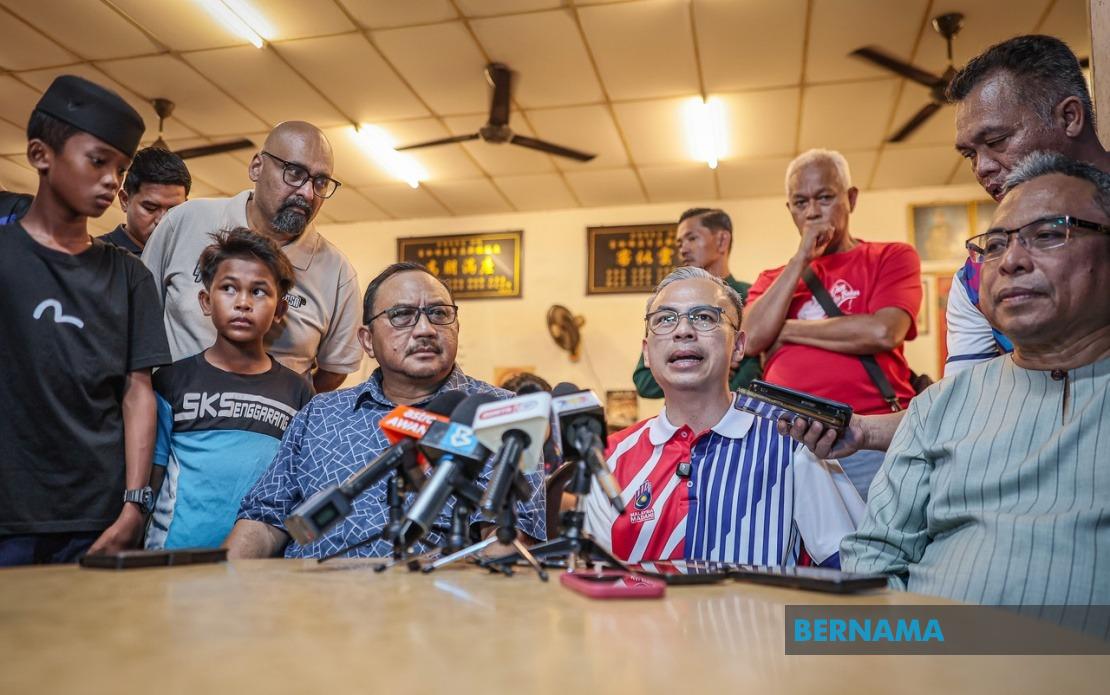
Pakatan Harapan is recalibrating its approach to the 16th Johor State Election by marrying ground-level voter engagement with the reach and speed of digital communication channels. The strategy, unveiled as official campaigning preparations intensify ahead of the nomination process, reflects a coalition attempting to maximise its presence across diverse voter demographics while navigating the complexities of modern electoral competition in Malaysia's second-largest state by population.
Datuk Fahmi Fadzil, the coalition's communications director and Minister of Communications, characterised the hybrid approach as essential to ensuring that PH's policy platforms penetrate across all layers of Johor society. The assertion underscores a broader recognition among opposition parties that winning modern elections requires simultaneous presence in both physical spaces—residential areas, town halls, and community gathering points—and virtual spaces where younger and urban voters increasingly gather information. For a coalition that has governed several states since 2018, demonstrating coherent messaging across these channels carries particular weight in establishing credibility.
PKR, which anchors PH's effort in Johor with 20 contested seats, will activate campaign machinery immediately after nomination closes on the opening day. Senior party figures including Fahmi himself and PKR deputy president Nurul Izzah Anwar have already mapped out their deployment across key constituencies. The visible presence of high-ranking leadership in nomination centres—Fahmi attending Semerah while Anwar joins Senggarang candidate Onn Abu Bakar—signals confidence in competitive battlegrounds and the coalition's determination to project momentum early in the campaign season.
Central to PH's messaging discipline is a commitment to fact-based communication. This emphasis assumes particular relevance given the proliferation of misinformation during Malaysian electoral contests. By positioning itself as a purveyor of verified information, PH attempts to differentiate itself while simultaneously addressing voter fatigue with unsubstantiated claims. The establishment of an official media dissemination group underscores this commitment, creating a designated channel through which candidate profiles, policy positions, and campaign announcements can reach supporters and wavering voters with controlled accuracy.
The coalition's emphasis on federal-state cooperation presents a tactical choice to highlight tangible developmental outcomes rather than engaging in abstract political rhetoric. Projects such as the Rapid Transit System Link and the Johor-Singapore Special Economic Zone are framed not merely as infrastructure investments but as mechanisms for stimulating broader economic growth and reducing spatial disparities between districts. For voters concerned about prosperity and opportunity—particularly in less-developed areas of Johor—such projects offer concrete evidence that PH-led governance can deliver material improvements to living standards. This framing proves particularly potent in rural and semi-urban constituencies where development remains a decisive electoral factor.
PH's invocation of its administrative record in Selangor, Negeri Sembilan, and Penang functions as a credibility marker. These are states where the coalition has governed since 2018 and accumulated measurable policy achievements and voter satisfaction metrics. By drawing explicit parallels between achievements elsewhere and promises for Johor, party leadership attempts to transform governance performance into electoral capital. The mention of specific candidates like Dr Maszlee Malik and Onn Abu Bakar in constituencies such as Puteri Wangsa and Senggarang further personalises this narrative, attaching individual aspirants to the coalition's broader institutional reputation.
A dedicated Johor state manifesto, while not yet revealed, signals PH's intention to present state-specific policy commitments rather than simply replicating federal platforms. This localisation of political messaging acknowledges that Johor voters have distinct priorities—matters of economy, infrastructure, education, and healthcare shaped by the state's unique demographic and geographic characteristics. A tailored manifesto demonstrates sophistication in campaign planning and respect for local particularity, potentially resonating with voters seeking evidence that PH has genuinely considered Johor's challenges rather than importing generic slogans.
The Malaysian Communications and Multimedia Commission's formation of an inter-agency task force involving the Election Commission, Royal Malaysia Police, and Malaysian Media Council reflects institutional concern about the toxic potential of disinformation campaigns. The presence of law enforcement and media industry bodies alongside communications regulators indicates a comprehensive approach to information integrity during the election period. For PH, supporting such mechanisms enhances its positioning as a guardian of democratic norms, particularly important given international perceptions of Malaysian electoral health.
Fahmi's participation in the Hasrat MADANI programme and attendance at community screenings such as the Blood Brothers film demonstrates an older style of grassroots engagement that coexists with digital strategies. These face-to-face interactions, rooted in local cultural practices and community social life, remain powerful tools for building trust and demonstrating accessibility to political leadership. The combination of such activities with sophisticated social media operations creates a comprehensive campaign footprint designed to reach voters across age groups, technological comfort levels, and residential contexts.
The Johor election assumes broader significance for Malaysian politics. As a large state with substantial electoral weight and a mixed urban-rural character, Johor's outcome will partially determine whether PH can sustain and expand its national political presence or whether opposition consolidation around other coalitions is accelerating. The campaign strategy articulated by PH leadership reflects awareness that victory requires coherent organisational effort, disciplined messaging, and demonstrated capacity to translate federal advantages into state-level appeal. Whether the hybrid grassroots-digital approach succeeds will depend partly on execution and partly on how effectively PH can connect abstract policy proposals to voters' immediate concerns about economic security and development.

