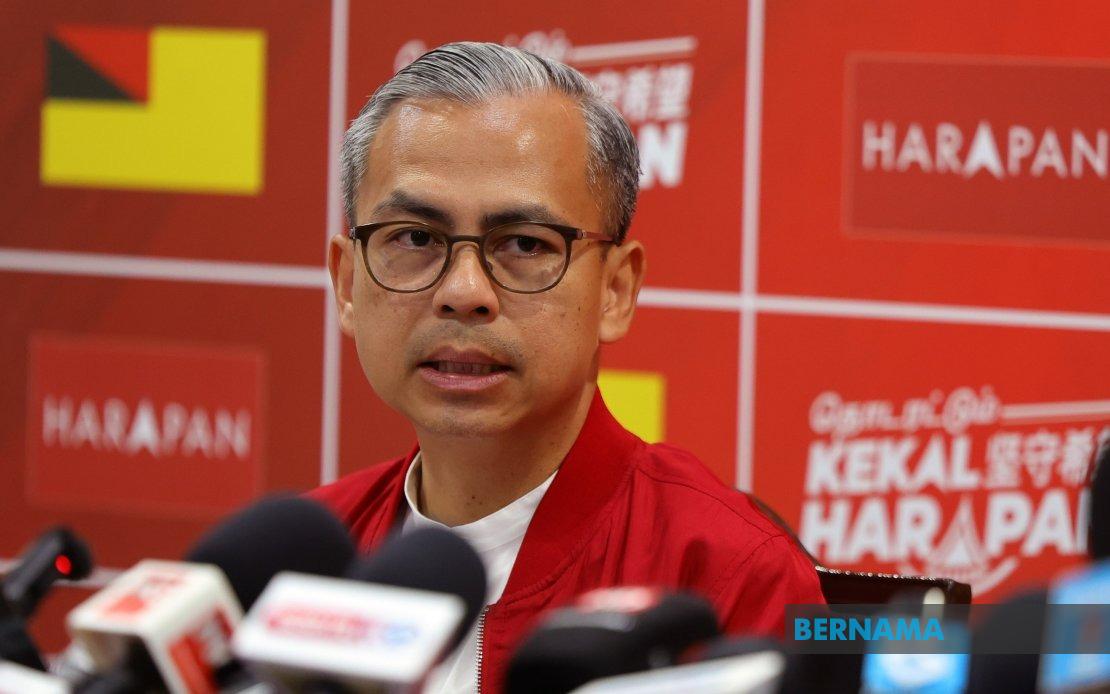
Pakatan Harapan is challenging the narrative that a single political bloc holds the exclusive mandate to represent Malaysia's Malay-Muslim community, with senior coalition figures arguing that such framing fundamentally misrepresents the country's pluralistic character and risks deepening political divisions. Speaking in Seremban on July 23, Communications Minister Datuk Seri Fahmi Fadzil articulated the coalition's position that attempts to monopolise representation of any ethnic or religious group contradict Malaysia's constitutional commitment to diversity and the social fabric that binds the nation together.
Fahmi, who serves as PKR information chief and Pakatan Harapan communications director, directly questioned the legitimacy of claims that only one political force can speak for Malay-Muslims, pointing to the coalition's own leadership as evidence of plural representation within its ranks. By invoking his own identity and that of Khalid Abdul Samad, Amanah's communications director who joined the press conference, Fahmi underscored that Pakatan Harapan comprises numerous Malay-Muslim figures across multiple party structures. This intervention reflected growing concern within the coalition that an opposing narrative—one painting PH as indifferent to Malay-Muslim interests—was gaining traction during the Negeri Sembilan state election campaign, which entered its final stretch with early voting scheduled for July 28 and election day set for August 1.
The coalition's response signals a strategic pivot to reframe the electoral contest around inclusivity rather than competing claims of communal representation. Rather than accepting a binary choice between competing Malay-Muslim representatives, Pakatan Harapan is attempting to shift the conversation toward a broader conception of shared governance that transcends ethnic categories. This approach reflects lessons drawn from previous electoral cycles where PH struggled to counter accusations that non-Malay parties within the coalition overshadowed Muslim concerns, a line of attack that has historically resonated in rural and semi-urban constituencies across Malaysia.
Central to Pakatan Harapan's defence is the track record of the Unity Government in Negeri Sembilan under Menteri Besar Datuk Seri Aminuddin Harun, where administrators from the coalition have overseen measurable expansions in Islamic infrastructure and revenue collection. Fahmi highlighted that mosque construction has accelerated under PH's watch and zakat collections have increased by approximately two-and-a-half times relative to the previous administration, framing these metrics as concrete proof that the coalition takes seriously the material welfare of Malay-Muslim constituencies. These figures carry particular weight in Malaysian politics, where visibility of investment in religious and communal facilities often translates into grassroots confidence among Muslim voters.
Yet the coalition's messaging extends beyond administrative accomplishments to a philosophical argument about the nature of political unity itself. Fahmi articulated a vision of Malaysia in which Malays organise around shared Malay interests, Chinese around Chinese interests, and Indians around Indian interests, but ultimately converge through commitment to common values and the broader good rather than through ethnic chauvinism. This formulation attempts to square a difficult circle: acknowledging the salience of communal identity in Malaysian politics whilst resisting the zero-sum competition that such identities can generate.
The statement reflects awareness within Pakatan Harapan that the party must work harder to communicate its inclusive credentials to Malay-Muslim voters, an acknowledgment implicit in Fahmi's commitment to intensified voter engagement in coming weeks. The coalition recognises that assertions of diversity within its ranks carry limited persuasive power if they do not translate into demonstrable grassroots connection and visible responsiveness to community concerns. This necessitates not merely rhetorical appeals to unity but sustained presence and dialogue in constituencies where opposition messaging may have already gained purchase.
For Malaysian voters in Negeri Sembilan and beyond, this exchange encapsulates a fundamental debate about representation in a multicultural democracy. One interpretation holds that Malay-Muslim voters benefit from concentrated representation by parties exclusively devoted to their interests. The opposing view, advanced here by Pakatan Harapan, contends that the nation's pluralism demands political structures capable of holding multiple communities together whilst safeguarding each group's substantive interests. The disagreement is not merely semantic but reflects competing theories of how democracy functions in a society marked by deep religious and ethnic diversity.
The context of the Negeri Sembilan election gives this debate particular salience. Negeri Sembilan occupies a middle position in Malaysia's political geography—neither as urbanised and cosmopolitan as Selangor nor as rural and tradition-oriented as Terengganu—making it a barometer for how different voter cohorts across the country respond to competing narratives about representation and identity. Results from the state election will signal whether Pakatan Harapan's repositioning successfully addresses voter anxieties about Malay-Muslim marginalisation or whether opposition claims continue to resonate with the electorate.
Packatan Harapan's intervention also occurs against a broader regional backdrop in which questions of communal representation and political exclusivity preoccupy democratic societies across Southeast Asia. Malaysia's approach to managing these tensions through coalition-building and compromise stands in contrast to other contexts in the region where winner-take-all politics has sharply narrowed the space for minority voice. The coalition's commitment to inclusive governance, should it be validated by voters, would reinforce a model of democratic competition centred on expansion of political participation rather than its restriction to favoured constituencies.
Moving forward, the efficacy of Pakatan Harapan's message will hinge on sustained delivery of visible benefits to Malay-Muslim communities, coupled with genuine internal dialogue that ensures minority voices within the coalition receive serious hearing in policy formation. Rhetorical appeals to unity and diversity, whilst important, possess limited persuasive force absent corresponding institutional arrangements that translate principle into practice. The weeks preceding August 1 will reveal whether the coalition's argument resonates with voters or whether competing narratives prove more compelling in determining electoral outcomes.

