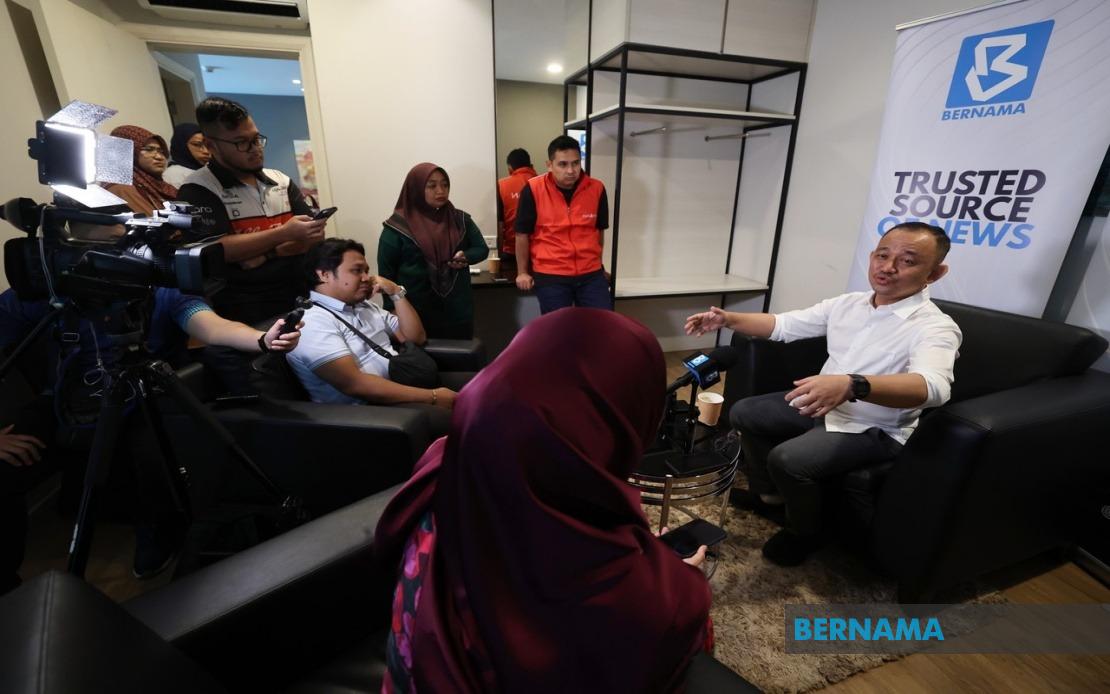
Pakatan Harapan has made clear its respect for constitutional monarchy by confirming that the selection of Johor's next Menteri Besar will rest entirely with the Sultan of Johor, should the coalition secure victory in the upcoming state election. Dr Maszlee Malik, the PH candidate for the Puteri Wangsa state seat, emphasised during discussions that the coalition has deliberately avoided deliberating on this question, recognising the palace's exclusive constitutional authority in the matter. This stance reflects a broader commitment to upholding institutional arrangements that have defined Malaysian governance since independence.
The clarification comes amid persistent social media speculation that has linked several PH figures to the Menteri Besar position, including Maszlee himself. Rather than engaging with such conjecture, the opposition coalition has chosen to redirect attention to its campaign priorities and electoral messaging. Maszlee's comments underscore a deliberate strategy to avoid the appearance of predetermined outcomes or factional positioning that might undermine the coalition's electoral appeal. For Malaysian voters concerned about democratic propriety and the maintenance of institutional balance, this approach carries particular significance in a political environment where questions about executive authority and constitutional limits frequently surface.
The Johor state election, scheduled for July 11 with early voting on July 7, represents a significant electoral contest that will shape regional political dynamics across Southeast Asia's third-most populous state. Johor's economic importance as a manufacturing and trading hub means that state-level governance decisions carry implications extending beyond the peninsula's southern region. The coalition's emphasis on deference to the Sultan reflects not merely constitutional formality but also a calculated recognition that public confidence in institutions depends upon visible respect for established hierarchies and separation of powers. This institutional restraint, if followed through in practice, could serve as a model for how opposition coalitions navigate the delicate relationship between electoral ambition and monarchical prerogative.
Maszlee's articulation of PH's strategy also reveals a shift in how the coalition seeks to project itself to voters. Rather than building a campaign around charismatic individual leadership, the party is attempting to emphasise collective competence and organisational strength. By describing the 56 candidates fielded across all contested seats as the coalition's "Avengers", Maszlee employed popular cultural imagery to communicate the notion that PH's strength lies in distributed capability rather than concentrated personality. This messaging approach addresses longstanding voter concerns about the sustainability of opposition governance and the risks associated with over-reliance on particular leaders, issues that have haunted coalition politics throughout Malaysia's recent electoral history.
The timing of PH's statement also reflects the competitive intensity of Johor's political environment. With the state election just weeks away, the coalition's decision to foreclose debate about the Menteri Besar post removes a potential source of internal friction and external criticism. By explicitly acknowledging the Sultan's prerogative, PH insulates itself from accusations of presumption or disrespect toward the monarchy, a concern that resonates powerfully across Malaysia where institutional stability remains highly valued. The move also prevents opposition rivals from weaponising such speculation against the coalition, a tactic that has proven effective in past Malaysian electoral campaigns.
The constitutional framework governing Menteri Besar appointments in Johor carries particular weight given the state's historical standing within the federation. As one of the original sultanates in the Malayan Union, Johor's monarchical institution commands deep historical legitimacy. The Sultan's prerogative in ministerial appointments reflects not merely contemporary constitutional law but centuries of sultanate tradition adapted to Westminster-influenced parliamentary democracy. PH's explicit recognition of this constitutional reality signals respect for these layered institutional inheritances and suggests the coalition understands that electoral victory entails responsibility to uphold not merely the letter but the spirit of Malaysian constitutional governance.
From a broader Southeast Asian perspective, Johor's political developments matter because they establish precedents that influence governance patterns across the region. Malaysia's mixed system, combining monarchy with parliamentary democracy, remains distinctive within ASEAN. How opposition coalitions manage relationships with traditional institutions while pursuing electoral goals shapes perceptions of democratic maturity and institutional respect across neighbouring states. PH's measured approach to the Menteri Besar question thus carries implications extending beyond Johor's borders, potentially influencing how other regional democracies navigate similar questions about executive appointments and institutional authority.
The coalition's team-oriented messaging also addresses practical governance realities. Malaysian state governments operate within fiscal constraints and depend upon coordinated administration across multiple agencies and elected representatives. The emphasis on presenting a cohesive slate of 56 candidates reflects recognition that electoral success requires not merely winning seats but ensuring that successful candidates can work together effectively to deliver public services. This represents a maturation beyond earlier opposition campaigns that often focused on national-level leadership and largely neglected the question of state-level governance capacity. For Malaysian voters in Johor, this shift suggests a coalition genuinely focused on the machinery of government rather than merely the symbolism of power.
Looking ahead to the July 11 polling day, PH's positioning on the Menteri Besar question establishes parameters for post-election governance whether the coalition succeeds or not. Should PH win, the coalition has already committed to honouring the Sultan's selection, removing potential friction over appointment announcements. Should PH fall short, the party has avoided making commitments it could not honour, preserving flexibility for future electoral cycles. This strategic clarity serves multiple audiences simultaneously: it reassures constitutional monarchists, signals respect to the palace, and communicates to voters that PH understands governance involves more than election victories. In the context of Malaysian politics, where institutional stability and respect for constitutional procedures remain valued commodities, such messaging carries genuine resonance.

