Pakatan Harapan faces a critical juncture following Barisan Nasional's decisive victory in the Johor state election, securing 29 of 56 contested seats. Rather than retreat, the opposition coalition is now adopting a methodical reassessment strategy to salvage momentum for the looming Negeri Sembilan election. This approach reflects PH's determination to prevent further erosion of its remaining state strongholds, particularly given that Negeri Sembilan remains one of its few administrative fiefdoms in Peninsular Malaysia.
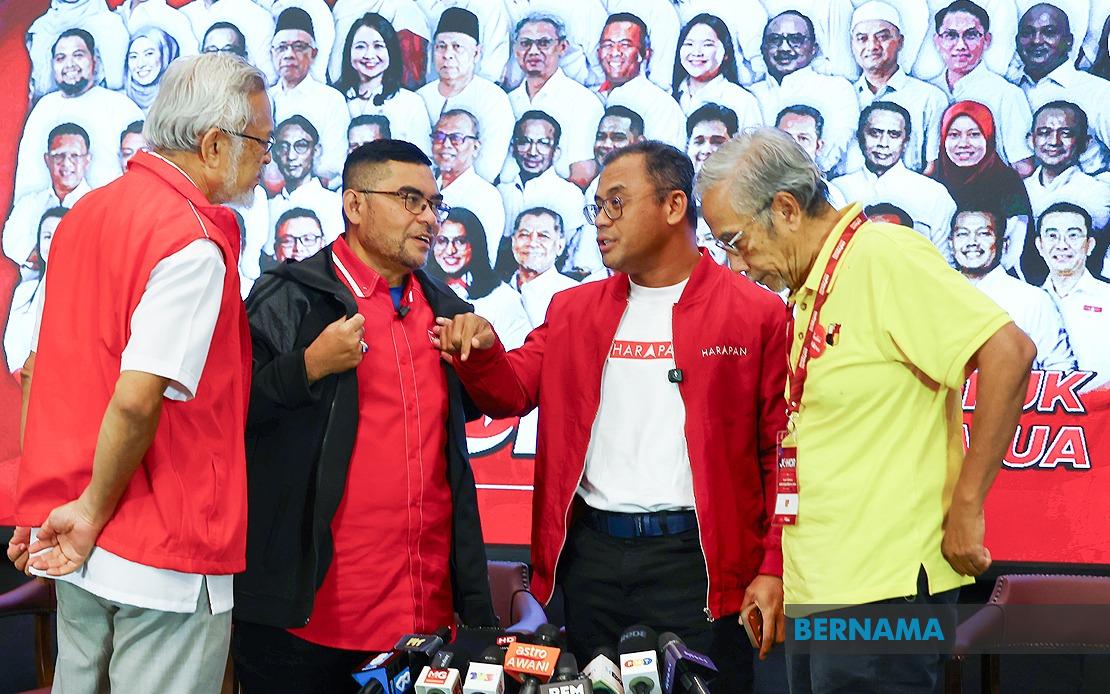
Datuk Seri Amirudin Shari, the Selangor Menteri Besar and PKR's election co-director, articulated PH's position from the coalition's operations centre in Johor Bahru on the evening of the election. Rather than prematurely defending the Johor outcome, he advocated for patience and precision. Amirudin emphasised that several seats remained officially undecided, making sweeping conclusions premature. This measured stance suggests PH recognises the need to avoid reactive decision-making that could alienate party members or confuse voter messaging ahead of Negeri Sembilan.
The depth of PH's planned review extends beyond standard post-election analysis. Coalition leadership intends to examine fundamental shifts in voting behaviour, particularly among younger demographics who have historically represented a key constituency for the reformist coalition. Understanding why PH may have underperformed in Johor among these voters could prove crucial for Negeri Sembilan, where demographic composition and electoral expectations differ substantially. The coalition's willingness to scrutinise generational support patterns suggests recognition that traditional PH messaging may require recalibration to resonate with evolving voter priorities.
Candidate selection discussions were scheduled to commence immediately, with the official candidate list set for announcement on July 14. This compressed timeline demonstrates that PH intends to move swiftly from introspection to action. The candidate refinement process itself will serve as an acid test of whether PH has genuinely absorbed lessons from Johor or merely undergone cosmetic reorganisation. The stakes are considerably higher in Negeri Sembilan, where retention of state control directly impacts the coalition's relevance in federal politics and its claim to viable alternative governance.
Amirudin projected confidence regarding Negeri Sembilan's prospects, anchoring PH's campaign narrative around the incumbent administration's track record under Datuk Seri Aminuddin Harun. This represents a classic incumbent advantage strategy, emphasising proven delivery rather than opposition rhetoric. In a state where PH already governs, the calculus differs significantly from Johor, where PH contested as the challenger. Governance performance becomes quantifiable and defensible, providing PH with tangible achievements to highlight rather than relying solely on criticism of BN's record.
The timing of Negeri Sembilan's election carries broader implications for Malaysian politics. Coming immediately after the Johor setback, PH faces intense pressure to demonstrate that the loss was state-specific rather than symptomatic of broader coalition weakness. A Negeri Sembilan retention would reset the narrative significantly, allowing PH to frame Johor as an anomaly attributable to local factors rather than systemic vulnerability. Conversely, losing Negeri Sembilan would precipitate serious questions about PH's electoral viability and federal stability under Datuk Seri Anwar Ibrahim's leadership.
Amirudin's assurances regarding federal government stability represent a crucial political calculation. By emphasising multi-party commitment to maintaining the federal administration until parliamentary dissolution, he sought to insulate Putrajaya from the reverberations of state-level contests. This messaging serves dual purposes: reassuring domestic markets and international observers of political continuity, whilst simultaneously attempting to prevent opposition exploitation of state results to justify federal defections. The explicit mention of BN's commitment to federal stability suggests tacit acknowledgment that Johor's outcome could theoretically embolden restless coalition partners contemplating withdrawal from the federal arrangement.
The composition of the PH delegation present at the press conference—including Amanah representatives Datuk Seri Dr Mujahid Yusof Rawa, Datuk Dr Mohd Hatta Ramli, and Khalid Abdul Samad—underscored the coalition's unified facade despite the Johor disappointment. Amanah's prominent presence indicated that the Islamist component party remained committed to PH's electoral project, at least publicly. This coalition cohesion cannot be taken for granted, particularly if state-level losses accumulate. The deliberate inclusion of multiple party figures suggested PH wished to project collective leadership rather than allowing any single component to dominate post-election narrative control.
For Malaysian and Southeast Asian observers, PH's response carries significance beyond Negeri Sembilan. The coalition's analytical approach to defeat contrasts with more defensive postures sometimes adopted by incumbent governments facing unexpected electoral setbacks. By committing to comprehensive review rather than immediate rationalisations, PH signalled institutional maturity and capacity for self-correction—qualities that voters often associate with effective governance. However, this advantage will evaporate if the coalition fails to implement genuine strategic adjustments by the time Negeri Sembilan polling occurs.
The regional context further complicates PH's strategic calculus. Across Southeast Asia, opposition coalitions have struggled to maintain coherence through successive electoral disappointments. PH's ability to retain coalition discipline and unity of purpose following Johor will set precedents for whether Malaysian opposition politics can mature into institutionally robust alternatives to single-party dominance. The Negeri Sembilan election will constitute the immediate test of whether post-Johor reorganisation represents genuine renewal or merely tactical repositioning.
Looking forward, PH's attention to young voter engagement patterns reflects understanding that Malaysia's demographic evolution poses both threat and opportunity. As younger cohorts increasingly comprise the electorate, appeals based on historical grievances or institutional symbolism lose potency. PH must articulate forward-looking visions addressing contemporary youth concerns—employment, housing affordability, digital economy participation, climate action. Negeri Sembilan's election will reveal whether the coalition has successfully translated this understanding into revised campaign messaging and candidate selection criteria.
The week-long window between the Johor election and official Negeri Sembilan candidate announcement proved critical for PH's internal consolidation. During this period, the coalition needed to navigate competing faction interests, assuage disappointed Johor operatives, and project confidence to prospective Negeri Sembilan voters. The speed of Amirudin's response and the detail of PH's announced review process suggested the coalition recognised that extended introspection could be misinterpreted as paralysis. Moving decisively whilst maintaining analytical rigour represented the optimal political strategy for a coalition confronting unexpected adversity.

