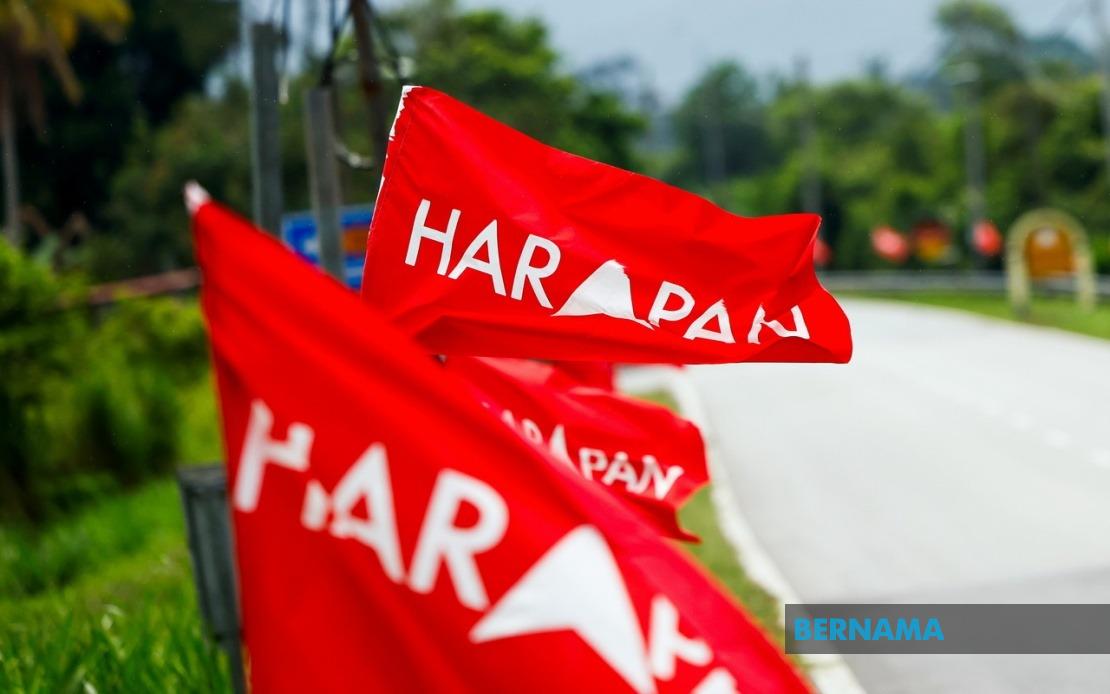
Pakatan Harapan is preparing to unveil its election manifesto for Negeri Sembilan's 16th state assembly election, marking a pivotal moment in the coalition's campaign strategy as voting approaches on August 1. The launch, scheduled for tomorrow evening in Seremban, will articulate the party's vision for the state over the coming term and establish its central messaging for the final stretch of campaigning.
The manifesto has been constructed to emphasise continuity and the consolidation of gains achieved since Pakatan Harapan captured the state government in 2018. Datuk Muhammad Zaki Md Sabri, the coalition's Negeri Sembilan Operations director, stressed that the party's senior leadership has crafted the document with meticulous attention to detail, ensuring that both economic and social dimensions are addressed comprehensively. The approach reflects a deliberate strategy to position the incumbent coalition as a force for stability in an environment where voters may be uncertain about change.
The timing of the manifesto release carries significance in the broader electoral calendar. Since the Negeri Sembilan State Legislative Assembly was dissolved on June 5, the state has been in campaign mode for weeks, with candidates engaging constituents and building momentum. The manifesto serves as both a consolidation of the campaign narrative and an opportunity to reset the conversation around substantive policy rather than personality-driven politics. With early voting scheduled for July 28 and election day on August 1, the announcement comes at a crucial juncture when voter attention is intensifying.
The manifesto's emphasis on sustaining development and prosperity reflects Pakatan Harapan's calculation that economic performance and visible improvements in public services remain the primary concerns for Negeri Sembilan voters. The coalition faces the perennial challenge confronting incumbents: demonstrating that previous accomplishments justify continued governance while proposing fresh initiatives that suggest renewed energy and commitment. By framing the manifesto around continuity rather than radical transformation, Pakatan Harapan appears to be betting that voter satisfaction with existing conditions will outweigh appeals for change.
Muhammad Zaki reported satisfaction with the operational execution of the campaign in its early stages, noting efficient logistics and grassroots enthusiasm among party candidates. This optimism about machinery performance suggests the coalition believes its ground organisation remains robust, though in Malaysian politics such assessments often require independent verification as campaigns progress. The importance of strong on-the-ground operations cannot be overstated in state elections, where localised dynamics and individual candidate appeal significantly influence outcomes.
The Elections Commission has registered 889,490 eligible voters across Negeri Sembilan, a substantial electorate whose composition reflects Malaysia's demographic diversity. The voter roll includes 867,151 ordinary voters alongside 16,884 military personnel and their spouses plus 5,455 police personnel, who will participate in early voting. This military and police representation, while numerically modest relative to the overall electorate, can prove decisive in closely contested seats, particularly given these constituencies' historical tendency toward government support.
A notable aspect of Muhammad Zaki's comments was his appeal for campaign conduct grounded in mutual respect and dignity. He explicitly called for all contesting parties to avoid provocative rhetoric and to refrain from exploiting the three Rs—religion, royalty, and race—issues historically sensitive in Malaysian electoral contexts. This plea, while couched diplomatically, acknowledges the real risk that state elections can become flashpoints for communal tensions if political actors prioritise short-term advantage over social cohesion. The request reflects a recognition that Negeri Sembilan, like all Malaysian states, requires political leadership that respects constitutional boundaries around sensitive matters.
For Pakatan Harapan specifically, the Negeri Sembilan contest carries implications beyond the state itself. The coalition has faced fluctuating fortunes across different state-level contests since its 2018 federal victory, and maintaining or expanding its state assembly representation remains strategically important. A strong performance in Negeri Sembilan would reinforce the coalition's narrative of sustained electoral competitiveness, while a disappointing result might prompt internal reassessment of campaign strategies and candidate selection. State elections thus function as important barometers of national political trends.
The manifesto launch represents Pakatan Harapan's formal opportunity to articulate a comprehensive vision for Negeri Sembilan's future rather than merely defending its record. Effective manifestos balance technical policy detail with emotionally resonant messaging that connects to voter aspirations. The challenge for the coalition will be presenting ambition without suggesting dissatisfaction with what has already been accomplished—a delicate balance that requires sophisticated political communication.
As the campaign enters its final phase, the manifesto becomes a reference document that candidates will invoke when engaging voters, media outlets will analyse for policy content, and opposition parties will scrutinise for perceived gaps or contradictions. The document's reception, both immediate and in the days following its release, will provide signals about whether Pakatan Harapan has successfully framed the election around terms favourable to its re-election prospects or whether challenger parties have succeeded in shifting the conversation toward alternative narratives and priorities.

