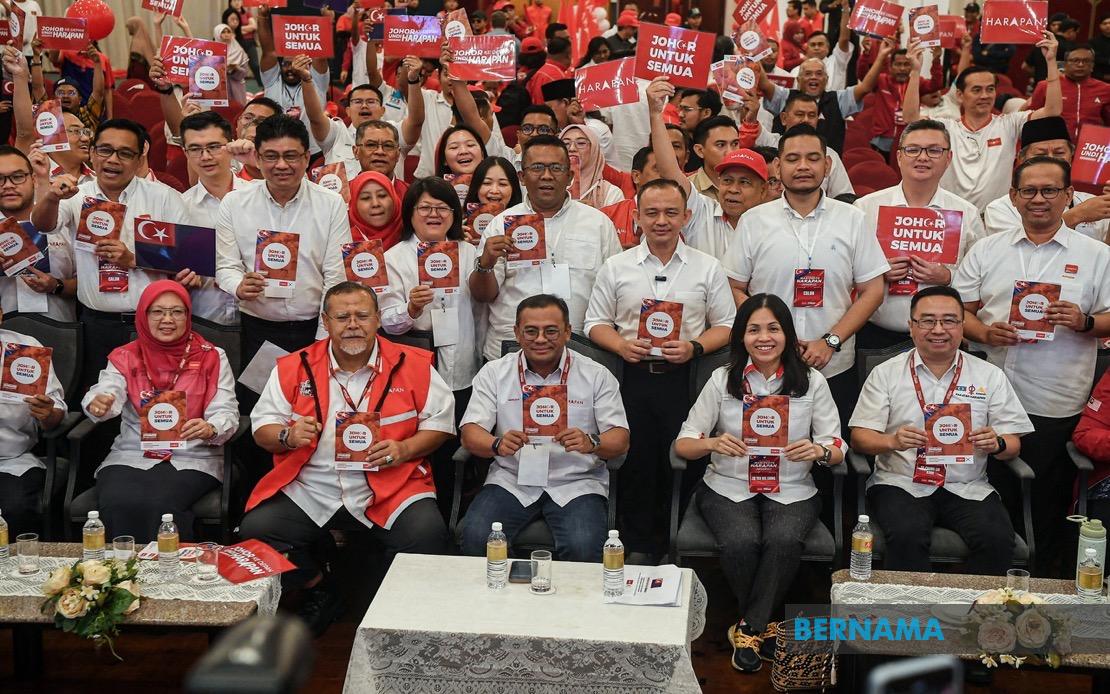
Pakatan Harapan launched its election manifesto for the 16th Johor state election on July 3 in Johor Bahru, presenting 'Johor Untuk Semua' (Johor For All) as a substantive response to voters' concerns rather than hollow campaign promises. Johor DAP chairman Teo Nie Ching characterised the programme as deliberately constructed around empirical evidence of what residents require and what the state's economy can realistically support, signalling an intent to move beyond aspirational pledges toward deliverable outcomes.
The manifesto encompasses ten principal commitments spanning healthcare access, housing affordability, youth empowerment, and education enhancement. At its core lies recognition that Johor's electorate spans multiple demographic segments with distinct priorities, a reality reflected in policies targeting first-time homebuyers, working mothers, young people seeking career opportunities, and school-age children. This breadth suggests coalition strategists conducted extensive groundwork identifying voter preoccupations across urban centres, rural districts, and suburban communities.
Teo's confidence in implementation hinges explicitly on federal-state coordination, a notable caveat given Malaysia's federal structure and the coordination challenges that can emerge between different political administrations. She identified the border crossing issue as a specific test case where home ministry cooperation would be essential to achieve the proposed 50 percent reduction in waiting times at Johor-Singapore checkpoints. This targeting of one of the state's most visible logistical headaches—a chronic frustration affecting daily commuters and commercial traffic—demonstrates attention to bread-and-butter governance that influences residents' quality of life.
Education emerged as another flagship priority, reflecting consistent public concern about schooling quality and accessibility. The manifesto's focus here taps into broader anxiety across Malaysian society regarding whether state education systems adequately prepare students for evolving economic demands. For Johor specifically, strengthening educational institutions could help retain talent and attract families, addressing long-standing concerns about brain drain to Selangor and Kuala Lumpur.
The proposed Johor Health Scheme represents perhaps the most innovative policy within the platform. Teo invoked Selangor's established health programme as proof of concept, citing the neighbouring state's experience as validation that similar initiatives can function effectively within Malaysian governance frameworks. This reference carries strategic weight, since Selangor's scheme has gained recognition as a workable model bridging gaps in federal healthcare provision. By anchoring Johor's health proposal to demonstrated precedent rather than untested theory, Pakatan Harapan attempts to reassure sceptical voters that the state can realistically implement universal health coverage without budgetary collapse.
The RM500 million youth development fund signals recognition that Johor's younger population requires targeted investment to compete economically. Youth unemployment and underemployment remain persistent challenges across Malaysia, and allocating substantial resources to skills development, entrepreneurship support, and job creation speaks to an age demographic that increasingly determines electoral outcomes. This commitment may particularly resonate in urban areas where young professionals contemplate migration to other states or countries in search of better prospects.
Housing assistance for first-time buyers addresses one of Malaysia's most intractable social issues. Property price inflation has outpaced wage growth substantially, leaving young couples and families unable to afford homes despite economic activity. The deposit assistance initiative acknowledges this structural problem directly, offering tangible support rather than vague promises of affordability. For a state like Johor, where rapid development has attracted migration but also driven up property costs, this policy addresses genuine hardship affecting voting-age population segments.
Teo's emphasis that the manifesto is "balanced" suggests Pakatan Harapan sought to avoid appearing tilted toward any single constituency while maintaining apparent fiscal responsibility. In Malaysian electoral politics, manifesto balance matters because voters routinely penalise perceived unfairness or unsustainable spending commitments. By framing policies as carefully calibrated rather than ad hoc, the coalition attempts to position itself as serious administrators rather than reckless promise-makers.
The policy platform's emphasis on economic realities reflects lessons from previous campaigns where ambitious but unfunded pledges damaged credibility. Acknowledging that Johor's finite resources demand prioritisation suggests a more mature approach to governance than campaigns offering everything to everyone. Whether this messaging translates to electoral success depends partly on whether voters believe Pakatan Harapan possesses both the competence and integrity to deliver on commitments made during the campaign.
With voting scheduled for July 11 and early polling on July 7, the manifesto launch marks an inflection point in Johor's campaign cycle. The state election carries broader implications for Malaysian politics, given Johor's historical significance and its role as a bellwether for national trends. Success or failure in implementing promised policies would establish Pakatan Harapan's credibility for potential future national governance, making the manifesto's grounding in empirical needs and economic feasibility strategically crucial.
The coalition's ability to execute on these commitments will depend substantially on cooperation dynamics with the federal government, administrative capacity within state institutions, and sustained voter engagement. Manifesto launches typically generate initial enthusiasm, but translating pledges into tangible improvements requires bureaucratic competence, political will, and often inter-governmental goodwill that cannot be guaranteed. Whether Johor residents believe Pakatan Harapan possesses these qualities will ultimately determine the manifesto's political efficacy on polling day.

