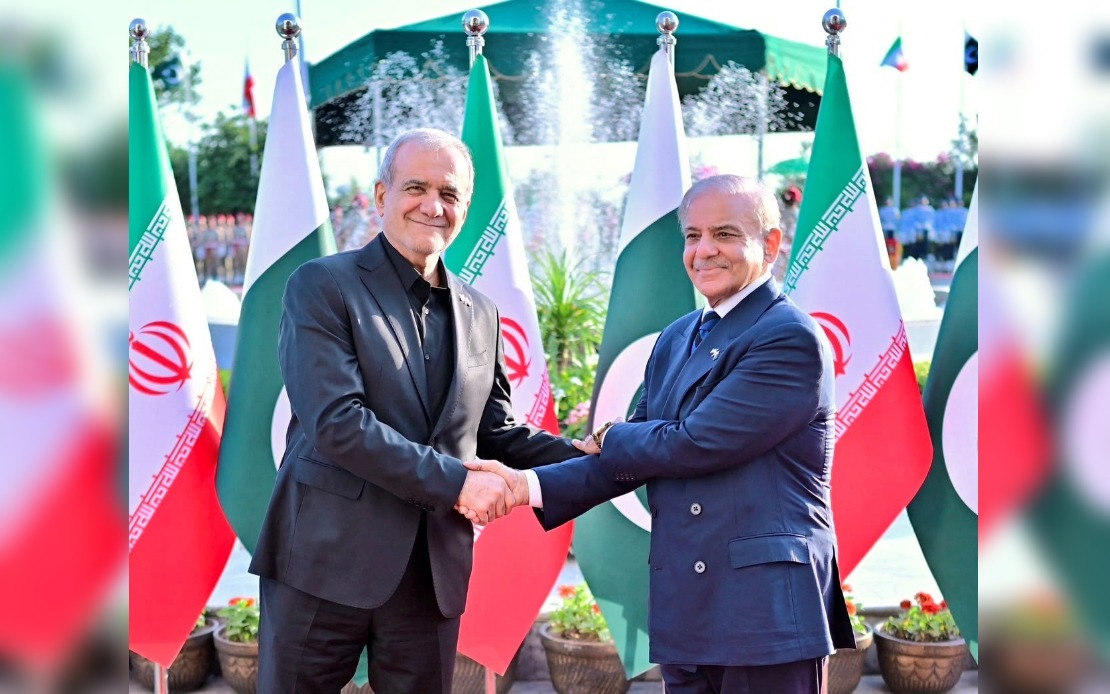
Pakistan and Iran have signalled their intention to resurrect the Islamabad-Tehran-Istanbul freight corridor, a crucial overland trade route that remains suspended after operational difficulties halted services in 2022. The commitment emerged from discussions between Pakistani Railway Minister Muhammad Hanif Abbasi and Iranian Interior Minister Eskandar Momeni during talks held in Islamabad on Wednesday, underscoring both nations' determination to capitalise on their geographic positioning as a gateway between South Asia, the Middle East, and Europe.
The proposed revival carries significant economic implications for the three countries directly involved and broader implications for Southeast Asia's trade relationships. By restoring connectivity between Islamabad, Tehran, and Istanbul, the corridor would create a direct overland pathway for cargo movement that bypasses traditional maritime routes through the Suez Canal or the Strait of Malacca—routes upon which Malaysia and other regional economies depend heavily. Such alternative logistics chains could reshape regional shipping dynamics and potentially offer cost advantages for businesses operating across multiple continents.
The ITI service previously operated without interruption until 2012, when it was suspended due to geopolitical tensions and security concerns. A modest revival in December 2021 generated optimism about restoring this connectivity, but technical and operational challenges—ranging from maintenance backlogs to coordination difficulties across three sovereign borders—forced another suspension within months. The current discussions represent a third attempt to establish sustainable operations, reflecting the strategic importance both nations attach to the project despite historical setbacks.
Pakistan's role as the linchpin in this corridor stems from its unique geographic position. The country is undertaking a substantial infrastructure overhaul, particularly through the modernisation of its Main Line-3 railway, which traverses Sindh and Balochistan provinces and forms the backbone of Pakistan-Iran connectivity. Railway Minister Abbasi indicated that construction work on this crucial upgrade would commence during the current fiscal year, with completion targeted for December 2029. This seven-year timeline reflects the scale and complexity of bringing Pakistan's ageing rail infrastructure to international standards.
Iran's commitment to the corridor is equally critical. The Interior Minister announced that Iran would complete modernisation of the Zahedan–Mirjaveh railway line within approximately one month, removing a significant bottleneck on the Iranian side. However, he simultaneously pressed Pakistan to accelerate work on the standard-gauge rail line connecting Mirjaveh to Taftan in Balochistan, emphasising that seamless cross-border operations depend upon both nations maintaining comparable technical standards and synchronised timelines. This interdependency highlights both the promise and the fragility of multilateral infrastructure projects in the region.
For Malaysia and other Southeast Asian economies, the potential success of the ITI corridor carries important trade implications. Should the service become operational and reliable, it would offer an alternative route for goods destined for European and Central Asian markets, potentially reducing reliance on shipping corridors that currently dominate regional logistics. Reduced transit times and costs could make Malaysian exports more competitive in markets like Turkey, Russia, and Central Asia, whilst simultaneously creating new opportunities for facilitating transhipment and value-added services.
The broader strategic context involves the Belt and Road Initiative and China's vision for Eurasian connectivity. Pakistan's infrastructure investments, including those under the China-Pakistan Economic Corridor, are designed to position the country as a key transit hub. The revival of the ITI corridor complements rather than competes with Chinese-backed projects, creating a multipolar approach to Asian integration that involves diverse partners and funding sources. For Malaysia, the emergence of multiple connectivity options reduces the risk of over-dependence on single-source infrastructure.
Operational stability remains the greatest challenge to the ITI corridor's success. The previous suspension occurred despite government-level support, suggesting that technical and logistical issues run deep. Railway maintenance standards, border crossing procedures, customs coordination, and security protocols all require alignment across three countries with different administrative systems and political relationships. The commitment from both Pakistan and Iran to address these challenges methodically, through dedicated bilateral discussions rather than ad-hoc crisis management, indicates a more serious approach this time.
The geopolitical dimension cannot be ignored. Whilst Pakistan-Iran relations have historically been complex, the emphasis on economic cooperation through infrastructure represents a pragmatic acknowledgment of mutual benefit. Turkey's participation completes a triangle linking South Asia, the Middle East, and Southeast Europe. For Malaysia's policymakers, this corridor demonstrates how regional nations can overcome historical tensions through structured economic engagement—a model with potential applications elsewhere in Southeast Asia.
Turkey's role as the western terminus of the ITI corridor also merits attention. Istanbul serves as a bridge between Asia and Europe, and the corridor would give Turkish industry and businesses improved access to Pakistani and Iranian markets whilst offering reciprocal benefits to both countries. For Malaysian exporters seeking entry into Turkish or European markets, the development of reliable overland routes through the ITI corridor could provide competitive advantages over traditional maritime shipping.
The financial and technical resources required for successful implementation remain substantial. Pakistan's investment in Main Line-3 modernisation, combined with Iran's Zahedan–Mirjaveh upgrade, will require sustained capital allocation amidst competing domestic priorities. International funding mechanisms, potentially involving multilateral development banks or regional cooperation frameworks, may prove necessary to ensure timely completion. The willingness of Pakistan and Iran to commit to specific timelines suggests confidence that financial resources can be secured.
Looking ahead, the success of the ITI corridor hinges upon consistent political will, technical competence, and effective cross-border coordination. For Malaysia and the broader Southeast Asian region, the corridor's revival would represent a positive development in Eurasian integration, expanding trade options and reducing dependency on traditional maritime chokepoints. The next eighteen months will be critical in determining whether this third attempt to establish the Islamabad-Tehran-Istanbul service succeeds where previous efforts faltered.

