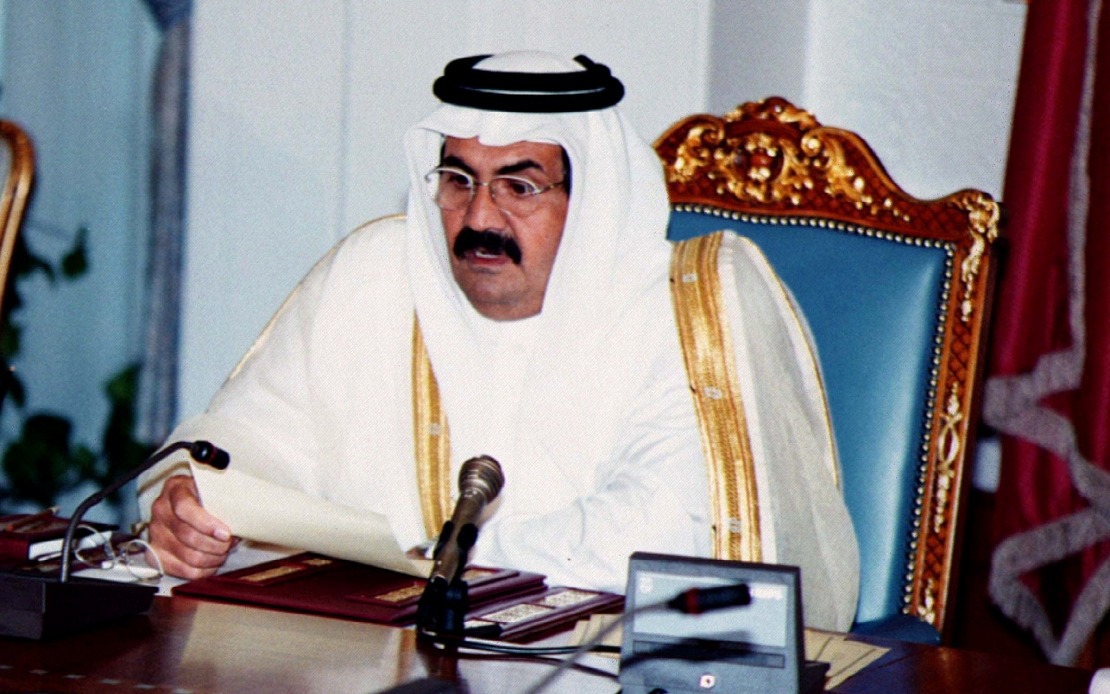
Pakistan's Prime Minister Shehbaz Sharif and Maldives President Mohamed Muizzu made separate visits to Qatar on Monday to convey condolences to the ruling family following the death of former Emir Sheikh Hamad Bin Khalifa Al Thani. The 74-year-old former ruler passed away on Sunday, prompting immediate expressions of sympathy from regional and international leaders who recognised his pivotal role in shaping modern Qatar.
Shehbaz Sharif's delegation to Doha included his brother Nawaz Sharif, the country's former prime minister, alongside Deputy Prime Minister and Foreign Minister Senator Ishaq Dar and Information Minister Attaullah Tarar. The high-level composition of the Pakistani contingent underscored the significance both Islamabad and the broader Islamic world attached to Sheikh Hamad's influence and legacy. Pakistan declared Monday a national day of mourning in tribute to the deceased ruler, a gesture mirrored by India, demonstrating the late emir's reach across South Asia's major powers.
Sheikh Hamad's reign from 1995 to his voluntary abdication in 2013 fundamentally transformed Qatar from a modest Gulf monarchy into a global economic and political powerhouse. During nearly two decades in office, he orchestrated Qatar's emergence as a major natural gas exporter, particularly through the development of the North Field, which would later become the foundation of the nation's energy wealth. His modernisation agenda extended far beyond hydrocarbons, encompassing education, healthcare, and infrastructure investments that positioned Qatar as a regional leader in development metrics.
The tributes flowing from world capitals focused on Sheikh Hamad's contributions extending well beyond Qatar's borders. Bangladesh Prime Minister Sheikh Hasina, in her condolence message to current Emir Sheikh Tamim Bin Hamad Al Thani, highlighted the former ruler's instrumental role in advancing regional stability, fostering economic cooperation, strengthening educational institutions, and promoting international partnerships. These accomplishments reflected a strategic vision that sought to embed Qatar within broader frameworks of regional and global engagement rather than pursuing isolationist policies.
For Southeast Asian observers, Sheikh Hamad's career demonstrates the transformative potential of visionary leadership combined with resource management and strategic positioning. His decision to establish the Al Jazeera media network in 1996 revolutionised Arab media landscape and extended Qatar's soft power throughout the region and beyond. Similarly, his hosting of major sporting events and international forums positioned a relatively small nation as a significant player in global affairs—an approach that smaller economies in the Indo-Pacific region have studied with keen interest.
The diplomatic visits by Shehbaz Sharif and Mohamed Muizzu reflect the interconnected nature of Gulf and South Asian politics. Pakistan maintains substantial economic and strategic ties with Qatar, including significant remittance flows from Pakistani workers employed throughout the Gulf state's economy. The Maldives, as a smaller island nation with growing strategic importance given its location along crucial shipping routes, has similarly cultivated close relationships with Gulf monarchies for security and economic support.
Sheikh Hamad's legacy also encompasses his role as a modernising force within the conservative Gulf Cooperation Council framework. His educational initiatives, including the establishment of Education City, which houses satellite campuses of leading international universities, created a model for knowledge-based economic diversification that influenced development strategies across the region. His commitment to women's rights and education, particularly through his wife Sheikha Mozah's prominent philanthropic work, introduced gradual but significant social reforms.
The condolence missions occurring in July 2024 underscore how succession and mourning rituals remain central to Gulf political culture and international diplomacy. While Sheikh Hamad had formally transferred power to his son Sheikh Tamim in 2013, retaining the title of Emir Father, his recent passing closes an important chapter in Qatar's modern history. The presence of multiple national delegations signalled that his influence transcended Qatar itself, extending throughout the Islamic world and touching South Asian nations with substantial populations working in the Gulf.
For regional analysts monitoring Gulf politics, Sheikh Hamad's death marks a symbolic turning point. The former emir's generation of Gulf leaders, who came of age during the oil boom and oversaw their nations' dramatic transformation, is gradually passing from the scene. The stability of succession in Qatar, demonstrated through the smooth transition to Sheikh Tamim's leadership over a decade ago, stands in contrast to succession uncertainties in some neighbouring states, suggesting institutional frameworks Sheikh Hamad helped establish continue functioning effectively.
The geopolitical implications extend to Malaysia and broader Southeast Asia, where Qatari investments in ports, real estate, and infrastructure have become increasingly visible. Sheikh Hamad's visionary approach to strategic investment and economic diversification created patterns of engagement that continue shaping Qatar's foreign policy under current leadership. Understanding this historical context helps illuminate current Qatari diplomatic and investment strategies throughout Southeast Asia.
Sheikh Hamad's passing also comes amid evolving regional dynamics in the Middle East. The normalisation of relations between various Arab states, the ongoing Palestinian situation, and shifting alliances in response to Iranian regional activities represent complex landscapes that he helped navigate during his tenure. His successors inherit both the institutional legacies and the diplomatic challenges that emerged during his transformative period in charge.

