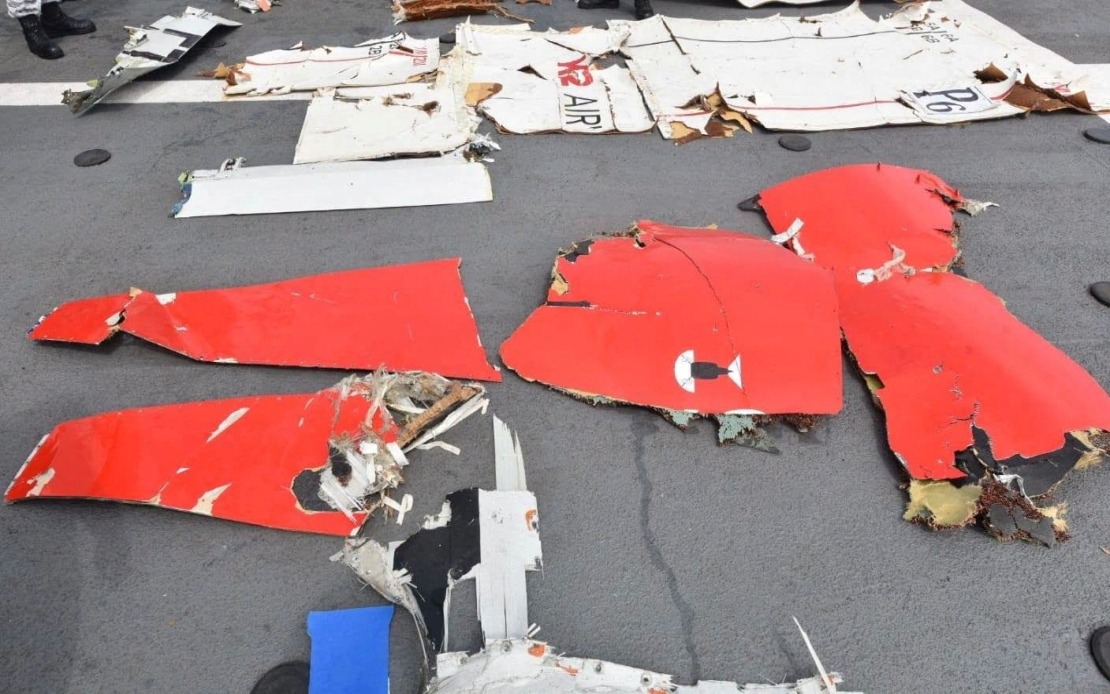
The Pakistani Navy has located fragments of a cargo aircraft operated by K2 Airways in the Arabian Sea, though hopes of finding the five-member crew alive are fading as search operations continue against challenging weather conditions. Naval units discovered pieces of the Boeing 737 off the coast near Amara, situated west of Karachi, following an intensive 12-hour search effort coordinated by Pakistan's airport authority. The discovery marks a significant development in the ongoing rescue operation, yet the absence of any sign of the crew has intensified concerns about their fate.
The aircraft, registered to K2 Airways, lost contact with air traffic control on Tuesday evening while en route from Sharjah in the United Arab Emirates to Karachi. Prior to disappearing from radar screens, the flight crew reported encountering navigation difficulties, providing investigators with preliminary insight into what may have triggered the emergency. The plane exhibited rapid altitude loss immediately before vanishing, suggesting a potential catastrophic failure during flight operations. This sequence of events has become the focus of preliminary inquiries by Pakistani aviation authorities seeking to reconstruct the final moments of the journey.
K2 Airways, a privately operated Pakistani airline that commenced operations in 2018, identified the crew composition as two pilots, two flight engineers, and one loadmaster. The airline publicly named all five individuals in a Facebook announcement and committed to full cooperation with Pakistan's Civil Aviation Authority and relevant government agencies. The company's statement emphasised its continued prayers for the crew members' safety and expressed solidarity with their families during this uncertain period. K2 Airways has since become the centre of media attention, though industry observers note the airline maintains a relatively modest operational profile within Pakistan's aviation sector.
The Boeing 737 involved in the incident carries considerable operational history, having entered service in 1999 as a passenger aircraft before undergoing conversion for cargo transportation. Such conversions are standard practice throughout the global aviation industry, extending the useful lifespan of ageing commercial aircraft. However, the modification process requires rigorous certification and adherence to stringent safety protocols. The aircraft's age and conversion status may feature prominently in technical investigations, though experts emphasise that properly maintained converted aircraft operate safely across international routes.
Search operations are confronting substantial obstacles as the Arabian Sea experiences monsoon conditions, which have intensified since the aircraft's disappearance. Rough seas and limited visibility are significantly hampering the ability of rescue teams to locate additional wreckage or any survivors. Pakistani airport authorities acknowledged these environmental challenges whilst maintaining search operations, recognising that time is critical in such circumstances. The monsoon season, which brings heavy rainfall and turbulent maritime conditions to the region, complicates rescue efforts precisely when they are most urgent.
Prime Minister Shehbaz Sharif acknowledged the tragedy on Wednesday, expressing profound sorrow regarding the accident and extending formal condolences to the crew members' families. The statement reflected Pakistan's official recognition of the aviation incident as a matter of national significance. Such high-level acknowledgment underscores the gravity with which Pakistani authorities are treating the search and investigation efforts. Government agencies have mobilised resources across multiple departments to support rescue operations and coordinate investigative procedures.
The incident highlights ongoing challenges within Pakistan's aviation safety framework, particularly concerning cargo operations which operate with reduced regulatory visibility compared to commercial passenger services. K2 Airways operates within Pakistan's civil aviation regulatory environment, overseen by the Pakistan Civil Aviation Authority. The airline's cooperation with authorities is expected to facilitate comprehensive investigation into technical, operational, and maintenance factors that may have contributed to the emergency. Such investigations typically examine weather conditions, maintenance records, crew experience, and aircraft systems performance.
For regional observers including Malaysian aviation authorities, the incident serves as a reminder of the inherent risks in air transport operations across the Indian Ocean region. The Boeing 737, whilst among the world's most widely operated commercial aircraft, requires strict adherence to maintenance schedules and operational procedures to ensure safety. Converted cargo variants demand particularly rigorous oversight, as cargo operations sometimes operate under different protocols than passenger flights. Malaysian aviation sector stakeholders have monitored similar incidents across Southeast Asia and the broader region to inform safety standards and regulatory practices.
The investigation into the K2 Airways incident will likely extend over several months as authorities recover additional evidence, analyse wreckage components, and examine operational records. International aviation safety organisations may provide technical support, as Pakistan frequently collaborates with international bodies on major incident investigations. The findings will inform recommendations aimed at preventing similar occurrences throughout Pakistan's aviation industry and potentially across the broader South Asian region. Until the investigation concludes and crew members' fates are definitively established, the incident will remain a focal point for aviation safety discussions within Pakistan and among international observers monitoring developments in the region's aeronautical operations.

