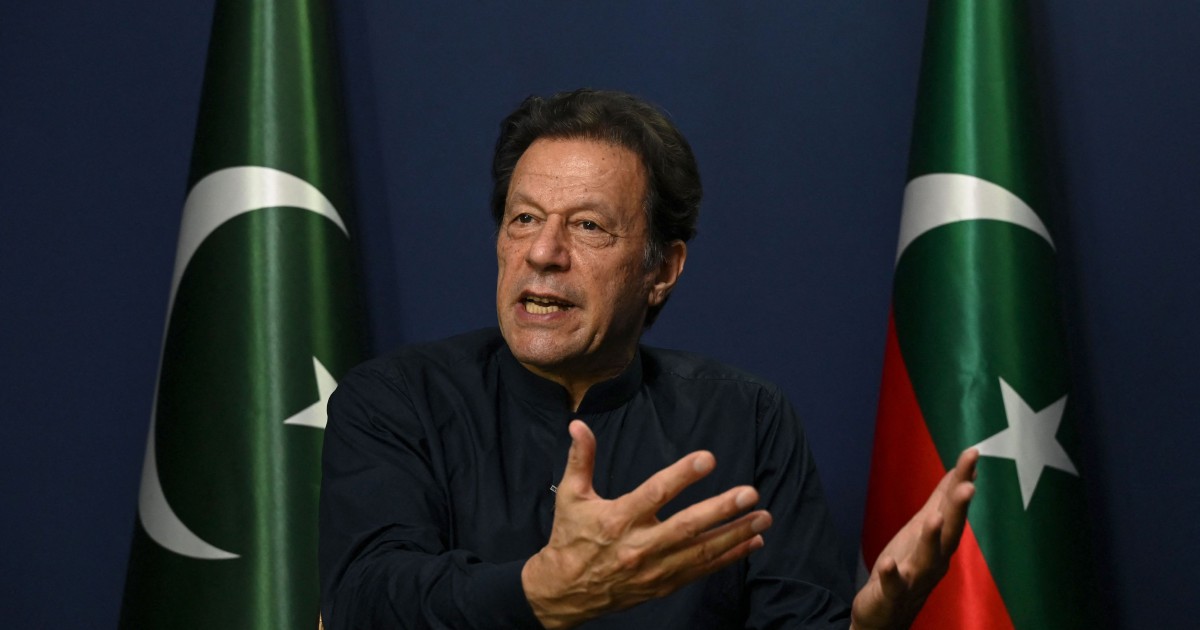
Pakistan's Supreme Court issued a directive on Tuesday mandating the transfer of former Prime Minister Imran Khan from his jail cell to hospital care, according to an announcement by his Pakistan Tehreek-e-Insaf party. The ruling represents a significant development in the high-profile detention of one of South Asia's most polarizing political figures and marks a partial victory for his supporters who have long campaigned for improved medical oversight during his incarceration.
The move comes after sustained pressure from the PTI, Khan's family, and international observers who have voiced concerns about his wellbeing while in custody. The party and his relatives have repeatedly alleged inadequate medical attention during his imprisonment, contending that his health has deteriorated under the conditions of jail confinement. The Supreme Court's intervention signals judicial acknowledgment that Khan's medical needs warrant specialized hospital-level care rather than the facilities available within the prison system.
Imran Khan, who served as Prime Minister from 2018 to 2022 before his government collapsed amid political turmoil and economic difficulties, has emerged as a leading opposition voice in Pakistan's fractious political landscape. His detention has proven deeply divisive domestically, with his supporters viewing it as politically motivated persecution, while the government has countered that he faces legitimate legal charges. The former cricket star has maintained his innocence across multiple cases filed against him since his arrest last year.
The Supreme Court's order reflects the judiciary's growing concern about detention procedures and humanitarian considerations, even amid Pakistan's complex political divisions. Courts in Pakistan have periodically intervened in high-profile cases to ensure basic standards of care and due process, though such interventions have sometimes been criticized as inconsistent or politically influenced depending on the circumstances and individuals involved. This particular ruling underscores the institution's role in checking executive power during periods of acute political tension.
The PTI party has framed the hospital transfer as validation of their long-standing grievances about Khan's treatment while imprisoned. Party officials and family members have consistently documented his reported health issues, arguing that confinement in jail conditions has prevented adequate medical evaluation and treatment. The Supreme Court's decision effectively acknowledges these complaints warrant institutional response, regardless of the underlying legal merits of the cases against him.
For Malaysia and the broader Southeast Asian region, Pakistan's judicial developments carry implications for understanding how regional democracies handle opposition figures and detentions. Malaysia has its own contentious history regarding the treatment of political opponents in custody, making the Pakistani precedent relevant to ongoing regional conversations about justice system independence and the protection of fundamental rights. The Supreme Court's willingness to intervene demonstrates how courts can assert themselves even amid severe political polarization.
The hospital transfer also raises practical questions about Khan's continued confinement. Pakistani law permits extended medical leave for detainees with serious health conditions, and hospital admission could potentially provide opportunities for legal challenges to his detention or temporary release on medical grounds. His lawyers are likely to pursue such avenues, making the hospital setting a potential turning point rather than merely a humanitarian adjustment to existing custody arrangements.
Khan's political movement has gained considerable momentum among younger Pakistanis and portions of the middle class who view him as a reformist challenge to the country's traditional power establishment. His detention has only amplified his symbolic importance within his party, transforming him into a rallying point for criticism of judicial and military influence in civilian governance. The Supreme Court order, while seemingly procedural, thus carries significant political weight in Pakistan's ongoing struggle over democratic legitimacy and institutional accountability.
The trajectory of Khan's legal cases remains uncertain. Multiple courts have previously rejected bail petitions, and charges span everything from violating security laws to financial impropriety. However, the Supreme Court's intervention on medical grounds suggests the judiciary recognizes limits to how extensively the state can maintain detention without adequate safeguards. Hospital care creates an environment more amenable to judicial scrutiny and public visibility compared to jail confinement, potentially emboldening his legal team to pursue additional petitions for bail or case dismissal.
The broader implications for Pakistan's political system rest on whether the Supreme Court's intervention foreshadows deeper judicial reconsideration of Khan's detention and trials, or whether it represents a limited humanitarian adjustment within a framework of continued prosecution. Either scenario will likely shape Pakistan's political dynamics heading into upcoming elections and legislative debates about institutional reform, while setting precedents that could influence how courts across South Asia approach detention of opposition figures.
International attention on Khan's case has remained persistent, with rights organizations and Western governments occasionally commenting on his treatment and the transparency of his trials. The hospital transfer may serve to quiet some international criticism while maintaining Pakistan's ability to prosecute the cases against him. The Supreme Court's order thus demonstrates judicial pragmatism in an intensely polarized environment where every decision invites accusations of political bias from one faction or another.

