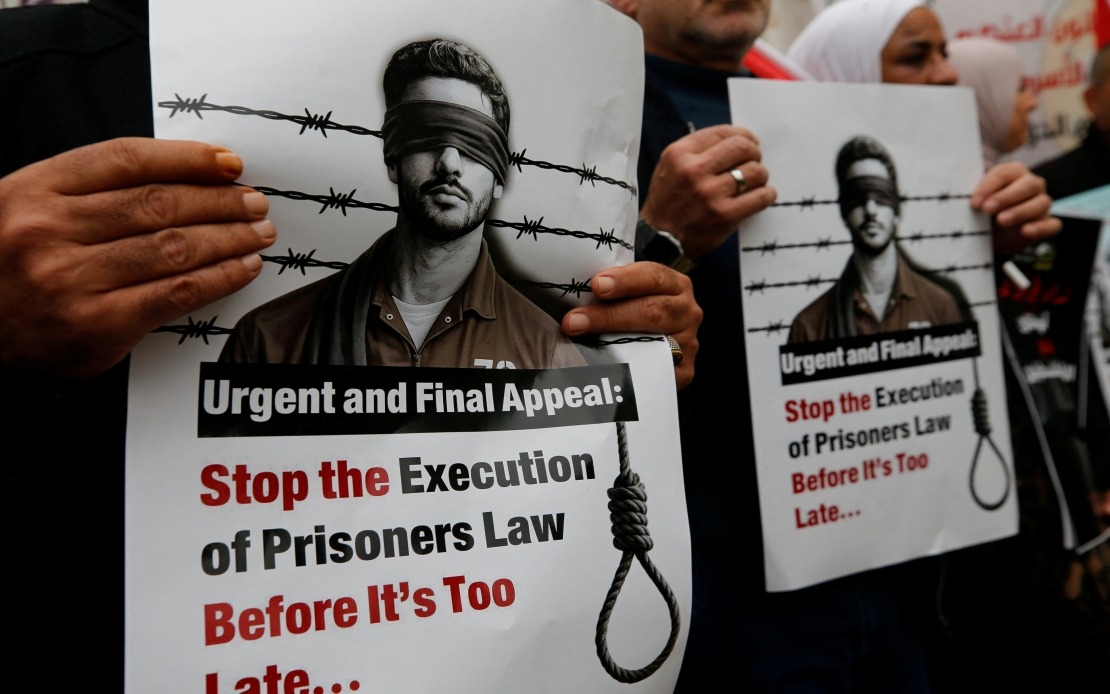
The Palestinian Prime Minister's Office has issued a comprehensive situation report documenting what it characterises as persistent and systematic human rights violations against Palestinian detainees held in Israeli prisons. Released on June 30, the Situation Report #92 covering the period of June 22 to 29, 2026, contains detailed allegations spanning detention practices, prison conditions, and the physical and psychological toll on those held within the Israeli penal system.
According to the Palestinian government's documentation, detainees have been subjected to various forms of physical abuse throughout their confinement. The report identifies specific methods including beatings, prolonged stress positions, and electrocution as part of interrogation and punishment regimes. Additional claims include sleep deprivation tactics, starvation practices, and allegations of sexual violence. These assertions, if substantiated, would constitute grave breaches of international humanitarian law and the Geneva Conventions, which establish baseline protections for prisoners regardless of conflict circumstances.
Beyond acute physical abuse, the Palestinian authorities have highlighted systemic failures in prison administration and healthcare provision. The report documents conditions it deems fundamentally inhumane, noting inadequate food and water supplies, what it describes as deliberate disease transmission, and systematic denial of essential medical treatment. Such allegations suggest a pattern that extends beyond individual incidents to represent institutional policy, a distinction that carries significant implications under international law regarding command responsibility and institutional accountability.
The detention figures presented in the report underscore the scale of the issue. More than 3,376 Palestinian administrative detainees remain incarcerated without formal charges or judicial proceedings, a practice that raises concerns regarding due process and the right to trial. Particularly troubling within these figures are the 360 Palestinian children documented as being held in custody, raising additional concerns under the Convention on the Rights of the Child and international standards protecting juvenile detainees. The broader West Bank detention population, including occupied Jerusalem, reportedly exceeds 9,500 individuals.
The situation of detained pregnant women constitutes another focal point in the report. Three pregnant Palestinian women currently in custody face compound vulnerabilities, according to the documentation. The allegations include inadequate prenatal healthcare, starvation conditions, humiliation, harsh interrogation practices, and forced strip searches. These claims, if accurate, represent a particularly egregious category of abuse given the heightened vulnerability of pregnant individuals and the international protections afforded to them under multiple humanitarian instruments.
The psychological and physical aftermath of detention emerges as a significant concern in the report's assessment of released detainees. Hundreds of former prisoners reportedly exhibit severe trauma manifestations, including complex post-traumatic stress disorder and physical disabilities resulting from torture and abuse. More alarmingly, the report documents cases of detainees dying shortly after release, with investigators attributing these deaths to the accumulated effects of abuse endured during incarceration. Such outcomes highlight the potentially irreversible damage inflicted through detention practices.
The report situates the detention issue within the broader context of casualties and displacement resulting from the Gaza conflict that intensified from October 2023 onwards. According to the Palestinian government's compilation, at least 73,054 Palestinians have been killed in Gaza during this period, including a documented 21,638 children, with a further 173,480 individuals injured. An additional 11,200 Palestinians remain classified as missing. These figures encompass significant losses among healthcare providers, with 1,700 health workers killed, and journalists, with 262 media workers documented as deceased. The scale of these losses contextualises the detention situation as one element within a broader humanitarian crisis affecting Palestinian civilians.
The West Bank situation, while distinct from Gaza's intensive military operations, demonstrates ongoing violence patterns. The report indicates that 1,175 Palestinians have been killed in the West Bank including occupied Jerusalem as of June 22, 2026, with 246 being children and 12,919 others injured. During the specific reporting week of June 22 to 28, the Palestinian authorities documented 362 military assaults, 47 shooting incidents apart from aerial bombardments, and 114 incidents attributed to settler violence. This weekly breakdown suggests an ongoing pattern of security incidents beyond detention issues.
Parallel to its human rights documentation, the Palestinian government has advanced administrative and governance initiatives. During its weekly cabinet session, Palestinian leadership reaffirmed commitments to institutional reform, emphasising improvements in governance structures and public financial management. President Mahmoud Abbas's approval of amendments to the Value Added Tax law has enabled the establishment of enhanced revenue administration mechanisms, including a newly formed Higher Council for Public Revenues. These reforms target modernisation of financial systems to align with international standards, combat tax evasion and smuggling, and sustain delivery of essential public services during conflict circumstances.
The Palestinian Cabinet has additionally prioritised digital transformation across governmental operations. The endorsement of the General Policy for the Telecommunications and Information Technology Sector covering 2026 to 2028 reflects strategic planning toward enhanced digital governance and public service delivery. This technology emphasis extends to healthcare administration, where the decision to transition from paper-based health insurance documentation to smart card systems signals investment in healthcare modernisation despite ongoing security challenges. Such initiatives suggest Palestinian institutional attempts to strengthen administrative capacity and governance resilience parallel to addressing immediate humanitarian concerns.
For Malaysian and Southeast Asian readers, the Palestinian situation represents a significant humanitarian concern within the broader Middle Eastern context that affects regional stability and global geopolitics. Malaysia's historically supportive stance toward Palestinian causes means these allegations warrant careful monitoring and documentation by international bodies. The detention figures and abuse allegations, if confirmed through independent investigation, would strengthen arguments for enhanced international oversight and intervention within existing UN and humanitarian frameworks. The distinction between administrative detention without trial and conventional imprisonment carries particular legal weight under international law, distinguishing the Palestinian complaint from routine incarceration issues.
The convergence of detention practices, alleged torture, and broad-scale casualties suggests a humanitarian crisis requiring comprehensive international response mechanisms. ASEAN nations, while maintaining diverse diplomatic relationships with regional actors, share common interests in upholding humanitarian standards and conflict resolution through established international legal frameworks. The Palestinian government's simultaneous focus on institutional reform and human rights documentation indicates efforts to strengthen both immediate advocacy and long-term governance capacity, suggesting a strategy combining crisis response with state-building objectives. These parallel initiatives reveal how humanitarian crises and administrative development intersect in conflict-affected territories.

