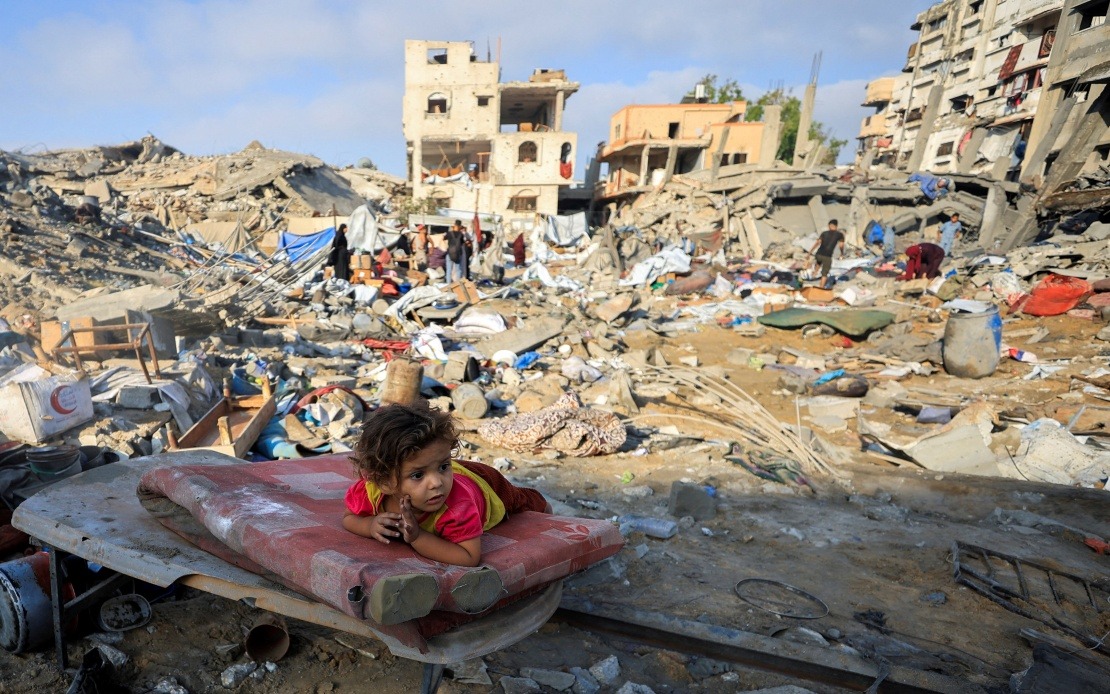
The Palestinian healthcare system has reached a breaking point, according to a statement issued Saturday by the Ministry of Health in Ramallah. Officials describe the current situation as the gravest challenge the sector has faced since its establishment, driven by three converging crises: the ongoing military operations in the Gaza Strip, intensifying violence affecting the occupied West Bank and Jerusalem, and a financial collapse within the Palestinian government that has left health institutions unable to function adequately. This convergence has created a humanitarian emergency that extends far beyond typical operational disruptions, threatening the very foundation of medical service delivery across Palestinian territories.
The healthcare infrastructure in Gaza has been particularly battered. Hospitals and clinics operate under what the ministry characterizes as extreme duress, with repeated military strikes targeting medical facilities themselves. Shortages have become acute across the board—medicines are scarce, medical equipment is depleted, and fuel reserves insufficient to power generators that keep life-support systems running. Healthcare workers describe conditions that force them to make impossible triage decisions daily, prioritizing which patients can receive treatment when resources simply do not stretch far enough. The psychological toll on medical staff compounds the logistical nightmare, as physicians and nurses continue showing up to work despite personal losses and displacement.
For Malaysian observers, the scale of this collapse offers sobering perspective. Southeast Asia's healthcare systems, while challenged in rural areas, benefit from relatively stable governance and supply chains. The Palestinian situation reveals how quickly modern medicine becomes primitive when civil infrastructure fails simultaneously with combat operations. Imagine a Malaysian hospital where fuel deliveries stop, where surgical supplies arrive unpredictably if at all, and where staff must treat hundreds of trauma cases with resources meant for dozens—this is the daily reality in Gaza's medical facilities.
The West Bank presents a different but equally corrosive challenge. Here, the problem is not primarily resource scarcity but rather movement restrictions and military interference. Ambulances face delays at checkpoints, making emergency response times unpredictable. Healthcare workers themselves struggle to reach hospitals safely. Military raids on health facilities have become routine enough that the ministry felt compelled to document them officially. This persistent insecurity undermines long-term planning and investment in healthcare infrastructure, creating a situation where even adequately supplied facilities cannot function normally.
Health Minister Majed Abu Ramadan has framed this crisis as more than a Palestinian problem, explicitly invoking international humanitarian law and the responsibilities of the global community. His statement suggests frustration that despite clear legal frameworks—the Geneva Conventions and their protocols provide explicit protections for medical facilities and personnel—enforcement mechanisms remain weak or absent. This argument resonates across the Global South, where nations frequently observe that powerful states can violate international law with relative impunity while weaker nations face intense scrutiny for minor infractions.
The ministry has made specific requests to international bodies including the United Nations, the World Health Organization, and the International Committee of the Red Cross. Beyond diplomatic appeals, it seeks practical interventions: establishment of humanitarian corridors guaranteeing safe passage for medical supplies and patients, regular medicine and fuel deliveries, and protection protocols for healthcare facilities and staff. These requests suggest a belief that international mechanisms, if activated, could still function meaningfully—though the ministry's need to repeat such appeals indicates previous efforts have proven insufficient.
A striking aspect of the ministry's statement concerns healthcare professionals who have departed Gaza. Rather than condemning them as deserters, officials acknowledge that many left for personal safety or to pursue education and careers, describing their exodus as a natural consequence of extraordinary circumstances. This nuanced position recognizes that asking medical professionals to work without resources, without safety, and without prospects for normal life exceeds reasonable expectation. It also acknowledges that Palestine loses critical human capital when trained doctors and nurses depart, hampering recovery once the immediate crisis ends.
The financial dimension warrants particular attention. The Palestinian Authority faces severe cash flow problems independent of the current conflict, rooted in long-standing fiscal disputes, aid dependencies, and structural economic weaknesses. When this pre-existing financial fragility combines with the emergency costs of treating mass casualties, healthcare budgets collapse entirely. Hospitals cannot pay staff reliably, cannot maintain equipment, cannot purchase supplies even when they are theoretically available for purchase. This suggests that even if military operations ceased immediately, the healthcare system would require substantial reconstruction and external financial support to restore basic functionality.
For the broader region, this crisis has implications beyond humanitarian concern. Healthcare system collapse in one territory destabilizes neighboring health systems when refugees flee seeking treatment, potentially straining resources in Egypt, Jordan, and Lebanese facilities already under stress. Additionally, the destruction of medical knowledge and institutional capacity in Palestine represents a loss to regional medical practice—decades of professional development and institutional learning are dissipating. When medical schools close, when research stops, when experienced clinicians emigrate, neighboring countries lose potential partners and peers.
The ministry's framing reveals underlying tensions in international humanitarian governance. Formal legal frameworks exist to prevent precisely these scenarios. The laws are clear; the violations are documented; yet the protection mechanisms have failed. This gap between legal aspiration and operational reality frustrates actors across the developing world, who observe that humanitarian law seems to offer protection primarily to those with powerful backers. The Palestinian Health Ministry's appeals thus carry an implicit critique: these institutions and laws exist, but without political will to enforce them, they amount to merely symbolic commitments.
Moving forward, the ministry has outlined a resilience strategy focused on managing available resources more efficiently, strengthening internal coordination, and mobilizing political and financial support. This represents acceptance of a grim reality—that restoration of normal conditions cannot be assumed as imminent, so the focus must shift to surviving the present abnormality. It implies planning for an extended period where the healthcare system operates far below adequate levels, attempting to minimize suffering with inadequate means rather than expecting restoration of normal service delivery.
The broader implication for Southeast Asia relates to systemic vulnerability. Even well-developed healthcare systems depend on stable supply chains, reliable electricity, physical security, and government financing. The Palestinian example illustrates how multiple simultaneous disruptions can overwhelm even essential services. Regional policymakers might consider what scenarios could similarly destabilize their own health systems, whether through armed conflict, economic collapse, or supply chain disruption, and what redundancies might provide resilience. The Palestinian crisis serves as a cautionary case study in how quickly healthcare can fail when multiple support systems deteriorate simultaneously.

