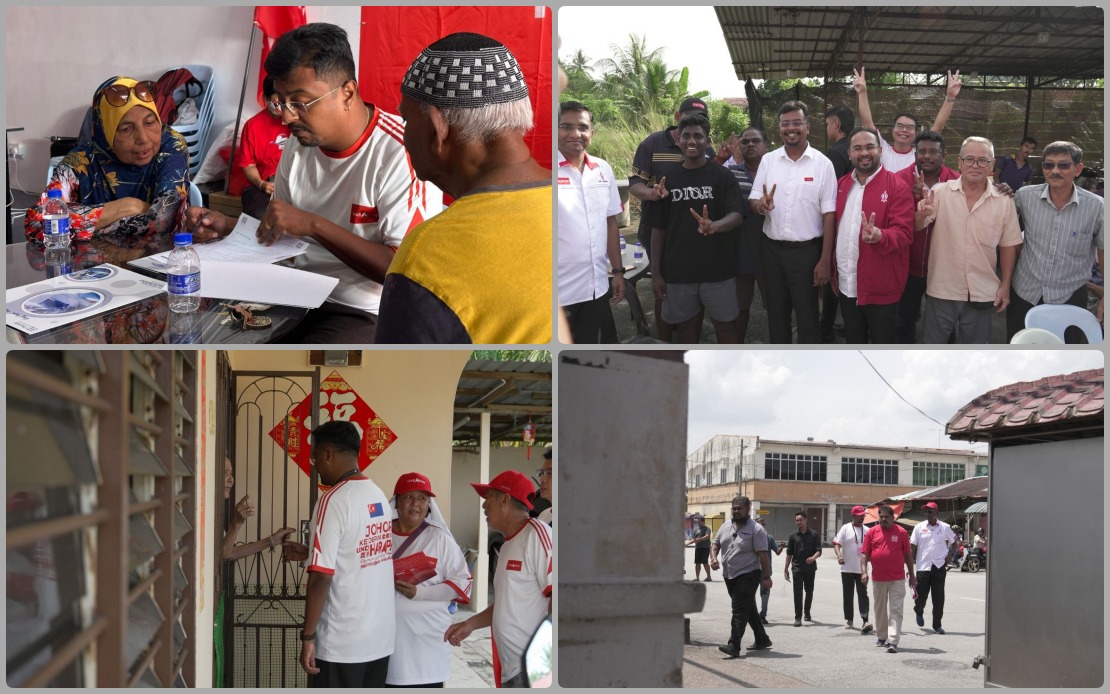
Dr. A. Ruban, the Pakatan Harapan candidate contesting the Paloh state assembly seat, was admitted to a private hospital in Batu Pahat on July 7 to undergo treatment for a recurrent slipped disc condition. The admission came just four days before the scheduled Johor state election on July 11, disrupting what had been an intensive ground campaign in the run-up to polling day.
The hospitalisation marks a significant interruption to Dr. Ruban's direct engagement with voters during a critical period of the state polls. His campaign manager, Abdul Majid Abd Aziz, explained that the medical issue stemmed from acute pain that had increasingly restricted the candidate's mobility since early morning, necessitating immediate hospital intervention. The condition, rooted in a pre-existing spinal vulnerability, had previously required surgical intervention.
According to campaign officials, the aggravation of Dr. Ruban's disc condition appears linked to the physical demands of election campaigning. The constant movement involved in walkabouts across the constituency, combined with the relentless schedule characteristic of state election campaigns, appears to have taken a toll on his health. Campaign fatigue and the compressed timeline of campaign activities likely contributed to the flare-up of a chronic condition that had remained relatively stable until the election season commenced.
Despite the hospitalisation, officials characterised Dr. Ruban's condition as non-critical, with expectations that discharge could occur within one to two days of admission. This timeline suggests the treatment is primarily focused on pain management and stabilisation rather than addressing a serious emergency, allowing for the possibility of his return to campaign activities, albeit potentially in a modified capacity, before voting day arrives.
The interruption to Dr. Ruban's physical presence on the ground prompted his campaign team to activate alternative strategies for maintaining voter engagement. The PH machinery in Paloh committed to sustaining community outreach efforts through other party functionaries and grassroots volunteers. Campaign messaging, including Dr. Ruban's policy positions and electoral manifesto, would continue circulating through these alternative channels, ensuring that his platform reaches voters even during his absence from public events.
The Paloh contest represents a four-way battle that reflects broader political dynamics in Johor. Competing against Dr. Ruban are D. Jeevakumar representing the Perikatan Nasional coalition, independent candidate G. Kamaleswaren, and the incumbent Lee Ting Han standing for Barisan Nasional. This multi-candidate contest suggests a fragmented political landscape in the constituency, where no single faction holds overwhelming dominance and where campaigning intensity from all sides remains high.
The timing of Dr. Ruban's hospitalisation underscores the physical and mental demands placed on political candidates during election campaigns across Malaysia. State elections compress extensive campaigning into short timeframes, requiring candidates to maintain punishing schedules of public appearances, community engagements, and logistical coordination. For candidates managing underlying health conditions, these pressures can precipitate medical complications, transforming campaign periods into particularly stressful phases.
Early voting for the Johor state election had already concluded on July 7, the same day as Dr. Ruban's admission, meaning a significant portion of voters had already cast ballots before his hospitalisation became public. This timing may have limited the potential electoral impact of the medical interruption, as early voters would have made their choices without knowledge of the incident. However, for voters planning to participate in the main polling day on July 11, the news of his health challenge during the campaign could potentially influence perceptions of his fitness for sustained service as an assemblyperson.
The incident also highlights practical considerations for election administration and campaign logistics. Political parties must balance the imperative to maintain candidate visibility and direct voter interaction with the need to ensure candidate welfare. When health crises emerge during campaigns, parties face difficult decisions about whether to project an image of unstoppable momentum or to transparently acknowledge medical challenges that might affect constituent services if elected. The PH approach—transparently communicating the hospitalisation while reassuring supporters about prognosis and campaign continuity—represents a calculated attempt to navigate these competing pressures.
For voters in Paloh, the incident introduces an unexpected variable into their electoral calculus during a state election already characterised by significant political contestation. While campaign teams can articulate platforms through various means, the direct personal engagement between candidate and voter remains a significant element of electoral communication. Dr. Ruban's absence, even if temporary, reduces opportunities for direct personal impression-making during the final days before voting. Whether this translates into electoral consequences will depend on how effectively his team mobilises alternative campaign infrastructure and whether voters prioritise direct candidate engagement in their voting considerations.
The broader context of the 16th Johor state election encompasses significant political stakes for all participating coalitions. The PH campaign in Paloh operates within this larger competitive framework, where every seat matters for the final composition of the state assembly. The interruption to Dr. Ruban's campaign represents not merely a personal health matter but a tactical challenge for PH's broader electoral strategy in the state, requiring rapid organisational adaptation to maintain momentum in a closely contested race.

