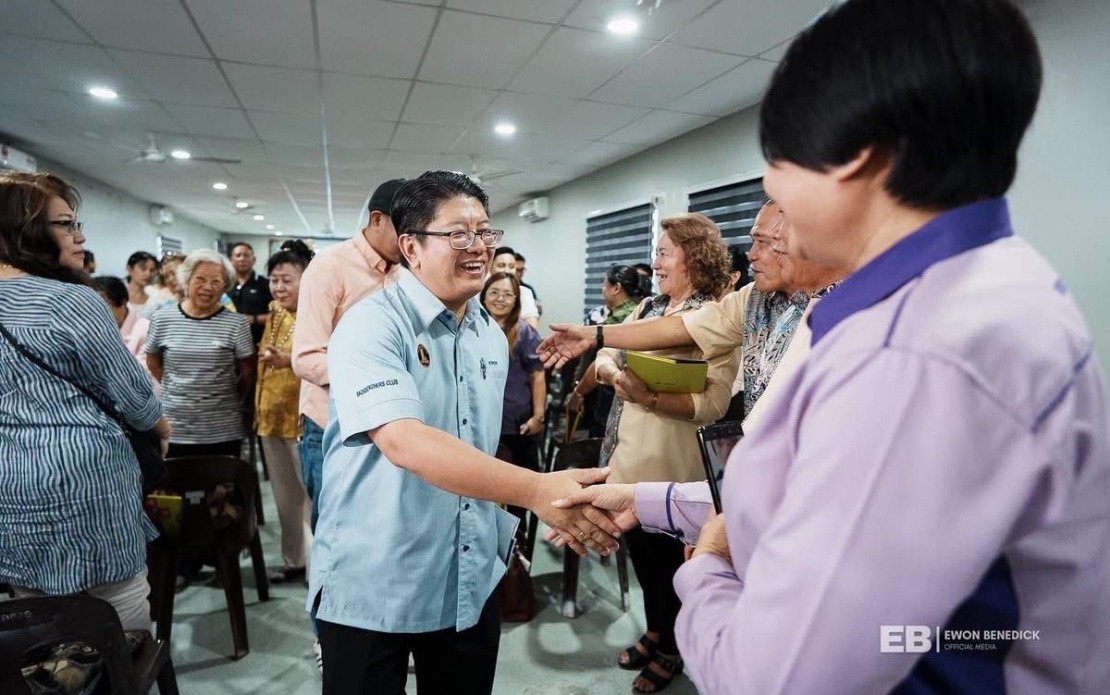
Datuk Ewon Benedick, Sabah's Deputy Chief Minister III, has sounded an urgent warning to parents about the growing threat of mule account syndicates targeting young Malaysians. Speaking at a digital parenting seminar in Penampang, the Industrial Development, Entrepreneurship and Transport Minister emphasised that allowing others to use personal bank accounts—a practice commonly exploited by financial crime networks—can expose teenagers to serious legal consequences, even if they are unaware of how their accounts are being used.
The issue strikes at a critical vulnerability in Malaysia's digital economy. Mule account schemes operate by recruiting individuals, often teenagers attracted by promises of easy money, to lend their banking credentials to criminal syndicates. These accounts subsequently become conduits for fraud, money laundering, and other unlawful financial activities. What makes this particularly insidious is that account holders may face criminal prosecution regardless of their knowledge or complicity, transforming unwitting teenagers into unwilling accomplices in serious financial crimes.
Ewon, who also serves as Member of Parliament for Penampang, framed the issue within the broader context of digital transformation in Malaysia. He noted that technology has fundamentally altered how citizens engage in financial transactions, business operations, and even government services. Quick response code payments have become ubiquitous in Malaysian markets, from wet markets to formal retail environments, normalising digital financial interactions across society. Similarly, entrepreneurship grants and cooperative funding—including federal government schemes—increasingly operate through online application portals, making digital literacy a prerequisite for economic participation.
However, this digital convenience carries hidden risks that many families do not adequately appreciate. The proliferation of digital payment channels and online banking services has created unprecedented opportunities for criminals to exploit the accounts of unsuspecting citizens. Young people, often less experienced in financial matters and more susceptible to persuasion or peer pressure, represent particularly attractive targets for mule account recruiters who operate through social media and messaging platforms. The psychological manipulation employed by these syndicates—offering quick cash rewards or leveraging social proof—can override the protective instincts of even reasonably cautious teenagers.
Ewon stressed that parental education represents the first line of defence against this threat. Parents must actively engage with their children about the dangers posed by sharing banking information, regardless of apparent legitimacy or the relationship to the person making the request. He underscored the importance of understanding not merely how to use digital technology, but also comprehending the security risks and criminal threats that accompany it. This knowledge gap between technical proficiency and security awareness has become a defining feature of digital vulnerability among Malaysian youth.
The Digital Parenting Programme Series IV, organised by the National Population and Family Development Board (LPPKN), represents a coordinated government effort to address this gap. By bringing together parents and community members for structured discussions about digital risks, these initiatives aim to build collective protective capacity at the household level. The programme reflects official recognition that technological change has outpaced public understanding of associated dangers, creating a vacuum that predatory actors readily exploit.
Ewon acknowledged the inherent tension between harnessing technology's benefits and managing its risks. He cautioned against excessive smartphone dependency among young people, noting that digital engagement should not displace fundamental responsibilities and essential life experiences. The challenge for modern parents is calibrating technology use—encouraging sufficient digital competence to function in an increasingly online society while preventing the digital immersion that clouds judgment about personal and financial boundaries.
The warning carries particular resonance for Southeast Asian economies where rapid digitalisation has outpaced regulatory and educational responses. Malaysia, with its sophisticated banking infrastructure and high internet penetration, has become attractive to international criminal networks seeking to establish mule networks. The ease with which digital accounts can be opened, combined with limited verification procedures for certain transaction types, creates conditions favourable to exploitation. Teenagers in urban areas with access to formal financial services represent ideal targets—they possess the banking credentials that international money laundering operations require.
Ewon positioned his advocacy within his broader portfolio responsibilities, linking parental guidance to entrepreneurship and economic development. He noted that legitimate digital financial tools should empower young Malaysians to participate in the digital economy as business owners and service providers, not as unwitting vehicles for criminal enterprise. This distinction between authentic digital opportunity and exploitative schemes represents a crucial pedagogical challenge that parents must navigate.
The deputy chief minister committed to continued support for parenting initiatives, characterising such engagement as consistent with his personal responsibilities as a father. This framing normalises digital parenting as an essential modern parental competency, equivalent to traditional guidance on physical safety or academic achievement. As digital threats evolve, this commitment to ongoing education and community dialogue becomes increasingly vital for protecting vulnerable young people from sophisticated criminal recruitment tactics.

