When Europe's summer heatwave descended on Paris during Couture Week, the fashion world's most glamorous event became an unexpected laboratory for style innovation. The seasonal gathering, traditionally a showcase for extravagance and meticulous tailoring, unfolded this year under intensely challenging climatic conditions that forced attendees to reconsider how luxury dressing functions in extreme heat. The collision between haute couture's exacting standards and the practical demands of sweltering weather created a compelling narrative about modern fashion pragmatism—one with lessons extending far beyond the French capital's front rows.
The heatwave's intensity was not unprecedented for Paris, yet its timing during one of fashion's most formal occasions highlighted a growing reality facing the industry: climate change is forcing permanent shifts in how designers and celebrities approach dressing. The conditions that had already tested menswear fashion week earlier in the season persisted through the couture calendar, leaving no respite for attendees juggling professional obligations with personal comfort. For many celebrities whose reputations depend partly on their sartorial choices, the heat presented a genuine challenge—how to maintain status and glamour while acknowledging physical reality.
The most striking trend that emerged was the embrace of structural simplicity paired with premium materials. Rather than abandoning elegance, stars shifted toward silhouettes that inherently suited warmer conditions. Oversized tailoring, famously championed by artists like Bad Bunny and Hudson Williams, proved surprisingly sophisticated in this context. The loose, flowing proportions associated with contemporary menswear allowed for air circulation while avoiding the stuffiness of traditional formal dressing. Many male attendees abandoned the conventional practice of layering, instead showcasing crisp linen shirts or going bare-chested beneath lightweight jackets, a choice that would have seemed scandalous at previous couture seasons but felt entirely appropriate given circumstances.
For women navigating the week, the exposed shoulder silhouette emerged as something far more interesting than a trend statement—it represented a practical evolution. While fashion typically frames bare shoulders as deliberately provocative, in this instance the exposure served primarily as thermal management. Tan Sri Michelle Yeoh's understated black design exemplified this shift, demonstrating that elegance need not depend on traditional coverage. The approach distinguished itself from summer resort wear through fabric quality and construction precision, maintaining couture's fundamental promise of superior craftsmanship even as hemlines rose and shoulder coverage fell.
Fabric selection became genuinely strategic rather than merely aesthetic. Silk and its variants dominated attendees' choices, offering the luxury industry's oldest solution to heat: breathable natural fibers with inherent prestige. The choice reflected both practical wisdom and fashion sophistication—silk photographs beautifully, drapes with incomparable fluidity, and genuinely performs better in high temperatures than synthetic alternatives. This return to fundamental fiber science demonstrated that sometimes the most innovative fashion solutions involve remembering why certain materials have remained fashionable for centuries. Lightweight constructions, previously considered somewhat pedestrian for couture events, suddenly represented thoughtful design choices rather than compromises.
Accessories took on unexpected importance as functional elements rather than mere embellishment. Songwriter Ejae's simple black folding fan provided perhaps the most literal example of practicality asserting itself within fashion's aesthetic framework. The accessory served no purpose beyond cooling, yet its integration into an otherwise formal ensemble illustrated how contemporary fashion accepts utility as legitimate. This represents a subtle but significant shift from earlier decades when acknowledging any practical need was viewed as admission of aesthetic failure. The folding fan, whether intentionally or not, referenced both historical fashion precedent and modern realism.
Sundresses and their couture interpretations offered another window into how formal fashion adapts to climate necessity. Priyanka Chopra's scalloped gown captured the essential summer spirit—structured enough for couture credibility yet fundamentally breathable and light. The garment category, long relegated to casual contexts, found unexpected legitimacy within the highest echelons of fashion. The scalloped detailing provided visual interest and movement, suggesting that sophistication in heat-appropriate dressing involves thoughtful detail work rather than surface-level exposure.
Shorter hemlines proliferated throughout the week, a practical choice that also aligned with broader contemporary fashion movements toward freedom of movement. The combination of reduced fabric volume and heightened hem lengths created silhouettes that functioned simultaneously as elegant statements and pragmatic responses to temperature. This dual functionality—where practical necessity aligns with aesthetic modernity—represents how climate constraints can drive innovation rather than restriction. The fashion industry, often criticized for ignoring real-world limitations, demonstrated surprising adaptability when conditions demanded it.
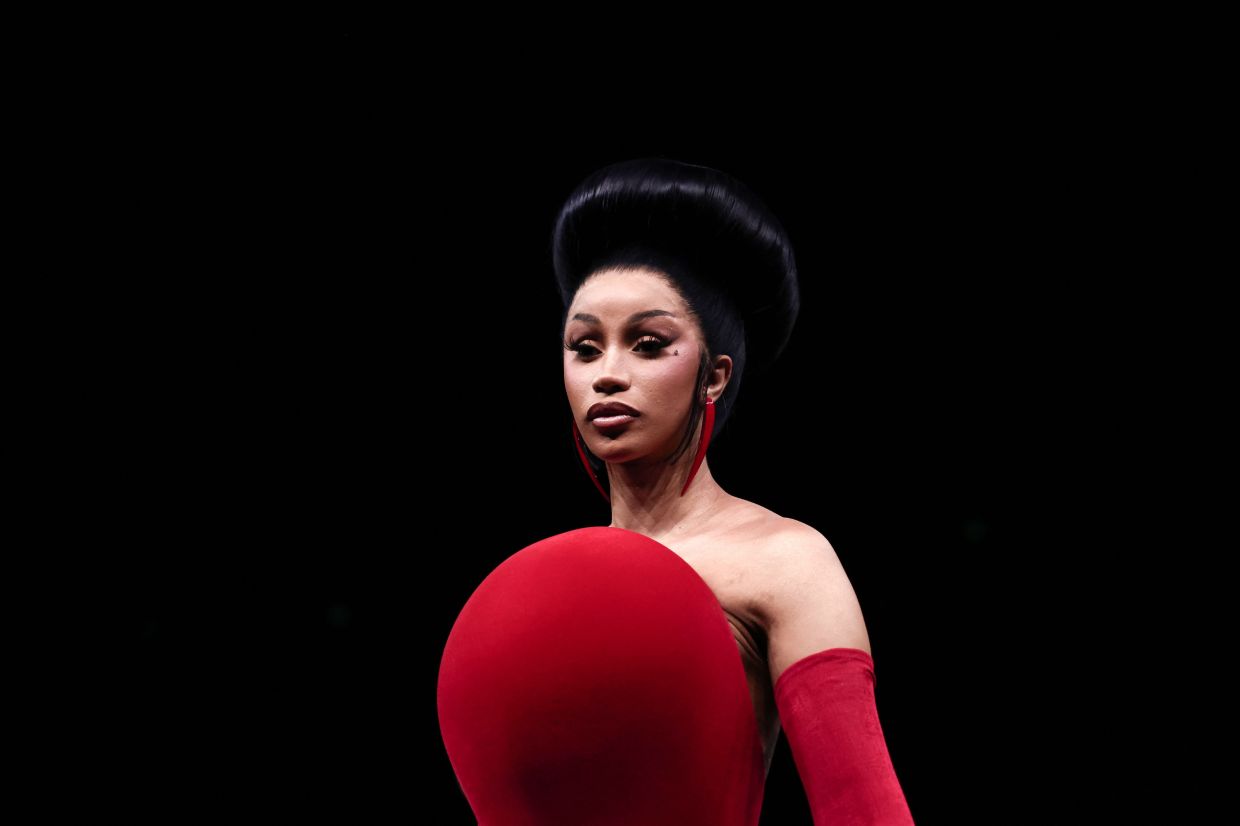
Cardi B's notably sculptural and fitted ensemble stood apart precisely because it prioritized visual impact over temperature consideration. The avant-garde approach reminded observers that fashion's highest echelons always maintain space for pure spectacle, regardless of circumstance. Her commitment to dramatic silhouette and unconventional construction underscored that couture ultimately serves multiple purposes simultaneously—some designers and wearers will always choose artistic statement over comfort, heat be damned. The exception proved the rule: most attendees, including those with sufficient resources to ignore practical concerns, chose instead to engage thoughtfully with climate realities.
Paris Couture Week's evolution under extreme heat suggests broader implications for fashion's future. As climate patterns shift globally, events in all regions may face similar challenges. The solutions demonstrated this season—premium natural fibers, considered silhouettes, reduced layering, strategic exposure—will likely become permanent rather than temporary adaptations. For Malaysian and Southeast Asian fashion professionals, the Paris example carries particular relevance, as tropical and subtropical climates have always required such pragmatism. International fashion weeks may increasingly learn from regional expertise that understands hot-weather dressing as fundamental to design rather than an occasional accommodation.
The week ultimately revealed that haute couture need not abandon its fundamental values when climate conditions change. Elegance survived; luxury persisted; craftsmanship remained paramount. What transformed was the specific expression of these ideals, adapted to acknowledge contemporary reality. As fashion's most conservative sector demonstrated unexpected flexibility, the broader industry received a quiet lesson: true sophistication involves responding intelligently to circumstance rather than rigidly adhering to precedent. Paris Couture Week 2024 will likely be remembered not for particular collections but for how the fashion world, faced with genuine constraint, chose adaptation over denial.

