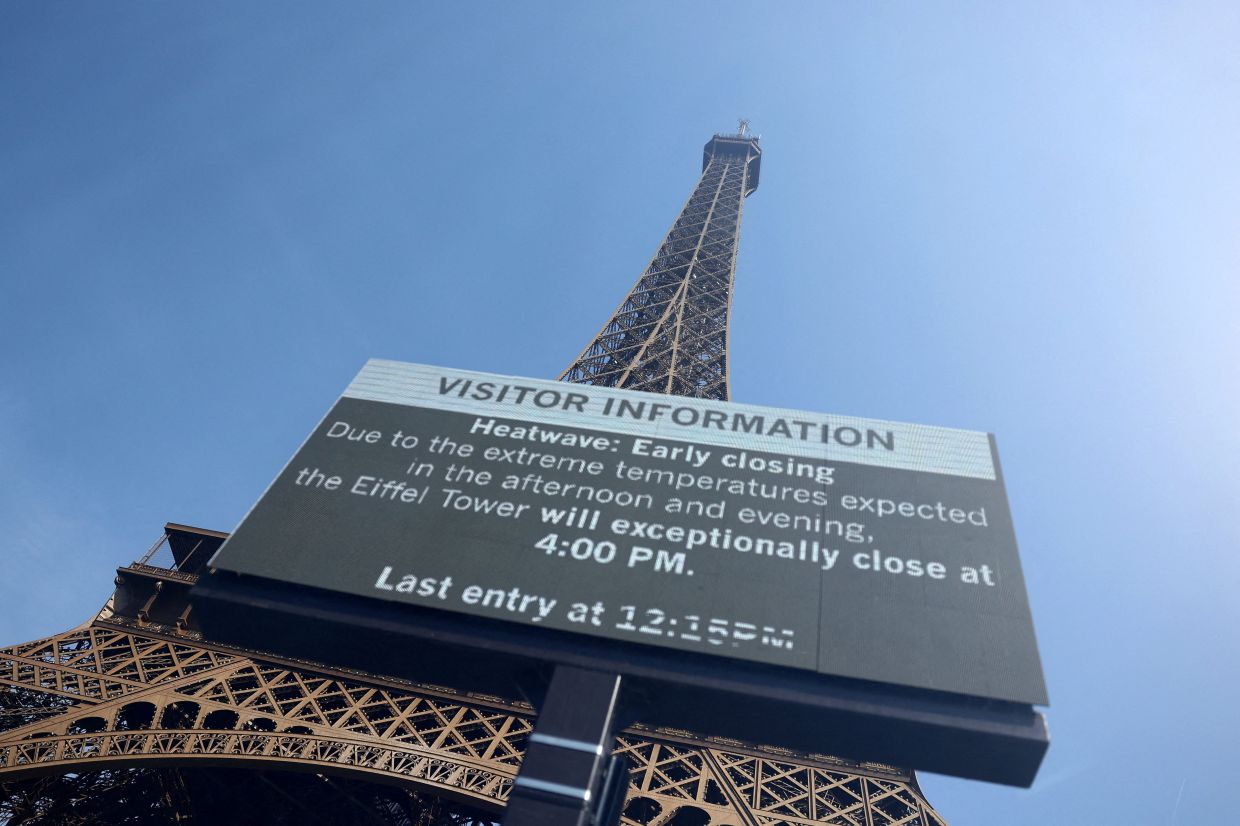
A punishing heatwave engulfing France this week has upended holiday plans for thousands of international visitors, forcing the unprecedented early closure of Paris's most emblematic attractions as temperatures soared to their highest levels since records began over seven decades ago. The combination of sweltering streets and shuttered monuments has transformed what should be summer peak season into a logistical nightmare for tour operators and a deeply frustrating experience for visitors who have spent months—and considerable savings—preparing their trips to the French capital.
The impact on tourism has been both immediate and severe. The Eiffel Tower, which ordinarily welcomes seven million visitors annually and typically remains open past midnight during the busy summer months, announced an exceptional closure at 4pm on June 23, the day France recorded its hottest temperatures since systematic weather measurements began in 1947. Officials indicated that further reductions to opening hours were highly probable in the coming days. The Louvre Museum, drawing approximately nine million annual visitors and home to priceless masterpieces including Leonardo da Vinci's Mona Lisa, also implemented early closing protocols. Management acknowledged that the sprawling palace—accumulated over centuries through the vision of successive French monarchs and presidents—was fundamentally "not sufficiently adapted to climate change," a candid admission that exposes the vulnerability of heritage infrastructure to extreme weather conditions.
The disruption has created a cascade of cancellations affecting the broader tourism ecosystem. Maite Blazques, a 35-year-old Spanish nurse from Madrid, exemplifies the personal toll of these closures. Having spent months carefully saving to bring her six-year-old son to Paris, she found herself forced into a complete reimagining of their holiday itinerary. The river cruises along the Seine, the guided walking tours through the historic Marais district, and the anticipated ascent to the Eiffel Tower's upper levels—experiences that define a first visit to Paris for many families—all evaporated. Speaking quietly while holding her son's hand, she described the emotional weight of these cancellations, illustrating how extreme weather increasingly threatens one of the world's most important tourism destinations.
American tourist Tamara Dancer experienced similar disappointment when her scheduled guided tour was cancelled on Tuesday afternoon, describing the disruption as genuinely hurtful to her vacation experience. The sense of letdown among visitors extends far beyond those with cancelled bookings. John Beeler, a 45-year-old American engineer, and his wife found themselves wilting under conditions they had not anticipated. Dressed in a fisherman's hat and clutching a small fan in a desperate attempt at temperature management, he articulated a sentiment shared by many: "Visiting Paris in this heat is awful." The experience extended beyond outdoor exposure—even the city's celebrated metro system and rental accommodation offered no respite from the oppressive conditions, forcing the couple to relocate to an air-conditioned hotel.
The fundamental problem facing Paris during this extreme weather event relates to how the city itself functions as a tourist destination. Drake Winners, a 66-year-old retiree from London, crystallised this challenge succinctly: discovering Paris through walking—the traditional, essential mode of experiencing the city's neighbourhoods, architecture, and street-level culture—becomes physically impossible during dangerous heat. This constraint eliminates a core component of the Paris experience that distinguishes it from other heritage cities. The Louvre remains accessible due to its climate-controlled interior spaces, but such refuges are limited, and many of Paris's most celebrated attractions are outdoor or partially exposed sites with minimal environmental controls.
The broader context of these closures reflects systemic infrastructure vulnerabilities that extend well beyond Paris. The Louvre's recent announcement specifically cited its inadequate adaptation to climate change, a statement that carries implications for cultural institutions across Europe. In the past year alone, the Louvre has confronted multiple crises: a brazen jewellery theft valued at US$100 million (RM414 million), a significant water leak, and various maintenance issues. These problems, combined with thermal vulnerabilities, paint a picture of aging infrastructure struggling under mounting pressures. The palace's centuries-long accumulation—a source of its cultural significance—has left it with structural constraints unsuitable for contemporary environmental extremes.
The geographic scope of disruption is extensive, with more than half of mainland France remaining under the weather service's highest alert level. This widespread danger has prompted warnings at attractions far beyond Paris's immediate vicinity. Mont Saint-Michel, the spectacular island fortress in Normandy that ranks among France's most visited tourist sites outside the capital region, issued an explicit advisory asking visitors to postpone their visits during the red alert period. Such recommendations, while sensible from a public safety perspective, represent an unprecedented level of tourism disruption that cascades through regional economies dependent on summer visitor spending.
For Malaysia and Southeast Asia's growing base of outbound travellers increasingly visiting Europe, this situation presents both immediate practical considerations and longer-term questions about climate resilience. Many Malaysian tourists, particularly those planning carefully budgeted family holidays, structure their European itineraries around reliable access to marquee attractions. The Paris heatwave demonstrates that even the world's most famous destinations can become unexpectedly inaccessible due to weather extremes. Tourism agencies advising Malaysian clients should anticipate similar disruptions becoming more frequent across heritage sites in Europe, and should incorporate climate adaptability into destination selection and itinerary planning.
The heatwave episode also underscores how climate change increasingly shapes the competitive landscape of global tourism. Cities and regions that can maintain visitor access and comfort during temperature extremes gain competitive advantage. Paris's management of this crisis—including the candid admission that its infrastructure is unsuitable for climate change—reveals both operational challenges and transparency about institutional limitations. This honesty, while refreshing, also highlights the massive capital investments required to retrofit centuries-old monuments with adequate climate controls, investments that must be weighed against heritage preservation concerns.
Looking forward, the experience suggests that the concept of a "tourist season" may require redefinition in an era of extreme weather. The traditional European summer season, historically the peak period for visitors from around the world, may increasingly encounter conditions that render some destinations temporarily inhospitable. This could shift tourism patterns toward shoulder seasons or fundamentally alter how international visitor flows distribute across the year. For travel planners, particularly those from tropical regions accustomed to managing heat, the irony is notable: the famous summer months in Paris, long considered ideal visiting season, are becoming increasingly unreliable.

