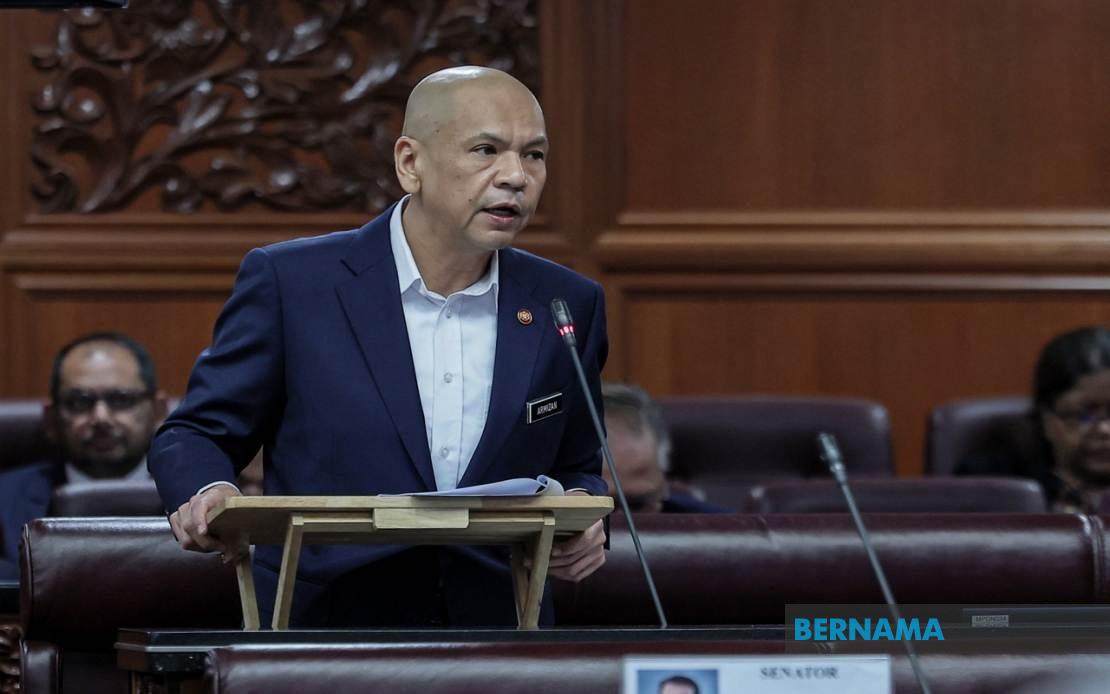
Malaysia's legislative framework for competition oversight is poised for substantial expansion following the tabling of two amendment bills in Parliament this week. The Competition (Amendment) Bill 2026 and the Competition Commission (Amendment) Bill 2026, both presented by Domestic Trade and Cost of Living Minister Datuk Armizan Mohd Ali, represent a comprehensive overhaul of the nation's competition enforcement architecture. Both measures are expected to proceed to second reading during the current parliamentary session, indicating government commitment to expediting these reforms through the legislative process.
The primary Competition Bill seeks to modernise the Competition Act 2010 by strengthening the investigative and enforcement capabilities of the Malaysia Competition Commission. This expansion comes amid growing concerns about market concentration and anti-competitive practices affecting Malaysian consumers and businesses. By enhancing MyCC's toolkit, lawmakers aim to address gaps that have emerged in enforcement over the past decade, particularly in cases involving coordinated behaviour and market manipulation that proved difficult to prosecute under existing provisions.
One of the Bill's most significant provisions, contained in Clause 3, fundamentally widens MyCC's jurisdictional reach. Rather than restricting oversight to commercial activities, the amendment extends competition law principles across all economic activities. This shift acknowledges the reality that anti-competitive conduct increasingly occurs outside traditionally defined commercial spheres, including sectors where government entities or quasi-public bodies operate. For Malaysian consumers and businesses across manufacturing, services, and digital platforms, this expanded scope means more comprehensive protection against unfair market practices.
Clause 7 grants MyCC enhanced information-gathering powers, enabling the Commission to compel production of data and documents from any individual or government entity during market reviews. This provision addresses a persistent frustration for competition authorities worldwide: the difficulty in obtaining timely information from reluctant parties. By clarifying this power explicitly, the amendment removes ambiguity that previously allowed some entities to resist requests under technical interpretations of the legislation. Such powers are particularly critical when investigating suspected cartels or monopolistic behaviour that relies on concealment of communications and pricing data.
The Bill also introduces criminal penalties for deliberate obstruction of MyCC's work. Clause 13 criminalises the intentional destruction, concealment, defacement or alteration of evidence with the purpose of misleading the Commission or impeding investigations and enforcement. This represents a hardening of Malaysia's approach to competition enforcement, bringing domestic law into closer alignment with international standards. Countries like Australia and Singapore have long imposed such penalties, recognising that effective competition law requires protection against evidence tampering and witness intimidation.
Parallel reforms contained in the Competition Commission (Amendment) Bill 2026 strengthen the institutional independence and decision-making processes of MyCC itself. Clause 8 clarifies the Commission's advisory role, explicitly empowering MyCC to counsel the government, public authorities, and regulatory bodies on competition implications of proposed policies and programmes. This acknowledgement of MyCC's policy expertise recognises that competition considerations should inform regulatory design across sectors, from telecommunications to retail.
Clause 10 introduces flexible delegation provisions, allowing MyCC's chairman to distribute functions among committees, officers, and employees. This modernisation facilitates faster decision-making and allows the Commission to respond proportionately to cases of varying complexity. Rather than centralising authority at the top, the amendment recognises that an effective competition agency requires distributed decision-making capacity comparable to leading international authorities.
Perhaps most significantly for governance transparency, Subclause 12(a) relocates appointment authority for MyCC officers from government hands to the Commission itself, subject to the chief executive's recommendation. This change insulates the agency from political pressure regarding personnel decisions, a concern that has occasionally clouded competition enforcement in emerging markets. By vesting hiring authority in MyCC's leadership, the amendment strengthens the institutional independence essential for credible competition law enforcement, particularly in cases involving politically connected businesses.
For Malaysian business, these amendments carry mixed implications. Companies engaged in legitimate competitive activity face no direct burden; indeed, they benefit from stronger enforcement against rivals engaging in cartels or predatory practices. However, enterprises that have previously exploited ambiguities in the current framework or relied on difficulty in evidence-gathering may face heightened compliance obligations. Multinationals operating in Malaysia should ensure competition law training extends throughout their organisations, as the expanded scope means activities previously thought outside competition law's reach may now attract scrutiny.
The timing of these reforms reflects Malaysia's positioning within the regional and global competition landscape. The Association of Southeast Asian Nations has increasingly emphasised competition law harmonisation, and Malaysia's modernisation efforts align with reforms recently undertaken in Thailand, Indonesia, and Vietnam. Harmonisation reduces compliance complexity for regional businesses while supporting the objective of creating a more competitive ASEAN market that benefits consumers through lower prices and greater innovation.
These amendments also respond to practical enforcement challenges that have emerged over the past fifteen years of competition law application in Malaysia. Courts and MyCC have encountered situations where existing provisions proved insufficient to address emerging forms of digital collusion, abuse of dominance through data manipulation, and anti-competitive conduct by state-owned enterprises. The expanded definition of economic activities and enhanced investigative powers directly address these enforcement gaps.
Looking forward, the bills' passage would position Malaysia among the region's more sophisticated competition enforcement regimes. Implementation will require investment in MyCC's capacity, including specialised teams for digital markets and coordinated enforcement with sector regulators. The success of these reforms ultimately depends not merely on legislative language but on the institutional capability and political will to apply them consistently, even when investigating powerful commercial interests or government-connected entities. Malaysian policymakers have signalled commitment to this agenda, but sustained support will be necessary to realise the potential of these legislative upgrades.