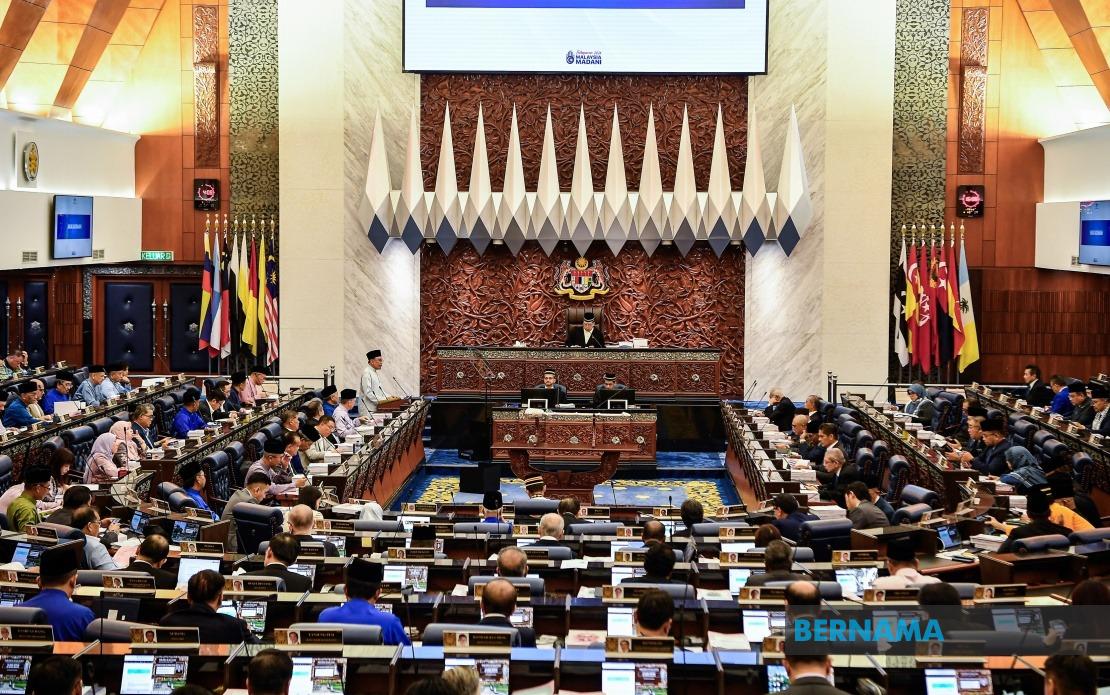
The Malaysian parliament endorsed the Communications and Multimedia Commission (Amendment) Bill 2026 on July 15, marking a significant step toward modernising the regulatory framework governing the nation's dynamic communications sector. Lawmakers voted in favour of the legislation following substantial debate involving fourteen representatives spanning both government and opposition parties, reflecting the measure's significance across the political spectrum.
The amendment addresses several structural and operational aspects of the MCMC, an entity tasked with regulating Malaysia's rapidly evolving telecommunications, broadcasting, and digital media landscape. At its core, the bill seeks to ensure that the commission can function sustainably while maintaining the oversight capacity necessary for an industry undergoing constant technological transformation. Given Malaysia's position as a digital economy aspirant within Southeast Asia, the efficiency and credibility of its communications regulator directly influences investor confidence and market development.
Deputy Communications Minister Teo Nie Ching articulated the government's rationale during the closing remarks on the bill, emphasising that the appointment process for the MCMC chairman and commissioners remains grounded in statutory criteria encompassing professional qualifications, personal integrity, relevant experience, and demonstrated leadership capability. This framework, she noted, has been embedded in legislation since 1998, though the current amendment refines and strengthens these provisions to address contemporary governance expectations.
A particularly noteworthy component of the revised bill introduces a requirement that the MCMC chairman cannot simultaneously hold membership in any legislative body—whether federal or state. This stipulation aims to eliminate structural conflicts of interest that could compromise the regulator's impartiality when addressing communications policy matters that frequently intersect with political considerations. In a context where regulatory capture remains a perennial concern across Southeast Asia, such institutional safeguards carry substantial weight for market participants and civil society observers.
The most immediately consequential amendment involves a tenfold increase in MCMC's procurement authority, elevating the contract threshold from RM5 million to RM50 million without requiring ministerial approval for each transaction. Teo explained that this adjustment aligns with the Finance Ministry's Procurement Regulations for Federal Statutory Bodies (WP7.5), which permit fully internally-funded federal entities to authorise procurements up to RM499 million. The government adopted a more conservative RM50 million ceiling, accounting for the fact that the previous limit had remained unchanged since 1998—nearly three decades of inflation, technological cost escalation, and labour expense growth.
The inflationary logic underlying the procurement adjustment extends beyond simple nominal adjustments. Over the past quarter-century, Malaysia's communications infrastructure has transformed fundamentally. Network densification, spectrum management systems, cybersecurity frameworks, and broadcast monitoring technologies now command costs vastly exceeding those of the late 1990s. A regulatory body constrained by outdated financial thresholds effectively operates with diminished purchasing power, potentially forcing inefficient piecemeal acquisitions or extended bureaucratic delays incompatible with rapid technological deployment. The amendment thus reflects pragmatic recognition that regulatory effectiveness requires operational agility proportionate to industry scale and complexity.
Opposition voices during the parliamentary debate, particularly from Dr Halimah Ali (PN-Kapar), pushed for even more ambitious governance reforms. She advocated adopting appointment mechanisms comparable to those utilised by the Human Rights Commission of Malaysia (SUHAKAM), wherein commissioners undergo more transparent selection emphasising expertise and credentials rather than ministerial discretion alone. Such proposals highlight ongoing tension between efficiency-oriented executive authority and transparency-oriented institutional design—a debate increasingly prevalent across ASEAN regulatory bodies as stakeholders demand greater legitimacy in governance processes affecting market competition and consumer interests.
Datuk Mas Ermieyati Samsudin (PN-Masjid Tanah) raised complementary concerns regarding oversight mechanisms, particularly surrounding the Universal Service Provision (USP) Fund—a mechanism designed to extend communications services to underserved populations. She advocated for enhanced audit powers, transparent recording of ministerial directives within legislative record, and periodic parliamentary reporting on fund utilisation. These proposals implicitly acknowledge that regulatory independence requires not merely structural autonomy but substantive accountability mechanisms ensuring that discretionary authority remains subject to public scrutiny.
Dr Richard Rapu (GPS-Betong) characterised the amendments as foundational infrastructure supporting Malaysia's transition toward increasingly sophisticated digital economic governance. He emphasised that the revisions strengthen MCMC's institutional architecture while positioning the body to meet emerging challenges inherent to rapid technological change, digitalisation of services, and evolving cross-border data and content considerations. Within the Malaysian context, where digital transformation constitutes explicit policy priority, a capable, professional, and operationally autonomous communications regulator becomes essential infrastructure.
The bill's passage reflects broader regional dynamics wherein communications regulators throughout Southeast Asia confront mounting complexity from convergence of telecommunications, broadcasting, and digital services. Nations including Singapore, Thailand, and Indonesia have undertaken similar regulatory modernisation exercises, seeking to balance rapid technological deployment against consumer protection, competition promotion, and national security considerations. Malaysia's amendment positions its regulator comparably with regional peers, potentially facilitating collaborative enforcement on cross-border issues including cybersecurity threats, spectrum interference, and digital content regulation.
For Malaysian stakeholders in telecommunications, broadcasting, and digital services, the amendment carries practical implications. Enhanced procurement authority accelerates infrastructure deployment cycles, potentially reducing time-to-market for MCMC-managed systems or initiatives. Strengthened appointment criteria and conflict-of-interest safeguards theoretically enhance regulatory credibility among market participants who perceive regulatory decisions as insulated from partisan political calculation. The restriction preventing legislative body members from chairing the commission directly addresses a vulnerability whereby politicians might leverage regulatory authority for electoral or factional advantage.
Nevertheless, the passage does not resolve all governance questions raised during parliamentary deliberation. The extent to which transparency and accountability mechanisms will accompany enhanced operational authority remains subject to implementation discretion. The interaction between ministerial appointment power and de facto regulatory independence continues reflecting underlying constitutional architecture wherein executive appointment authority coexists with expectations of professional autonomy. These tensions typically resolve through institutional practice and accumulated precedent rather than through legislation alone.
Looking forward, the amendment's success ultimately depends upon appointments of commissioners demonstrating genuine expertise and professional standing, explicit ministerial forbearance from directing regulatory decisions for political purposes, and transparent parliamentary oversight of the commission's substantial discretionary authority. For Malaysia's communications sector and broader digital economy aspirations, the MCMC's capacity to function as a credible, professional regulator operating within clearly defined institutional bounds becomes increasingly consequential as technological change accelerates and regulatory responsibilities expand into emerging domains including cybersecurity, artificial intelligence governance, and digital services competition.

