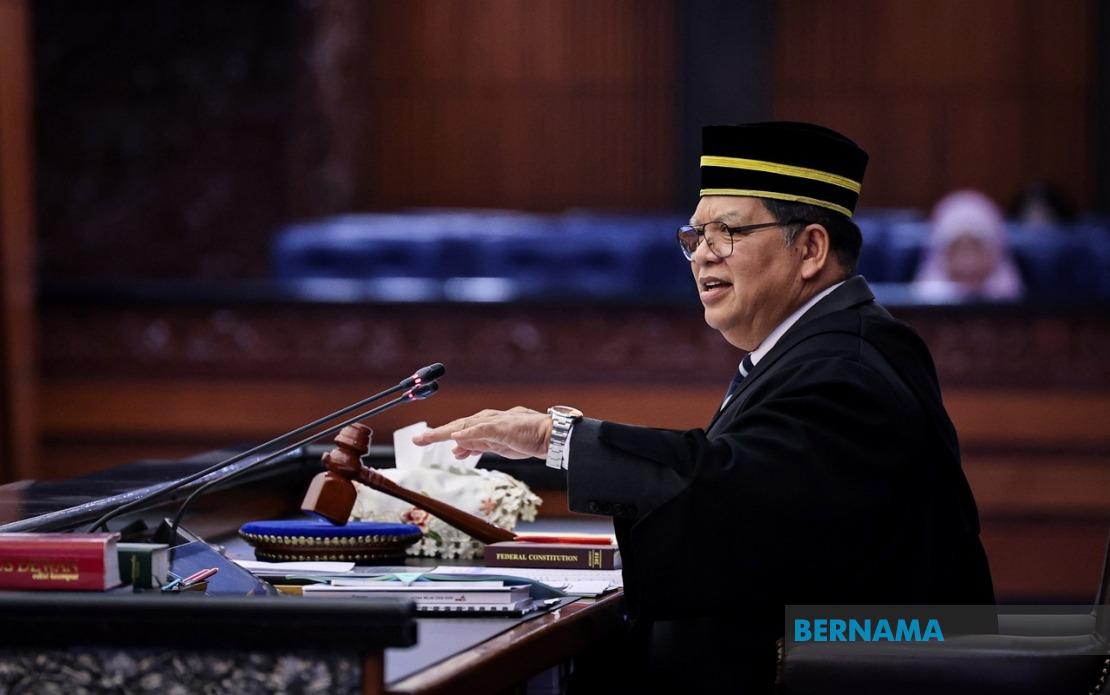
Parliament formally adjourned its current session on July 16 following a 16-day sitting that commenced on June 22, marking the completion of the second meeting under the Fifth Term of the 15th Parliament. During his adjournment remarks, Dewan Rakyat Speaker Tan Sri Dr Johari Abdul highlighted the legislative productivity achieved throughout the session, noting that 13 bills received parliamentary approval alongside the passage of several motions, including substantive debate on the 2024 Annual Report of the Human Rights Commission of Malaysia (SUHAKAM).
The legislative agenda reflected the government's broader policy priorities across multiple sectors. Transport safety received attention through the Road Transport (Amendment) Bill 2026, which updates regulations governing Malaysia's road network at a time when vehicle safety and licensing standards remain under intense scrutiny. The Sexual Offences Against Children (Amendment) Bill 2026 represents another significant piece of child protection legislation, signalling renewed parliamentary focus on safeguarding vulnerable populations from exploitation. Meanwhile, the Cybercrimes Bill 2026 addresses the evolving threat landscape in the digital sphere, a critical concern for a nation increasingly reliant on digital infrastructure and e-commerce platforms.
Business regulation and consumer protection formed a substantial portion of the legislative package. Two interconnected measures—the Competition (Amendment) Bill 2026 and the Competition Commission (Amendment) Bill 2026—seek to strengthen Malaysia's competition framework during a period of regional economic integration. These amendments presumably enhance enforcement mechanisms and regulatory powers to ensure fair market practices as the Malaysian economy becomes more interconnected with regional trade agreements. Additionally, the Control of Padi and Rice (Amendment) Bill 2026 demonstrates continued government intervention in agricultural commodities, maintaining price controls and supply management in a sector vital to rural livelihoods and national food security.
Criminal justice and public administration underwent legislative refinement as well. The Witness Protection (Amendment) Bill 2026 modernises provisions for witnesses in sensitive cases, potentially strengthening the capacity of prosecutorial authorities to secure testimony in high-stakes criminal proceedings. The Social Work Profession Bill 2026 represents a landmark recognition of social work as a regulated profession, establishing professional standards and qualifications for practitioners engaged in welfare delivery across Malaysia's communities. This legislation could reshape how social services are administered and ensure practitioners meet recognised competency standards.
Infrastructure and administrative governance also received parliamentary attention through additional bills. The Communications and Multimedia (Amendment) Bill 2026 and the Malaysian Communications and Multimedia Commission (Amendment) Bill 2026 together modernise telecommunications regulation, likely addressing convergence between traditional broadcasting and digital platforms. The National Trust Fund Bill 2026 establishes or modifies mechanisms for managing accumulated public resources, while the Statistics Bill 2026 presumably updates Malaysia's statistical frameworks, ensuring national data collection and analysis meet contemporary standards for research, policy-making, and public accountability.
Beyond the legislative tally, the parliamentary session accommodated multiple briefing mechanisms to inform members' deliberations. Three full ministerial briefings occurred, supplemented by one minister's briefing within the Special Chamber—likely addressing confidential or sensitive matters requiring restricted attendance. Six additional briefings by Select Committee chairmen presented committee reports, allowing Parliament to scrutinise executive action and implementation progress across policy domains. This multi-layered briefing structure suggests a parliament attempting to balance legislative work with substantive oversight activities.
Parliamentary management and member welfare featured prominently in the Speaker's closing remarks. Tan Sri Dr Johari Abdul issued a reminder for all members to undergo health screenings before October 30 and lodge their health records with Parliament for institutional safekeeping. This directive appears partly precautionary—encouraging parliamentarians to maintain fitness during the anticipated upcoming election campaign period—and partly administrative, establishing a centralised health information repository for Parliament's future reference. The timing of this reminder, positioned immediately before adjournment, suggests Parliament anticipated campaign activities would commence shortly after the recess.
The Speaker also announced that Malaysian Parliament would host an unspecified programme open to members of Parliament, parliamentary staff, youth parliament participants, and members of the public. Though the source material truncates details about this initiative, the inclusivity of the programme—extending beyond legislators to encompass staff and public participation—indicates efforts to enhance parliamentary transparency and public engagement. Such programmes typically serve educational or commemorative purposes, reflecting Parliament's evolving role as a public institution rather than exclusively a legislative forum.
Tan Sri Dr Johari Abdul's concluding remarks extended gratitude to all members for their cooperation throughout the sitting, whilst acknowledging contributions from government officials, parliamentary staff, media representatives, and other stakeholders in managing the session's proceedings. This expansive acknowledgement reflects the complex institutional ecosystem required to sustain parliamentary operations, from security personnel to media management and administrative support structures. The formal expression of appreciation, whilst ceremonial, signals the Speaker's commitment to fostering collaborative institutional culture.
The adjournment without specification of the reconvening date indicates Parliament's schedule remains contingent upon executive determination, a practice consistent with Malaysia's Westminster-derived system where the Prime Minister retains substantial control over parliamentary scheduling. This flexibility permits responsive governance whilst also raising questions about parliamentary autonomy and the predictability of the legislative calendar for members managing constituency commitments.
The 16-day sitting represents substantial parliamentary activity, with 13 bills addressing diverse policy domains from child safety to digital regulation and agricultural management. The breadth of legislative coverage suggests a government attempting to advance multiple reform agendas simultaneously, though the concentration of bills in 2026-dated legislation raises questions about drafting timelines and whether these represent previously delayed initiatives or forward-looking legislative planning.

