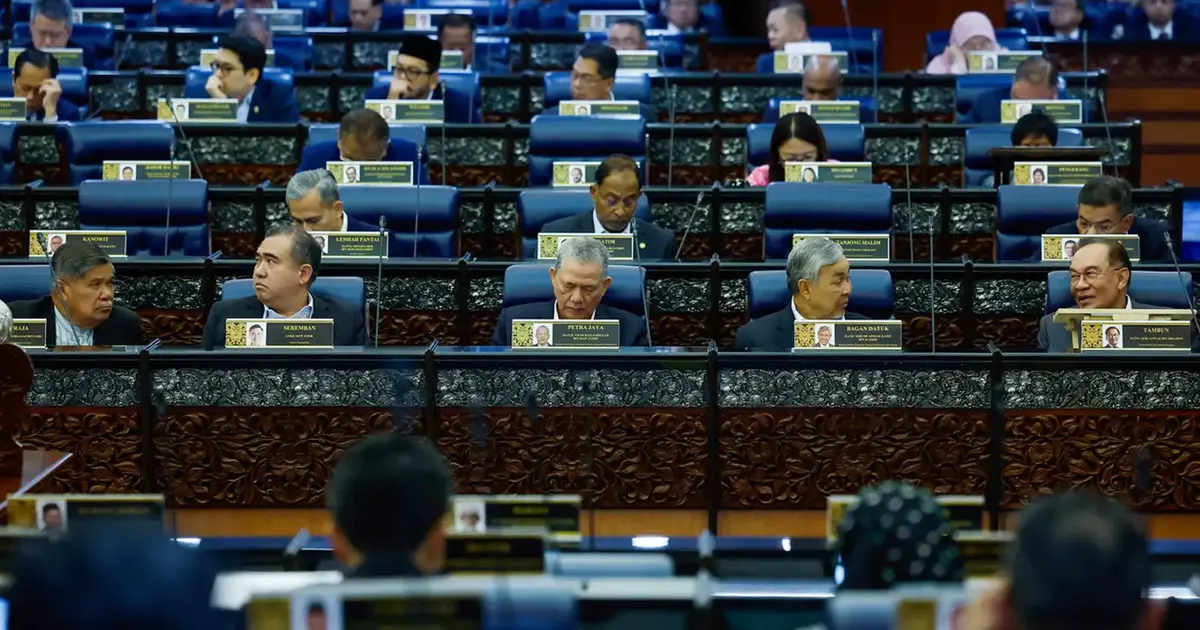
The possibility of DAP quitting government ministerial roles would not necessitate dissolving Parliament, according to PKR deputy secretary-general Saifuddin Shafi Muhammad, who sought to ease mounting concerns about the stability of Malaysia's ruling coalition. His remarks came as observers scrutinised the viability of the current political arrangement, particularly following tensions within the multiethnic alliance structure.
Saifuddin's clarification underscores a critical distinction in Malaysian coalition politics: the separation between holding cabinet positions and maintaining parliamentary representation. This nuance reflects the constitutional flexibility that allows individual MPs and parties to support government legislation without necessarily occupying ministerial appointments. The PKR leader's intervention signals that party strategists believe the coalition possesses sufficient breathing room to weather potential reorganisations of the executive without triggering constitutional crises.
DAP MPs would continue backing the government in parliamentary votes even if the party relinquishes its ministerial portfolios, Saifuddin asserted. This posture effectively decouples party representation in Parliament from the distribution of cabinet seats, a distinction particularly relevant in Malaysian politics where coalition stability often hinges on perceptions of fair power-sharing. The proposal suggests mechanisms exist within the current government structure to accommodate shifting roles while preserving legislative support.
The PKR leader's statement arrives amid broader scrutiny of coalition cohesion in the context of Malaysia's complex ethnic and religious politics. DAP, predominantly Chinese-backed, has historically faced questions about its role within predominantly Malay-Muslim led coalitions. By publicly asserting that DAP's parliamentary support transcends ministerial involvement, Saifuddin attempted to frame ministerial positions as negotiable elements rather than prerequisites for coalition survival.
This interpretation carries significant implications for Malaysian governance. The ability to separate cabinet composition from parliamentary backing creates flexibility in addressing internal party grievances and public pressure regarding ministerial appointments. For instance, criticism directed at specific DAP ministers could theoretically be managed through portfolio adjustments without forcing broader coalition recalibration. However, such flexibility depends on maintaining transparent communication and trust among coalition partners—elements that have occasionally proved fragile in Malaysia's turbulent political landscape.
The remarks also reflect underlying calculations about demographic representation and ministerial balance within the coalition. Any redistribution of cabinet seats would inevitably involve discussions about which communities receive prominent executive roles, a perpetually sensitive matter in Malaysia's multiethnic context. Saifuddin's framing suggested that such adjustments need not destabilise parliamentary operations, though such transitions would undoubtedly invite scrutiny from opposition parties seeking to exploit perceived divisions.
From a regional perspective, Malaysia's coalition dynamics warrant attention as a case study in managing multiethnic governance within democratic structures. The model of separating parliamentary alignment from ministerial participation offers lessons for other Southeast Asian democracies navigating similar power-sharing arrangements. Yet the Malaysian experience also demonstrates the tensions inherent in such systems, where informal conventions sometimes prove as important as constitutional provisions.
Saifuddin's intervention should be understood against the backdrop of occasional public friction within the current coalition. While coalition partners have historically managed disagreements through established channels, speculation about structural changes periodically surfaces in Malaysian political discourse. The PKR leader's statement sought to provide reassurance that the government possesses institutional flexibility to address grievances without resorting to parliamentary dissolution—a measure that would trigger fresh elections and introduce substantial uncertainty.
Parliamentary dissolution represents an extreme option that few coalition participants would voluntarily embrace, given that recent Malaysian electoral cycles have demonstrated unpredictable outcomes. Positioning ministerial role adjustments as manageable alternatives serves both to calm anxious coalition members and to signal to the broader public that the government operates with sufficient stability and consensus to govern effectively. Such messaging becomes particularly important during periods when coalition unity faces testing.
Looking forward, the framework articulated by the PKR leader suggests potential pathways for coalition evolution without constitutional rupture. Whether such flexibility can be sustained depends on several factors: the willingness of all coalition members to honour the implied separation between parliamentary support and executive positions, the capacity of leadership to manage public perceptions of fairness in any redistribution, and the restraint of opposition forces in exploiting any apparent divisions. These elements interact in complex ways within Malaysia's distinctive political ecosystem.
The PKR deputy secretary-general's assurances fundamentally assert that the current ruling coalition possesses sufficient structural resilience to accommodate internal adjustments. Whether this optimism proves warranted will depend on how coalition partners navigate future tests of unity and how Malaysian voters ultimately evaluate the government's performance and legitimacy. For now, Saifuddin's statement establishes an official position that ministerial changes, while potentially significant, need not threaten the foundation of parliamentary support sustaining the administration.

