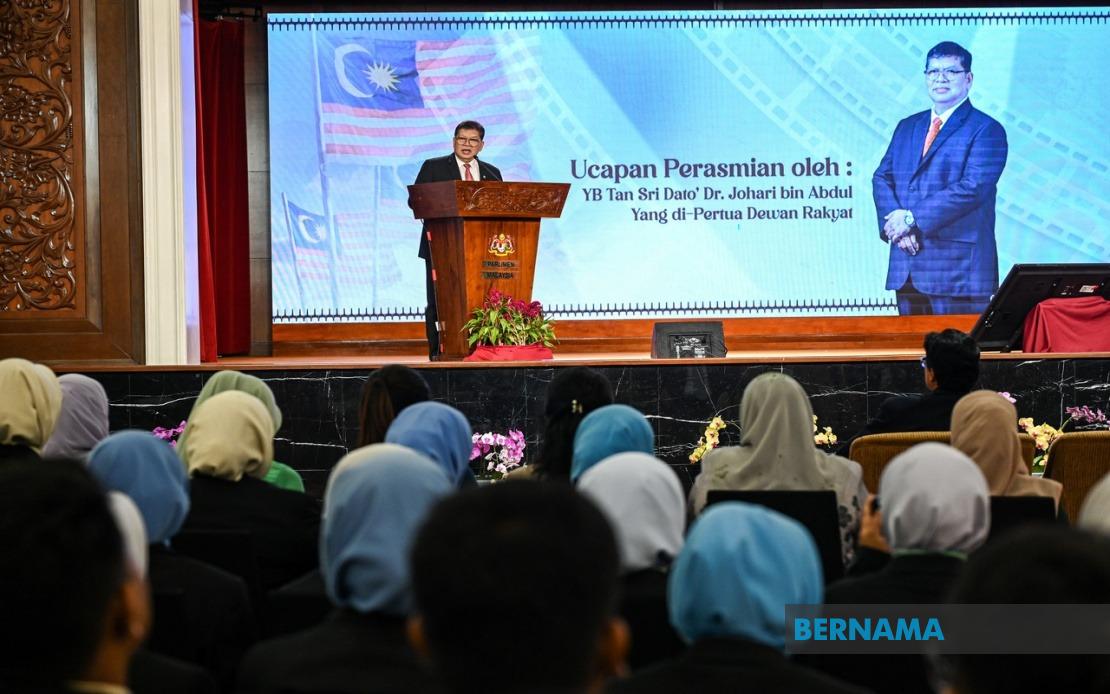
Parliament has unveiled a new short film titled 'Arkitek Bangsa' aimed at nurturing a generation of young leaders committed to building the nation, marking the latest effort by legislative authorities to deepen civic engagement among Malaysia's youth. The video initiative, launched at the Parliament Building, represents an attempt to transform how young Malaysians perceive their role in national development, moving beyond passive citizenship toward active participation in nation-building.
Parlament Speaker Johari described the film as instrumental in conveying a fundamental message to young Malaysians: that leadership is not an innate trait confined to a select few, but rather a skill that can be systematically developed through exposure, mentorship, and structured training programmes. His remarks underscore a broader strategic shift within parliamentary institutions toward actively shaping the next generation of decision-makers and community leaders. The core philosophy centres on empowering young people to envision themselves as architects of national progress rather than mere observers of political and social processes.
The messaging embedded within 'Arkitek Bangsa' carries particular significance given Malaysia's ongoing need to strengthen social cohesion and national identity among diverse youth populations. Johari's emphasis on young Malaysians taking pride in their identity addresses contemporary concerns about generational disconnection from national narratives and historical consciousness. By framing nation-building as an inclusive endeavour accessible to all young people regardless of background, the film attempts to create a shared sense of collective responsibility across Malaysia's multicultural population.
Parliament's strategic positioning of this initiative within a broader ecosystem of youth development programmes reveals a coordinated institutional approach to civic education. The Parliament School Programme, which has already conducted visits to the legislative chamber for over 1,000 schools, provides the experiential foundation upon which films like 'Arkitek Bangsa' build. Through direct exposure to parliamentary processes and democratic institutions, students gain practical understanding of how governance functions, creating receptive audiences for messages about leadership and civic participation.
The expansion of the Youth Parliament programme from 100 to 222 members, combined with implementation of a proportional representation system, signals institutional commitment to youth inclusion that extends beyond symbolic gestures. These structural changes create genuine opportunities for young Malaysians to participate in legislative deliberation and gain practical experience with democratic processes. Such hands-on engagement complements the inspirational messaging of films, grounding aspirational calls to leadership in tangible institutional pathways.
Parliament's involvement with the National Service Training Programme (PLKN) through a dedicated select committee further demonstrates integration of leadership development across multiple government channels. By embedding parliamentary and democratic education within national service training, authorities attempt to reach young Malaysians during formative periods when values and career aspirations are being crystallized. This multi-platform approach acknowledges that sustained attitude change requires reinforcement across diverse institutional settings.
Johari's metaphor comparing national construction to physical building serves as a powerful reminder of vulnerability inherent in institutional stability. The observation that construction requires sustained effort while destruction occurs rapidly resonates particularly in Malaysian contexts where rapid social change and political transitions have historically tested national cohesion. By emphasizing the fragility of national institutions, the narrative encourages young people to view themselves as custodians responsible for preserving and strengthening hard-won democratic and social achievements.
The cultural and historical education dimensions of 'Arkitek Bangsa' address a notable gap in many young Malaysians' understanding of sacrifice and contribution made by previous generations. Without deliberate efforts to transmit historical consciousness and appreciation for foundational nation-building achievements, generational knowledge transfer becomes incomplete. Films and educational programmes serve to bridge this gap, ensuring that contemporary youth understand their inheritance not as a given right but as a product of collective historical effort.
National Film Development Corporation Malaysia (FINAS) involvement in producing 'Arkitek Bangsa' reflects recognition that cinematic media offers particular power in communicating values and aspirational messaging to youth audiences. Visual narratives can transcend some barriers to conventional political or civic communication, reaching audiences who might not otherwise engage deeply with parliamentary institutions or governance-related content. Strategic use of film as an educational tool aligns with how young people increasingly consume and process information across digital and visual platforms.
The broader implications of this initiative extend beyond immediate youth engagement toward long-term institutional legitimacy and democratic sustainability. By investing in programmes designed to cultivate leadership aspirations and national pride among young Malaysians, Parliament attempts to create generational cohorts more deeply invested in democratic institutions and national stability. Such investments acknowledge that institutional credibility depends partly on successfully transmitting values and commitments across generational lines.
For Southeast Asian contexts more broadly, Malaysia's emphasis on youth-centred civic education through parliamentary institutions offers instructive lessons regarding approaches to strengthening democratic cultures and national identity simultaneously. Many regional nations grapple with balancing youth political engagement against maintaining institutional stability; Malaysia's multi-pronged strategy through experiential programmes, expanded youth representation, and inspirational media content demonstrates one model for pursuing both objectives.

