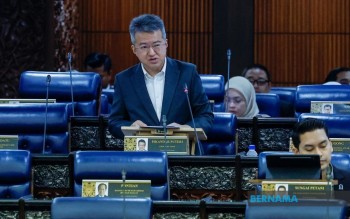
Malaysia's Dewan Rakyat has given its approval to the National Trust Fund (KWAN) Bill 2026, marking a significant step toward institutionalising the country's long-term savings mechanism. Tabled by Deputy Finance Minister Liew Chin Tong on July 16, the legislation passed with strong parliamentary support following debate contributions from 15 Members of Parliament. The measure represents a fundamental shift in how Malaysia manages accumulated reserves intended for future generations, moving from a discretionary model toward one grounded in statutory obligation and disciplined governance.
At the time of parliamentary passage, the KWAN group held combined assets valued at RM22.43 billion as of the conclusion of 2024. Since its inception in 1988, Petronas has maintained its position as the sole voluntary contributor to the fund, having channelled RM13.5 billion into the pool across nearly four decades. The petroleum giant's sustained commitment, despite the voluntary nature of participation, underscores the fund's strategic importance to Malaysia's fiscal strategy. However, the reliance on a single contributor exposed structural vulnerabilities that prompted legislative reform.
The trajectory of KWAN administration revealed critical shortcomings in the existing framework. Most notably, a withdrawal of RM5 billion in 2021 generated considerable public scrutiny and raised broader questions about institutional discipline and accountability. This episode, coupled with decades of operational experience, demonstrated that the fund's foundational architecture required modernisation. The previous system permitted contributions entirely at government discretion, imposed no meaningful restrictions on withdrawals, and lacked clarity regarding permitted uses of accumulated resources. These ambiguities created conditions where parliamentary oversight and public confidence could erode over time.
Liew's legislative proposal directly addresses these governance deficiencies through three interconnected mechanisms. First, the bill introduces a statutory contribution rate of 0.1 per cent, transforming participation from a voluntary gesture into a binding obligation. This fixed minimum rate ensures that the fund receives consistent inflows regardless of government spending priorities or fiscal pressures in any given budget cycle. Second, the legislation establishes withdrawal discipline by imposing boundaries on how much money may be extracted from reserves, preventing the arbitrary large-scale drawdowns that characterised the 2021 event. Third, the bill modernises governance structures and accountability mechanisms, bringing KWAN into alignment with contemporary standards for managing large institutional funds.
The 0.1 per cent contribution threshold serves as a foundational floor rather than a ceiling, preserving flexibility for future parliaments to increase the rate should economic conditions and national priorities warrant enhancement. Critically, Liew emphasised during parliamentary winding-up remarks that any modification to this rate remains the exclusive prerogative of Parliament, requiring formal legislative amendment. This constitutional safeguard ensures that no executive action or administrative decision can unilaterally alter the fund's financing structure. The explicit vesting of rate-change authority in the Dewan Rakyat reinforces democratic accountability and prevents successive governments from eroding the inter-generational savings obligation through quiet administrative adjustment.
The legislative framework embodies a philosophical commitment to ensuring that fiscal discipline extends across political cycles and governmental transitions. Liew articulated this principle clearly, stressing that the obligation to save for coming generations must transcend the priorities of any single administration or parliamentary term. By anchoring contributions in statute rather than discretion, the bill insulates Malaysia's long-term savings capacity from short-term budgetary constraints or changing policy emphases. This approach acknowledges that inter-generational equity cannot depend upon the consistent goodwill of successive leaders; rather, it must be mechanically embedded into the institutional machinery itself.
For Malaysian policymakers and civil society observers, the KWAN legislation carries implications extending beyond technical adjustments to fund administration. The bill signals recognition that accumulated public wealth requires protection against both inadvertent mismanagement and deliberate political opportunism. As Malaysia confronts longer-term demographic shifts, including an ageing population and evolving social expenditure demands, the security of substantial reserves takes on heightened importance. A fund with statutory contribution requirements and enforced withdrawal discipline provides a cushion against sudden revenue shocks or unexpected liabilities that might otherwise necessitate rapid adjustments to essential public services.
The strengthened KWAN framework also positions Malaysia comparatively well within Southeast Asia's institutional landscape. Peer economies face persistent challenges in maintaining dedicated savings vehicles, often succumbing to pressure to deploy reserves for immediate budgetary needs. By legislating restraint and consistency into KWAN's operational structure, Malaysia establishes a model that prioritises prudent stewardship of public resources and long-term fiscal sustainability. The statute-based approach, requiring parliamentary action to modify contribution or withdrawal policies, creates transparency and deliberation around any future changes.
Petronas's sustained participation as the sole contributor to date highlights an ongoing opportunity to broaden the funding base. The bill's structural reforms create a platform for encouraging additional public and quasi-public entities to participate in the scheme. A diversified contributor base would not only increase KWAN's capital accumulation but also distribute the burden of supporting inter-generational savings more equitably across the economy. The legislative foundation now in place removes administrative ambiguity that may have previously discouraged potential participants from joining.
Looking forward, the practical implementation of KWAN's strengthened governance framework will determine whether the legislation achieves its stated objectives. Parliament's passage of the bill represents commitment at the highest political level, yet sustained institutional discipline throughout the fund's operational phases remains essential. The new withdrawal limits must be clearly defined and rigorously enforced, preventing creeping erosion through exceptional cases or emergency justifications. Similarly, the governance and accountability mechanisms must embed genuine oversight rather than merely creating administrative procedures that can be bypassed through executive creativity.
The bill's passage also reflects growing recognition across the Malaysian political spectrum that demographic and fiscal trends necessitate proactive long-term planning. Rapid population ageing, infrastructure financing demands, and the imperative to maintain social cohesion in the face of economic transition all argue for substantial accumulated reserves. By rendering KWAN's contribution structure statutory and withdrawal protocols disciplined, parliament has taken a deliberate step toward ensuring that current policy choices do not unintentionally undermine the fiscal flexibility and social resilience of coming generations.

