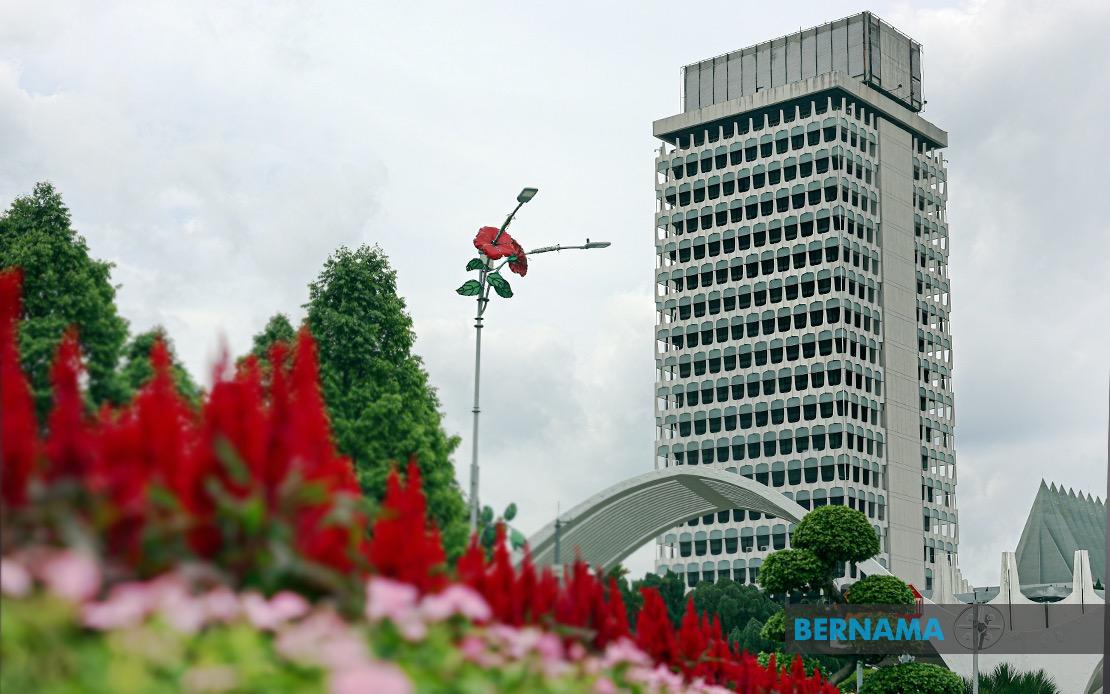
Parliament's recent special sitting on the Tabung Haji Royal Commission of Inquiry report has crystallised a rare cross-party consensus: the governance framework enabling decades of mismanagement must be fundamentally restructured. Lawmakers from the government coalition, opposition, and Sabah-based parties have united in demanding rapid amendments to Act 535 to curtail ministerial powers, insulate the institution from political appointments, and establish merit-based leadership selection—a coordinated push that signals serious intent to prevent future governance collapse at Malaysia's flagship Islamic pilgrimage savings institution.
The core grievance centres on Section 10 of the 1995 Act, which grants the Minister sweeping authority to issue general directions to Tabung Haji. Datuk Shahelmey Yahya, representing Putatan, articulated the fundamental problem: this concentration of executive power has historically enabled political actors to subordinate institutional performance to factional interests. The section, he argued during the parliamentary sitting, has proven incompatible with excellence, as organisations cannot function optimally when political calculus overrides sound management. His proposal to abolish or substantially curtail this ministerial prerogative reflects growing recognition that Tabung Haji's deterioration correlates directly with the ease with which sitting governments have exercised control over its strategic direction and personnel decisions.
The Royal Commission's investigation into Tabung Haji's operations between 2014 and 2020 unearthed systemic weaknesses that exposed millions of Malaysian pilgrims' savings to misguided investments and poor oversight. The report's 25 recommendations have achieved approximately 75 per cent implementation as of late July, yet the legislative amendments remain incomplete—a gap lawmakers regard as unacceptable given the scale of depositor vulnerability. The institution, in its current legal configuration, lacks sufficient structural barriers against the recurrence of political patronage and poor governance practices that characterised the previous decade.
Tan Sri Muhyiddin Yassin, speaking from the Perikatan Nasional benches, articulated a broader remedial vision extending beyond mere legislative amendment. He called for comprehensive implementation of all commission recommendations, including enhanced oversight by Bank Negara Malaysia and the establishment of an independent investment committee insulated from political interference. Restructuring Tabung Haji's investment portfolio to ensure compliance with Syariah principles and prudent financial management represents an equally critical dimension of reform. His intervention reflects appreciation among some opposition voices that fixing Tabung Haji requires sustained institutional discipline, not merely legislative band-aids.
The question of Board appointments has emerged as the lightning rod for parliamentary concern. Multiple speakers, including Syed Saddiq Syed Abdul Rahman of MUDA, emphasised that institutionalising a merit-based appointment process would prove meaningless without legal safeguards against political capture. Transparency in selection procedures and demonstrable professional qualifications must supplant the historical practice of rewarding political allies or party loyalists with lucrative board seats. For depositors who have contributed savings over decades to fund their religious obligation, the assurance that their funds are steered by competent professionals rather than political appointees represents a basic fiduciary principle that has been systematically violated.
Mohamad Shafizan Kepli's intervention highlighted the particular vulnerability of ordinary Malaysians dependent on Tabung Haji. As an Islamic financial institution serving predominantly middle and lower-middle-income savers, governance failures disproportionately impact those with fewest alternative investment mechanisms. The depositor base comprises ordinary Malaysians who have sacrificed portions of their earnings specifically to fulfill the hajj pillar of Islam, making the preservation of their contributions a matter of religious and social justice. When political interference generates poor investment decisions or misallocates funds, the consequences ripple through entire families and communities deprived of their anticipated pilgrimage experience.
The parliamentary debate also surfaced concerns regarding conflicts of interest and the involvement of active politicians in subsidiary governance structures. The RCI's recommendation to prevent such entanglements acknowledges that competing loyalties—to political parties, ministerial portfolios, and corporate boards—inevitably compromise institutional decision-making. By institutionalising distance between political office and Tabung Haji stewardship, legislators hope to create structural conditions favouring prudent, independent judgment. Several other MPs, including those representing constituencies in Peninsular Malaysia and Sarawak, reinforced this message, suggesting that governance reform enjoys geographically dispersed political support.
The timing of this parliamentary scrutiny reflects the government's July 29 decision to release the RCI report publicly, enabling MPs to examine findings with appropriate transparency. This opening has catalysed what appears genuine parliamentary momentum for legislative action rather than continued bureaucratic procrastination. The special sitting itself, convened specifically to debate the commission's conclusions, signals that Tabung Haji reform occupies elevated priority status within the current legislative agenda. Whether this momentum translates into expedited amendments or succumbs to bureaucratic inertia remains a critical test of parliamentary effectiveness.
For Malaysian pilgrims and the broader Islamic finance ecosystem, successful legislative reform would establish an important precedent. It would demonstrate that major institutions can be insulated from political interference through thoughtful legal architecture prioritising independence, transparency, and merit. Conversely, failure to amend Act 535 meaningfully would signal that political patronage networks remain sufficiently entrenched to withstand even sustained parliamentary pressure and public exposure of institutional damage. The amendments therefore carry implications extending far beyond Tabung Haji itself, testing whether Malaysia's institutions can evolve toward governance standards consistent with international best practices in Islamic finance and public fund stewardship.
The cross-party consensus evident in the parliamentary sitting suggests that most lawmakers, irrespective of factional affiliation, recognise that Tabung Haji's credibility—and by extension, public confidence in Islamic financial institutions more broadly—depends on eliminating the legal architecture enabling political control. Implementing this consensus through actual legislative change remains the outstanding challenge, requiring coordination between the executive branch, which must draft amendments, and parliament, which must vote them into law. The window for demonstrating genuine commitment to governance reform is narrowing, particularly as the 2025 deadline approaches when additional depositor compensation or institutional restructuring may become unavoidable if reforms fail.

