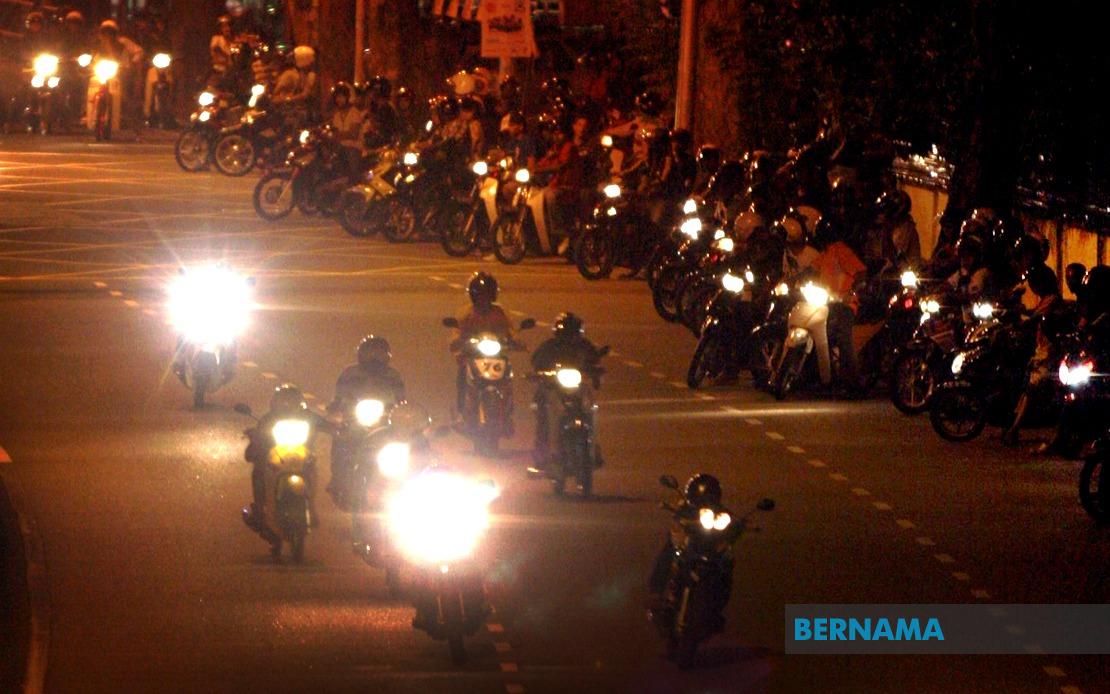
Legislators across the political spectrum presented a united front against illegal street racing during parliamentary debate on the Road Transport (Amendment) Act 2026, offering a comprehensive suite of policy measures aimed at dismantling the phenomenon that has claimed lives on Malaysian roads. The proposal marks an escalation in government resolve to address a persistent public safety crisis, with proposals ranging from permanent licence revocation to family accountability mechanisms and vehicle destruction protocols.
Khairil Nizam Khirudin from Jerantut introduced a rehabilitative dimension to the discussion, advocating for structured intervention programmes that would complement traditional punitive measures. His vision encompasses disciplinary training paired with mandatory community service, targeting the psychological and social drivers that lead individuals toward dangerous street racing. This approach reflects growing recognition among policymakers that enforcement alone cannot solve entrenched behavioural patterns, particularly among younger offenders who may lack understanding of consequences or access to positive alternatives.
The MP further directed attention toward the supply chain enabling illegal racing infrastructure. Workshops that undertake unauthorized motorcycle modifications form a critical nexus in the street racing ecosystem, enhancing engine performance and removing safety features. Khairil proposed leveraging inter-ministerial coordination between the Ministry of Transport and the Ministry of Domestic Trade and Cost of Living, with potential invocation of Section 66 of the Road Transport Act 1987 to establish regulatory frameworks targeting modification businesses. This regulatory gap has historically allowed workshops to operate with minimal scrutiny, effectively subsidizing criminal activity through technical enhancement services.
Datak Willie Mongin from Puncak Borneo advanced the harshest individual penalty proposal, calling for permanent revocation of driving privileges combined with financial and custodial sentences. His recommendation stipulates minimum fines of RM300,000 or five-year prison terms, with the permanent licence revocation operating as an additional deterrent mechanism rather than a time-limited suspension. Mongin framed such severity as essential signalling of governmental commitment, implying that current penalty structures fail to reflect the gravity of street racing as a public menace.
Kuantan's Wan Razali Wan Nor broadened the legislative scope beyond motorcycles, citing the June 1 Simpang Renggam tragedy in Johor that claimed multiple lives involving high-powered vehicles. This incident fundamentally altered the narrative around street racing in parliamentary chambers, shifting discourse from a motorcycle-centric problem to a multi-vehicle phenomenon with potentially catastrophic consequences. The Simpang Renggam collision demonstrated that luxury car racing represents an equally dangerous variant demanding equivalent legal attention, particularly given the greater velocity and collision energy characteristic of four-wheeled racing vehicles.
Setiu MP Shaharizukirnain Abd Kadir proposed the destruction of excessively modified vehicles as a punitive measure, suggesting that removal of equipment used to facilitate illegal activities represents a logical extension of penalty philosophy. Vehicle forfeiture and destruction programmes operate on the principle that confiscating purpose-built racing equipment removes both the means and the motivation to continue participation, while simultaneously eliminating potential future incidents involving the same vehicle.
The inclusion of family accountability in parliamentary discussion reflected anxieties about parental supervision and societal responsibility for youth behaviour. Proposals targeting parents of illegal racers attempt to distribute accountability beyond individual offenders, recognizing that family environments and parental oversight significantly influence adolescent decision-making regarding risk-taking activities. This approach carries potential constitutional and practical complications, yet indicates legislative willingness to explore novel enforcement angles.
Separate from illegal racing discussions, multiple MPs elevated concerns regarding impaired driving, particularly offences involving alcohol and narcotic substances. Jeli MP Zahari Kechik advocated for establishing formal compensation mechanisms whereby individuals convicted of driving under the influence bear financial responsibility for victim medical expenses and ongoing welfare support. This proposal transforms the legal framework from purely punitive to restorative, ensuring that injured parties receive concrete recompense rather than relying solely on insurance or state social programmes.
Maran's Datuk Seri Dr Ismail Abd Muttalib supported strengthening enforcement mechanisms targeting drink-driving and drug-impaired driving, emphasizing the necessity of heightened deterrence through intensive policing and prosecution. He advocated for reinforcing sections 44 and 45A to 45C of the Road Transport Act 1987, suggesting that existing provisions require enhancement to deliver adequate justice for accident victims damaged by impaired drivers. The implication centres on inadequacy of current enforcement intensity and penalty structures.
The parliamentary debate engaged 24 government and opposition legislators, indicating broad consensus across factional lines regarding the necessity for comprehensive intervention. This cross-party alignment carries significance in Malaysian politics, where polarization frequently fragments legislative enthusiasm. The breadth of participation suggests that illegal racing affects constituencies nationwide, generating voter demand for visible government action transcending partisan divisions.
For Malaysian motorists and families, these proposals signal an emerging enforcement environment with substantially heightened consequences for street racing participation. The combination of permanent licence revocation, six-figure fines, extended imprisonment, and vehicle destruction represents a categorical shift in penalty architecture. Young drivers and parents should recognize that post-amendment legislation will render casual participation in illegal racing exponentially more costly across financial, legal, and personal dimensions.
The debate's emphasis on workshop regulation and vehicle modification oversight addresses a crucial enforcement gap historically limiting police ability to interdict racing infrastructure. By targeting modification businesses through inter-ministerial coordination and regulatory clarification, authorities could prevent equipment from reaching prospective racers upstream of actual racing events. This preventive approach complements traditional reactive enforcement at racing scenes.
Regional implications extend to other Southeast Asian nations wrestling with similar street racing epidemics. Malaysia's legislative approach, combining rehabilitation, family accountability, vehicle destruction, and expanded legal scope to luxury vehicles, offers a comprehensive template that neighbouring jurisdictions might adapt. The Simpang Renggam incident's parliamentary significance demonstrates how singular tragic events can catalyse legislative momentum for systemic reform, potentially influencing regional policy diffusion.