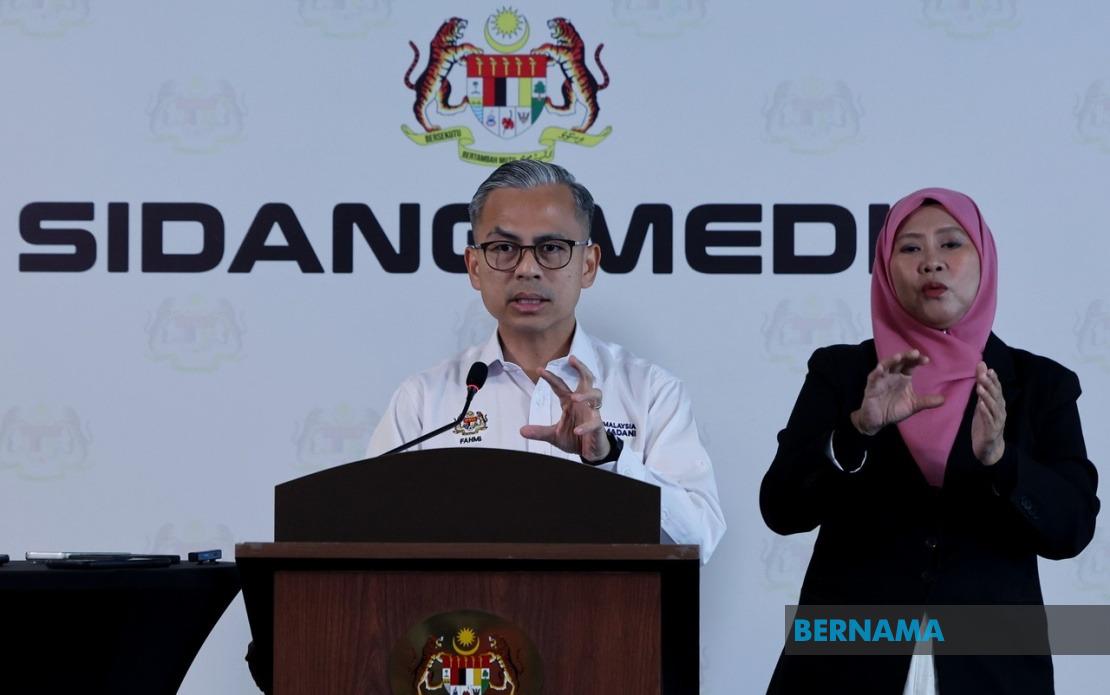
Parliament will hold an extended debate on August 11 to scrutinise the findings of the Royal Commission of Inquiry into Tabung Haji's operational and investment failures, with Communications Minister Datuk Seri Fahmi Fadzil confirming that a significant number of lawmakers have signalled their readiness to participate in what promises to be a contentious parliamentary session.
The special sitting, which will commence at 10 am and continue into the afternoon without scheduled breaks, reflects the gravity with which the government is treating the RCI report's revelations. Dewan Rakyat Speaker Tan Sri Johari Abdul has sanctioned the uninterrupted proceedings, signalling Parliament's determination to conduct a thorough examination of the issues raised. The decision to hold a continuous session underscores expectations of extensive discussion and multiple contributions from the legislative chamber.
Fahmi's announcement that 35 to 40 MPs have expressed interest in contributing to the debate indicates substantial parliamentary engagement with the matter. This level of participation suggests the issue has transcended partisan lines, with lawmakers from various political backgrounds viewing the Tabung Haji situation as warranting detailed public scrutiny. The scale of interest also reflects growing public concern about governance failures at one of Malaysia's most significant Islamic financial institutions, which holds savings for millions of Malaysian pilgrims.
The RCI report, released on the Department of Islamic Development Malaysia portal on July 29, examined Tabung Haji's management and operations across the critical period of 2014 to 2020. During this span, the institution experienced substantial deterioration in asset values, prompting the inquiry into the decision-making processes that contributed to this decline. The commission's investigation uncovered a pattern of problematic investment choices that demand forensic examination to establish how such decisions were authorised and implemented without adequate safeguards.
Beyond identifying problematic investments, the RCI report documented evidence of suspicious transactions that raise questions about the integrity of internal controls and governance structures. The commission found that information had been concealed, suggesting potential attempts to obscure or downplay concerning developments from stakeholders and regulators. These findings carry significant implications for how Malaysian financial institutions operate and the effectiveness of oversight mechanisms designed to protect public assets and citizen savings.
The parliamentary debate will provide an opportunity for lawmakers to demand accountability from relevant authorities and examine what reforms are necessary to prevent similar governance failures. The public nature of parliamentary proceedings means Malaysian citizens will be able to observe the discussion live through official broadcasting channels, ensuring transparency in how elected representatives scrutinise government institutions and their leadership. This accessibility aligns with the MADANI government's stated commitment to open governance and public accountability.
For Malaysian savers who have entrusted their pilgrimage funds to Tabung Haji, the parliamentary debate represents a formal mechanism through which their concerns can be elevated and addressed. The institution's financial health directly affects millions of Malaysians' ability to undertake the Hajj pilgrimage, one of Islam's five pillars. The significance of Tabung Haji to Malaysia's Muslim population means that governance failures extend beyond financial metrics to affect religious practice and personal life milestones for millions of families.
The RCI's recommendation for forensic audits of past investment decisions suggests that substantial investigative work remains to be conducted. Such audits typically examine decision-making chains, approval processes, and the expertise and judgment applied to major financial choices. Parliamentary discussion will likely focus on establishing who bears responsibility for these decisions and what mechanisms should be implemented to ensure that comparable lapses do not recur within Tabung Haji or other government-linked institutions managing citizen assets.
Prime Minister Datuk Seri Anwar Ibrahim's decision to allocate parliamentary time for this debate reflects acknowledgment that the findings demand legislative attention and public explanation. The timing of the special sitting, less than two weeks after the report's release, demonstrates the government's intent to move swiftly on addressing public concern rather than allowing the matter to languish without structured parliamentary examination. This approach contrasts with historical patterns where sensitive institutional failures sometimes received limited legislative scrutiny.
The debate will also likely explore broader governance and oversight issues within government-linked companies and Islamic financial institutions. The Tabung Haji situation serves as a case study in how institutional failures emerge and what warning signs should trigger intervention by regulators and oversight bodies. Malaysian investors and the international financial community will be watching to assess whether the government's response indicates genuine commitment to strengthening governance frameworks or represents merely reactive damage control.
Sector analysts suggest the parliamentary discussion could inform future regulatory reforms affecting how Islamic financial institutions operate and report to authorities. The RCI process itself reflects the government's recognition that ordinary regulatory mechanisms may have failed to prevent or adequately address Tabung Haji's deterioration, necessitating a more comprehensive investigative approach. Parliamentary debate can now determine what legislative or administrative changes should follow from these conclusions.

