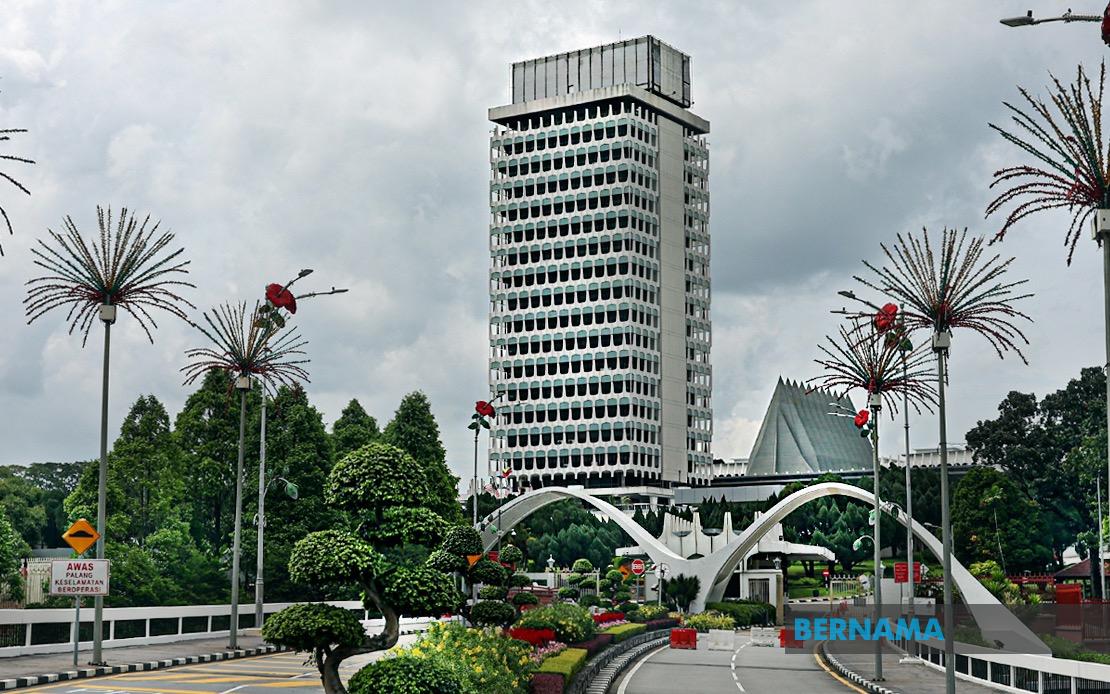
The Dewan Rakyat is directing sustained attention to structural challenges within Malaysia's governance and economic frameworks as the parliamentary session enters its second week. Among the substantive matters commanding debate are proposals to overhaul the funding architecture of the Human Rights Commission of Malaysia (SUHAKAM) and a growing policy concern about the disconnect between headline inflation statistics and the lived experience of rising household costs across the nation.
The amendment to SUHAKAM Act 1999 represents a significant shift in how Malaysia's premier human rights watchdog would sustain its operations. Lawmaker Teresa Kok Suh Sim from the Seputeh constituency has raised a pointed question to the Prime Minister about whether the government intends to grant SUHAKAM the capacity to develop revenue streams through educational initiatives. The proposal would enable the commission to offer training programmes and specialised courses to external clients, diversifying its income base and reducing reliance on annual government budget allocations. This approach mirrors practices in several neighbouring jurisdictions where independent commissions generate partial operational funding through knowledge-sharing and capacity-building activities.
The rationale underlying this structural reform warrants examination. Institutional independence, a cornerstone of effective human rights monitoring, is fundamentally strengthened when organisations retain financial autonomy. Heavy dependence on government grants, while historically the norm in Malaysia, can theoretically constrain the commission's willingness to investigate sensitive matters involving state actors. By cultivating alternative revenue channels, SUHAKAM could reinforce its institutional credibility and operational freedom, particularly when examining complaints against government bodies. The proposal also aligns with global standards promoted by international human rights networks, which increasingly emphasise diversified funding for independent national institutions.
The second major parliamentary focus addresses a persistent economic puzzle that touches the lived reality of Malaysian households. Opposition backbencher Mohd Syahir Che Sulaiman has asked the Economy Minister to articulate the government's formal assessment of a widening gap between official inflation figures and actual cost-of-living pressures experienced by consumers. This distinction carries real consequences for policy credibility. When statistical agencies report single-digit inflation whilst families report double-digit increases in food, transport, and utilities bills, public confidence in economic management erodes.
Several factors explain this measurement disparity. Official inflation indices employ standardised consumption baskets developed years prior and updated periodically, which may not accurately reflect how ordinary Malaysian families actually allocate their spending. A household spending 40 per cent of income on food and utilities may experience vastly different inflation than the national average if those categories are rising faster than apparel or consumer electronics. Regional variations further complicate the picture—urban dwellers in Kuala Lumpur face different pricing dynamics than residents in smaller towns or rural areas. The parliamentary inquiry signals recognition that economic policymaking cannot rest solely on aggregate statistics divorced from ground-level realities.
Inextricably linked to this inflation discussion is the question of economic growth translation. The Economy Minister's response will presumably address mechanisms through which headline GDP expansion genuinely improves household purchasing power and material standards of living. The inquiry reflects a broader concern that Malaysia's economic growth has not always proportionately benefited ordinary workers and middle-income families, a tension increasingly visible across Southeast Asia as development gains concentrate in specific sectors and regions.
Parliamentary attention also extends to infrastructure resilience and land management. Klang's representative V. Ganabatirau is pursuing the status of a government review into land transfers affecting flood retention ponds, particularly within Kuala Lumpur's municipal boundaries. This reflects heightened legislative focus on environmental governance and urban flood mitigation, matters of escalating importance as climate variability intensifies across the region. Proper management of flood retention infrastructure represents a critical adaptation measure for tropical cities facing increasingly intense rainfall events.
Education policy features prominently in parliamentary questioning as well. Kubang Pasu's representative has requested comprehensive data on the proportion of students enrolled in Science, Technology, Engineering and Mathematics (STEM) disciplines compared to humanities and social science programmes within Malaysia's higher education ecosystem. This inquiry addresses a persistent policy anxiety about whether Malaysia is producing sufficient technically qualified graduates to meet industry demand. The question extends to specific targets for engineers across different engineering specialties, signalling parliamentary recognition that economic competitiveness increasingly hinges on technical human capital development and alignment between educational output and industry requirements.
The Cybercrime Bill 2026 is scheduled for second reading during the session, marking another significant legislative development with implications for Malaysia's digital governance framework. This bill represents the government's response to evolving cybersecurity threats and online criminal activity, domains where legislative frameworks require regular updating to maintain effectiveness and relevance as technology and criminal methodologies evolve rapidly.
The parliamentary session extends across 16 sitting days until mid-July, providing sustained opportunity for detailed examination of these interconnected policy challenges. Each topic—SUHAKAM funding independence, inflation measurement, flood infrastructure, education alignment, and digital security—reflects contemporary governance preoccupations that extend well beyond Malaysia's borders, resonating across Southeast Asia's middle-income democracies grappling with similar developmental pressures, institutional modernisation requirements, and climate adaptation imperatives. The substance of parliamentary debate and government responses will signal the administration's commitment to tackling structural economic concerns and institutional strengthening.

