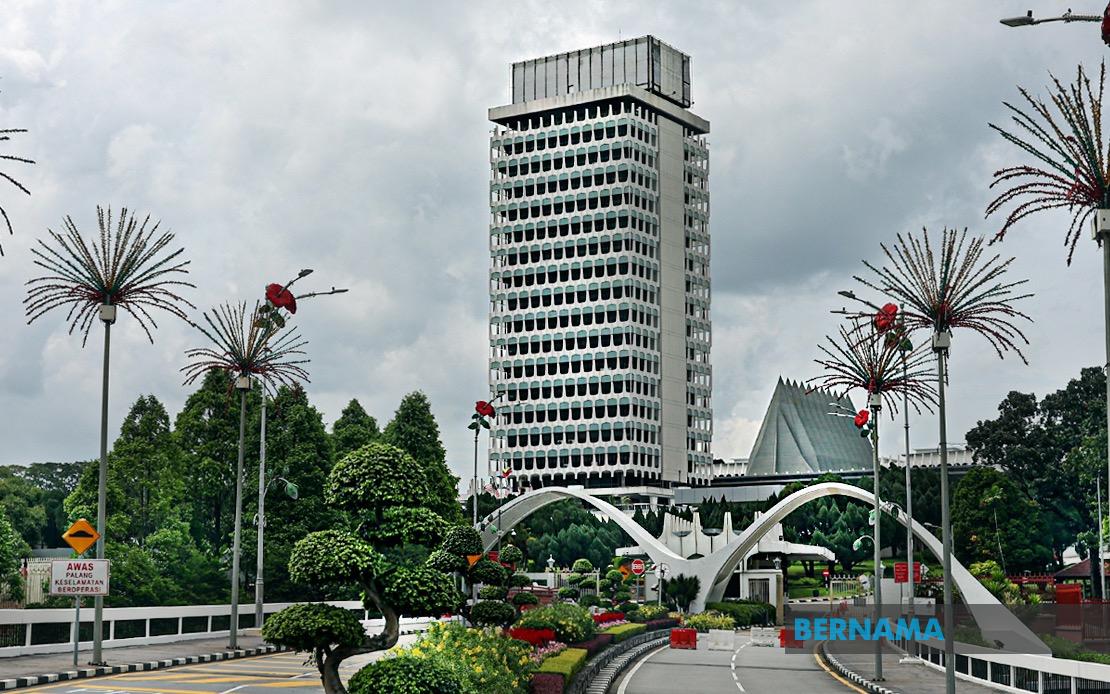
Parliament convened today to address a sprawling agenda encompassing renewable energy adoption, regional diplomacy, and domestic economic pressures. Among the key focal points are the operational rollout of the Corporate Renewable Energy Energy Supply Scheme (CRESS), the government's evolving approach to Myanmar in light of the Five-Point Consensus framework, and measures being taken to cushion Malaysian businesses against mounting economic headwinds stemming from global energy instability.
The renewable energy push commands considerable legislative attention as the nation seeks to position itself as a competitive hub for data-intensive industries. Rodziah Ismail from Ampang will interrogate the Minister of Energy Transition and Water Transformation on how many enterprises have enrolled in CRESS since its inception, alongside details on the System Access Charge (SAC) rate review. This line of questioning reflects broader parliamentary concern about whether current pricing mechanisms will burden data centre operators—a sector Malaysia has been aggressively courting—or whether the cost structure remains attractive relative to regional competitors. The legislator also intends to probe the corporate green power programme and battery storage systems, underscoring how energy policy intersects with industrial competitiveness and Malaysia's aspirations within the digital economy.
Economic resilience emerged as a parallel theme, with lawmakers demanding accountability for job preservation and growth stabilisation. Mohd Syahir Che Sulaiman, representing a Kelantan constituency, will press the Minister of Economy to articulate what protective measures the National Economic Action Council has deployed as unemployment climbs and commercial activity contracts. The enquiry seeks concrete results rather than mere policy announcements, signalling parliamentary impatience with incremental responses to what many perceive as a deepening economic squeeze. The global energy crisis has cascading ramifications for manufacturing competitiveness, working capital availability, and household purchasing power—dynamics that fuel anxiety across coalition benches.
Fuel subsidy targeting also surfaces as a contentious issue. Datuk Seri Hasni Mohammad will challenge the Finance Minister on the rationale behind standardising fuel subsidies through MyKad verification for diesel purchases, and whether the blanket 200-litre monthly entitlement adequately meets consumer needs. This question reflects the tension between fiscal sustainability and social protection in a country where transportation costs ripple through every economic segment. The subsidy architecture involves trade-offs between immediate relief for lower-income households and medium-term fiscal health—a perennial balancing act for Malaysian policymakers.
Myanmar policy has assumed heightened parliamentary significance as regional instability persists and the Five-Point Consensus—a framework ostensibly aimed at achieving dialogue and stability—shows limited tangible progress. William Leong Jee Keen will ask the Foreign Minister to clarify Malaysia's current diplomatic stance toward the Myanmar junta and whether consensus principles genuinely inform policy decisions or remain aspirational rhetoric. For Malaysia, Myanmar represents both a security concern and a humanitarian challenge, given the refugee flows, cross-border tensions, and drug trafficking that originate from instability. The Five-Point Consensus, endorsed by the Association of Southeast Asian Nations (ASEAN), seeks to restore civilian rule and curb violence, yet implementation has stalled. Parliament's probing suggests frustration with the lack of visible diplomatic leverage or strategic recalibration.
Data sovereignty has emerged as a strategic concern binding digital development to national security. Datuk Seri Amirudin Shari will interrogate the Digital Minister about coordinating state-level infrastructure projects—notably Selangor's Dark Fiber Network—with overarching data sovereignty frameworks. The legislator specifically wants assurance that data protection remains central to Malaysia's artificial intelligence readiness agenda by 2030. This reflects broader regional and global anxiety about whether digital infrastructure investments inadvertently create vulnerabilities to foreign surveillance, data exploitation, or geopolitical coercion. Southeast Asia's digital ecosystems have attracted scrutiny from major powers, making data governance not merely a technical issue but a sovereignty concern.
The Islamic education curriculum also merits scrutiny from the parliamentary opposition. Datuk Idris Ahmad will seek Prime Ministerial clarification on curriculum effectiveness and coordination between federal and state Islamic Religious Councils to ensure nationwide standards. This question touches on both educational quality and federalism, areas where Malaysia's bifurcated governance structure occasionally creates inconsistencies. The concern reflects sentiment that Islamic education should be strengthened and standardised, addressing both religious formation and integration with broader educational outcomes.
Sabah and Sarawak representation in parliament emerges as another significant concern. Isnaraissah Munirah Majilis will demand updates on Malaysia Agreement 1963 (MA63) implementation and timelines for increasing parliamentary seats for these East Malaysian states to 35 per cent of total seats nationwide. This reflects longstanding grievances regarding equitable representation and resource distribution under the federal agreement. Progress on MA63 has been incremental, and parliamentary pressure signals that stakeholders expect more decisive action on constitutional commitments made at independence.
The Public Accounts Committee will simultaneously brief parliament on a damaging report examining surging health insurance premiums and private hospital charges, alongside their spillover effects on the broader public health landscape. This investigation implicates the Ministry of Finance, Ministry of Health, and Bank Negara Malaysia, suggesting systemic coordination failures in regulating healthcare costs. Rising out-of-pocket expenditures create hardship for middle and lower-income households, whilst also crowding public healthcare facilities that already operate under resource constraints.
Finally, the Dewan Rakyat will resume deliberations on the Prisons (Amendment) Bill 2026, continuing a legislative session scheduled through mid-July. The combined agenda—spanning energy transition, diplomatic strategy, economic stabilisation, health economics, and institutional reform—reflects the multifaceted pressures confronting Malaysia's policymakers. These sessions, extending through July 16, will test the government's ability to navigate competing priorities whilst maintaining coalition cohesion amid persistent economic uncertainty and regional volatility.

