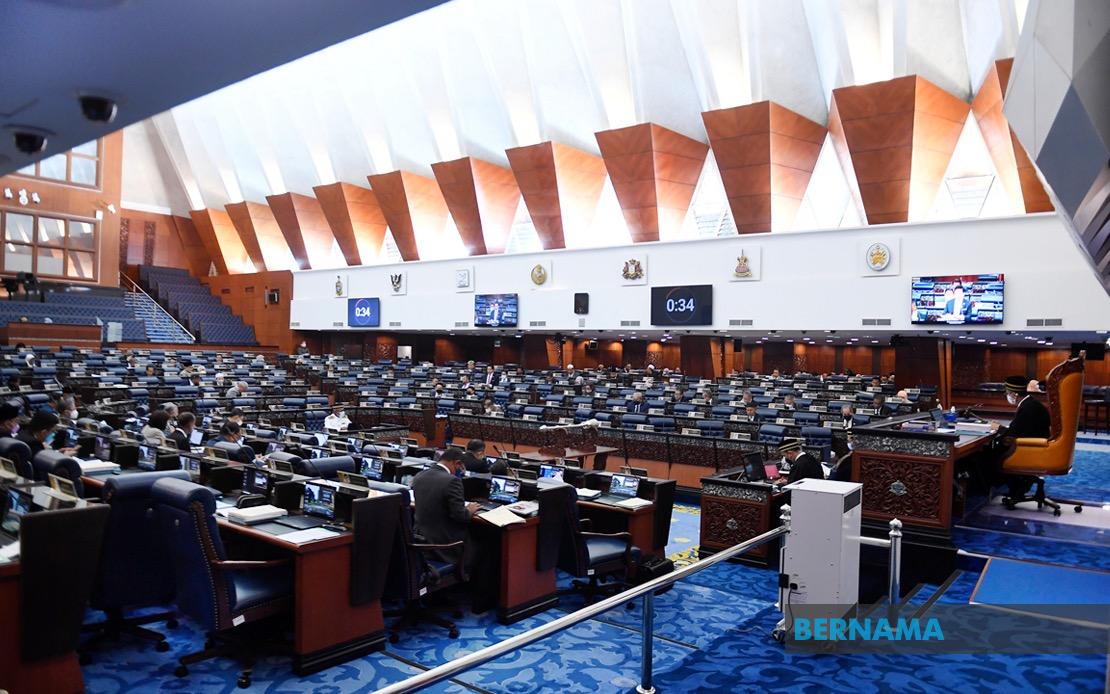
Parliament's focus today will centre on two contentious governance issues: whether the federal government distributes resources equitably to state administrations, and whether rules preventing project announcements during election nomination windows are being properly enforced ahead of upcoming electoral contests in Johor, Melaka and Negeri Sembilan.
Doris Sophia Brodi, the GPS member representing Sri Aman, will press the Prime Minister to respond to allegations that state governments receive inadequate federal allocations relative to the revenue they contribute to the central exchequer. Her question signals ongoing friction between Putrajaya and state capitals over the mechanisms by which federal coffers are distributed. The timing is significant, given that resource distribution has historically been a point of tension between federal and state governments across Malaysia's federal system, particularly when administrations of different political complexions govern different levels.
The MADANI Government will be asked to outline its approach to reforming how allocations are calculated and delivered, reflecting growing discontent among state administrations that the current system may disadvantage certain regions or states perceived as less politically aligned with the federal centre. This question touches on fundamental fairness in fiscal federalism—a perennial challenge in Malaysian governance that affects development priorities, service delivery, and political stability across the federation.
Dr Shahidan Kassim from Perikatan Nasional will simultaneously probe the status of restrictions on announcing government projects and spending following the close of nomination day in elections. This rule, designed to level the playing field and prevent incumbent governments from using project announcements as campaign tools, has been controversial. His inquiry will seek clarity on whether the prohibition remains operational and what penalties or monitoring mechanisms the government will deploy as Johor, Melaka and Negeri Sembilan prepare for their electoral contests. The question underscores concerns that campaign financing and the use of state resources remain inadequately policed in Malaysian elections.
Beyond these primary concerns, parliament will tackle emerging governance challenges during Question Time. Ismail Sabri Yaakob will urge the Communications Minister to detail strategies for enhancing media and digital literacy, specifically addressing the surge in artificially generated content and deepfake videos. This reflects growing alarm across Southeast Asia about the weaponisation of AI-generated misinformation during elections and in everyday political discourse. The minister will be pressed to explain what verification systems and labelling protocols the government intends to implement on social media platforms to alert Malaysians to manipulated visual content.
The Energy Transition and Water Transformation Minister will field questions from Chong Zhemin regarding Malaysia's capacity to supply electricity to the rapidly expanding data centre and artificial intelligence sectors. This query is pertinent given the federal government's ambitions to position Malaysia as a regional AI and digital infrastructure hub, requiring substantial investment in power generation and grid resilience to meet surging demand from energy-intensive operations.
Other parliamentary questions will examine the reach of the mySalam scheme, a government insurance initiative targeting lower-income households, the uptake of MADANI Book Vouchers distributed to students, and the effectiveness of TalentCorp initiatives aimed at bringing women back into paid employment through its Career Comeback Programme. Collectively, these inquiries reflect government priorities in social protection, education access, and workforce participation, while implicitly testing whether targeted programmes are delivering intended outcomes.
The Domestic Trade and Cost of Living Minister will answer questions about the Program Jualan Rahmah MADANI, the government's initiative to stabilise prices and ease consumer burden through subsidised sales of essential goods at fixed locations. Parliamentarians will demand updated figures on implementation across state constituencies and whether the government plans to increase the frequency of these sales events to provide more consistent relief to shoppers grappling with persistent inflation pressures.
Following Question Time, the Dewan Rakyat will continue debate on the Sexual Offences Against Children (Amendment) Bill 2026, a piece of legislation intended to strengthen protections for minors and potentially increase penalties for perpetrators of crimes against children. This legislative agenda reflects government commitment to child safety, an issue that commands broad cross-party support but often generates technical debate over sentencing frameworks and definitions of offences.
The parliamentary order paper also includes consideration of amendments to the Employment Insurance System (Amendment) Bill 2025 and the Cyber Crime Bill 2026, both of which have already passed through the Upper House. The employment insurance amendments address worker protections in Malaysia's evolving labour market, while the cyber crime legislation aims to modernise legal frameworks governing digital offences, including hacking, data theft and online fraud. These bills represent attempts to align Malaysian law with contemporary challenges in digital economies and employment relations, signalling parliament's engagement with technological and social transformation.

