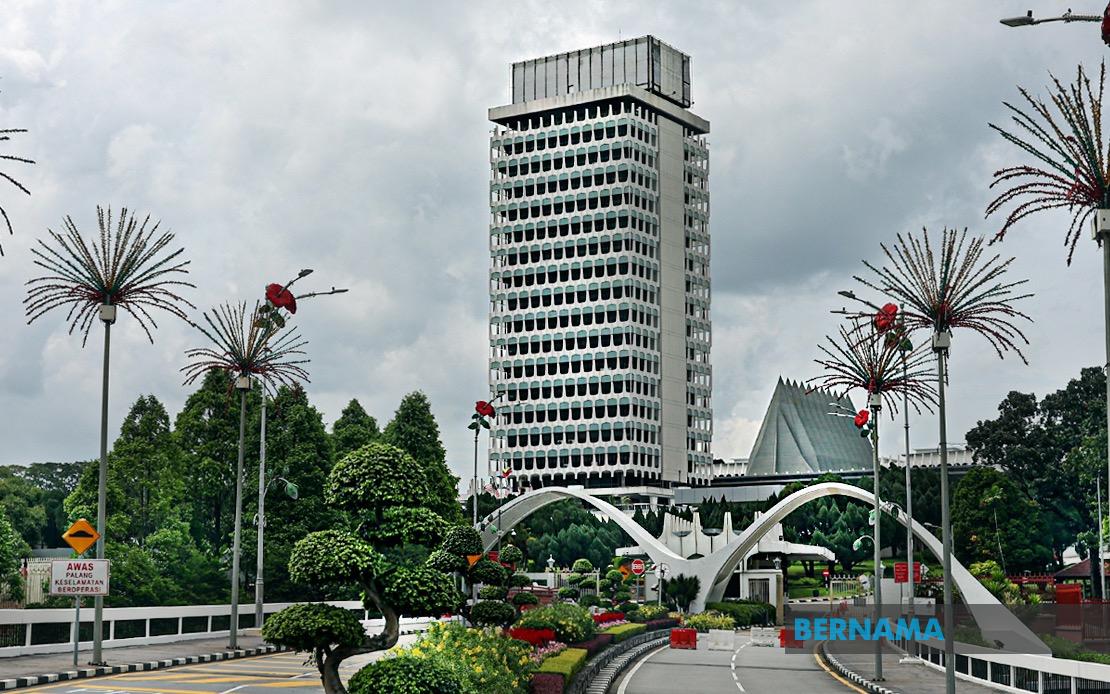
Malaysia's foreign policy stance on the evolving Middle Eastern situation takes centre stage in Parliament today as lawmakers prepare to grill the cabinet on the implications of any breakthrough between Washington and Tehran. The Dewan Rakyat sitting, commencing at 10 am, will provide a platform for elected representatives to probe how the government intends to navigate the complex regional dynamics should a Memorandum of Understanding materialise between the United States and Iran to resolve their military standoff in West Asia.
Datuk Mohd Isam Mohd Isa from the Barisan Nasional component representing Tampin has tabled a parliamentary question directed at the Foreign Minister, seeking clarification on Malaysia's strategic positioning in light of such potential diplomacy. His inquiry extends beyond mere acknowledgment of the developing situation to demand specificity about the concrete measures Kuala Lumpur plans to implement in pursuit of durable peace across the region. This line of questioning reflects growing parliamentary interest in ensuring Malaysia's interests—ranging from maritime security to trade connectivity through critical shipping lanes—remain protected amid geopolitical realignment in the Middle East.
The timing of this parliamentary scrutiny coincides with ongoing international diplomatic efforts to defuse tensions that have threatened regional stability for years. Malaysia, as a significant Southeast Asian economy with substantial interests in Middle Eastern markets and energy supplies, cannot afford to remain passive during such pivotal negotiations. The question raised in the chamber signals that lawmakers across the political spectrum recognise the need for transparent communication about Malaysia's diplomatic engagement and the government's contingency planning should regional conflict dynamics shift dramatically.
Parallel to foreign policy concerns, Parliament will also examine the domestic economic initiative known as MADANI Mart, a government programme aimed at providing affordable consumer goods to Malaysian households. Datuk Rosol Wahid, representing the Perikatan Nasional faction from Hulu Terengganu, will press the Minister of Domestic Trade and Cost of Living for a comprehensive update on the scheme's operational status. His questions will focus on quantifiable metrics including the total number of functioning retail outlets currently operating under the MADANI Mart banner, the volume of applications processed from prospective business operators, and the exact number of entrepreneurs actively participating in the initiative.
The MADANI Mart programme carries significant implications for cost-of-living pressures that continue affecting Malaysian families across income brackets. By examining the expansion rate and entrepreneurial participation, Parliament seeks to assess whether the initiative is delivering on its promise to make essential commodities more accessible and affordable. The numbers requested—outlets, applications, and participating entrepreneurs—serve as barometers of the scheme's penetration across Malaysian communities and its capacity to scale beyond initial implementation phases.
Drug-related challenges will also feature prominently during the question-and-answer session. Khoo Poay Tiong, the Petaling Jaya representative for the opposition Democratic Action Party, intends to extract data from the Home Ministry regarding documented cases of synthetic drug addiction recorded since 2023. Beyond mere statistics, his query demands articulation of the government's strategic response to the escalating consumption patterns of such substances and the particular menace posed by fentanyl, a potent opioid that has triggered public health emergencies across multiple jurisdictions globally.
The fentanyl crisis warrants particular attention in the Malaysian context given the substance's potency and the catastrophic consequences of uncontrolled proliferation through street-level distribution networks. Understanding how many citizens have become ensnared in synthetic drug dependency over recent years provides crucial baseline data for assessing whether existing rehabilitation frameworks, enforcement operations, and prevention programmes are achieving meaningful impact. The parliamentary inquiry reflects broader concerns about whether Malaysia's approach to narcotics control remains adequately calibrated to address evolving drug threats.
Trade arrangements between Malaysia and the United States will occupy another portion of parliamentary time. Datuk Seri Hamzah Zainudin from Perikatan Nasional's Larut constituency has prepared a question for the Minister of Investment, Trade and Industry regarding implementation progress on the Agreement on Reciprocal Trade framework binding the two nations. This bilateral commercial arrangement carries substantial weight for Malaysian exporters, manufacturers, and service providers seeking preferential market access within the American economy. Parliamentary oversight of implementation timelines ensures that promised benefits materialise within reasonable periods and that any obstacles hindering full operationalisation receive appropriate ministerial attention.
The day's legislative agenda will extend beyond question time to include the first reading of three significant bills designed to modernise Malaysia's regulatory framework. The Prisons Amendment Bill 2026 will undergo initial parliamentary consideration, likely addressing evolving correctional practices and penal administration. The Competition Amendment Bill 2026 and the Competition Commission Amendment Bill 2026 represent efforts to refresh the nation's competition law architecture, potentially strengthening regulatory mechanisms and enforcement capabilities within Malaysia's market economy.
These legislative proposals arrive at a moment when regulatory modernisation has become increasingly urgent across Southeast Asian jurisdictions. Competition law frameworks originally conceived decades ago may no longer adequately address contemporary challenges presented by digital commerce, cross-border transactions, and monopolistic practices enabled through technological platforms. Malaysian lawmakers recognise that maintaining competitive market conditions requires periodic refinement of legal instruments and institutional structures responsible for enforcement.
The convergence of foreign policy debate, domestic consumer protection examination, drug policy scrutiny, trade arrangement oversight, and legislative innovation within a single parliamentary sitting illustrates the multifaceted agenda confronting Malaysia's government and Parliament. Each component demands serious analysis and responsive governance. The questions posed by opposition and government-linked backbenchers alike underscore Parliament's continuing role as a forum for accountability and policy refinement, ensuring that executive decisions affecting Malaysians receive appropriate legislative examination before implementation proceeds.

