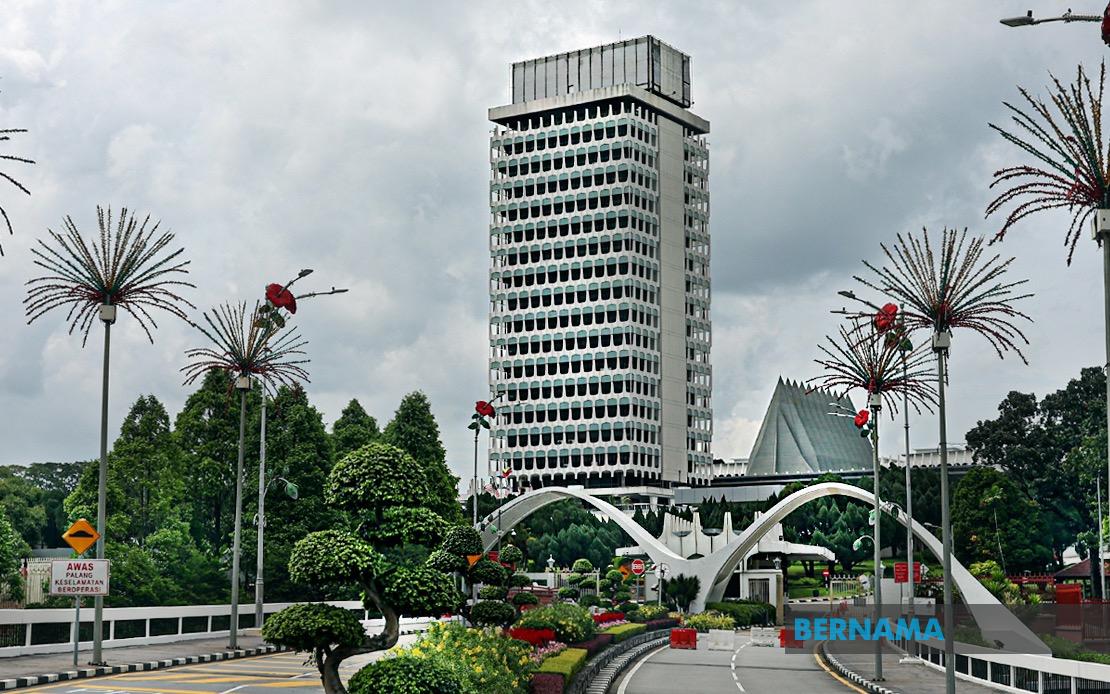
The Dewan Rakyat is poised to tackle infrastructure resilience, consumer protection, and digital regulation in today's parliamentary sitting, reflecting mounting pressures across multiple sectors affecting Malaysian households. Among the substantive questions tabled for debate are inquiries into how the government plans to bolster Johor's water supply capacity through capital-intensive infrastructure projects, strengthen the Malaysia Competition Commission's investigative powers in the housing sector, and clarify the implementation framework for age verification on social media platforms—each raising distinct governance challenges for the administration.
Water scarcity remains one of the most pressing sustainability issues confronting Malaysia's developed states, and Johor's predicament is emblematic of the broader infrastructure gap facing rapid urbanisation. Suhaizan Kaiat of Pulai, a Pakatan Harapan parliamentarian, will press the Energy Transition and Water Transformation Minister for specifics regarding the government's long-term strategy to expand Johor's water resource capacity. The questioning signals backbench frustration with the pace of capital works and the need for transparency about the pipeline of dams, water treatment facilities, and recycled water schemes that officials claim will address mounting demand. For Malaysian voters living in water-stressed regions, this line of enquiry addresses a daily reality—sporadic supply cuts and the threat of rationing during drought seasons—that directly erodes public confidence in infrastructure stewardship.
The scope of infrastructure enhancement extends beyond conventional dam construction and treatment capacity. Recycled water and non-conventional sources have become critical components of water security strategies in mature economies facing competing demands from agriculture, industry, and households. The question implicitly invites the minister to articulate a diversified portfolio of supply-side interventions, moving beyond the traditional reliance on surface water. This approach carries cost and quality implications that the government must address transparently, particularly given the historical reluctance of Malaysian consumers to embrace recycled water schemes due to residual safety concerns, despite international evidence supporting their safety and efficacy.
The second major parliamentary focus shifts to market regulation and housing affordability, a perennial grievance among younger Malaysian households squeezed by property prices that have outpaced wage growth across most metropolitan areas. Datuk Seri Ismail Abd. Muttalib, representing Maran under the Perikatan Nasional banner, will interrogate the Domestic Trade and Cost of Living Minister about measures to fortify the Malaysia Competition Commission's capacity to monitor anti-competitive conduct in the housing sector. His questions specifically target price-fixing, market manipulation, and collusive pricing practices—conduct that regulators in other jurisdictions have successfully prosecuted but which remains difficult to detect and prosecute in Malaysia's fragmented, developer-dominated property market.
The significance of this parliamentary inquiry lies in its implicit acknowledgment that market concentration and information asymmetries in housing create opportunities for competitive abuse that ordinary consumer remedies cannot address. The MyCC, Malaysia's competition authority, possesses statutory powers to investigate suspected violations but has historically faced resource constraints and structural limitations that hinder enforcement. A backbench question exerting parliamentary pressure may catalyse administrative action or budgetary allocation, signalling to the regulator that lawmakers expect more vigorous oversight. For Malaysian property purchasers, many of whom view housing as a lifetime investment or savings vehicle, the effectiveness of MyCC investigations directly influences whether they obtain fair pricing and transparent terms.
Digital regulation enters the parliamentary agenda through questions about age verification mechanisms for social media platforms, a policy priority across democracies grappling with online safety, child protection, and data privacy in parallel. Syahredzan Johan, the Bangi representative from Pakatan Harapan, will ask the Communications Minister to clarify the rationale and implementation framework for age verification systems that social media companies would be required to operate. His line of questioning indicates particular concern about the scope of personal data that service providers would access—a critical safeguard against mass surveillance and mission creep.
Age verification for social media has become progressively contentious in global policy circles, with regulators citing child safety benefits while privacy advocates warn against creating databases of verified identities that governments or corporations could weaponise. Malaysia's approach remains under development, and parliamentary scrutiny may influence whether the final framework tilts toward permissive identity verification—which enhances safety but creates privacy risks—or toward privacy-protective solutions that limit efficacy. The question about ensuring that platforms retain personal data only for the minimum duration required to complete verification reflects sophisticated parliamentary engagement with technical and rights-based dimensions of the policy.
The range of questions before the Dewan Rakyat underscores how contemporary governance spans physical infrastructure, market conduct, and digital regulation—policy domains that rarely interact but increasingly affect economic security, consumer welfare, and individual rights. Water security shapes industrial competitiveness and household resilience; housing market integrity determines wealth accumulation for ordinary Malaysians; and social media regulation influences childhood development, mental health, and democratic discourse. Parliamentary scrutiny of each domain signals that no single ministry can operate in isolation and that cross-cutting governance challenges require co-ordination and transparency.
The current parliamentary session, scheduled to conclude on July 16 after sixteen sitting days, provides the legislative branch with formal opportunity to extract accountability from executive agencies and extract commitments to policy action. While parliamentary questions do not directly determine policy outcomes, they create documentary records of government positions, establish baselines against which future performance can be assessed, and signal to the bureaucracy that lawmakers are monitoring progress. For Malaysian citizens invested in the outcomes of these policy domains, the sitting represents a moment when parliamentary advocacy can amplify public concerns and shape governmental priorities before decisions crystallise into regulation or deployment.