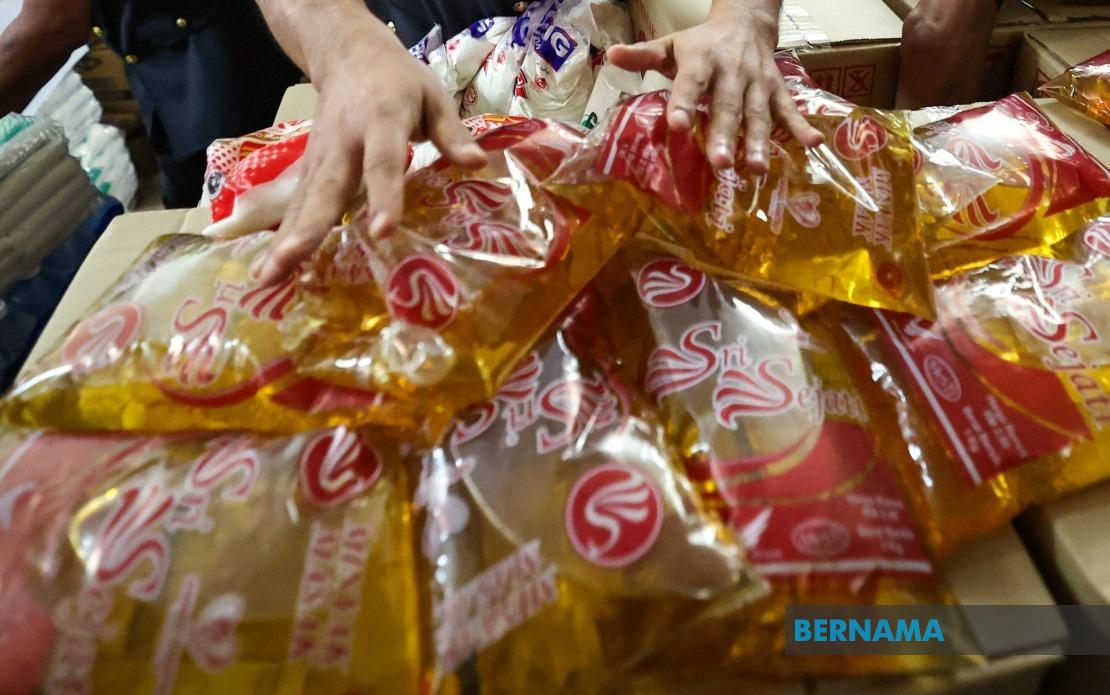
Malaysia's Public Accounts Committee has uncovered troubling inefficiencies in the nation's cooking oil subsidy scheme, recommending sweeping reforms to a programme that has cost the government RM10.879 billion over six years. The parliamentary watchdog's investigation, led by deputy chairperson Teresa Kok, scrutinised how the Cooking Oil Price Stabilisation Scheme (COSS) has been managed by the Ministry of Domestic Trade and Cost of Living (KPDN), and the findings paint a picture of a system riddled with structural flaws that have allowed public money to flow away from its intended beneficiaries.
At the heart of the problem lies a striking mismatch between what the government supplies and what Malaysian households actually need. The COSS currently allocates 60,000 metric tonnes of subsidised cooking oil monthly, yet the PAC's investigation determined that domestic demand stands between just 19,000 and 30,000 tonnes per month. This massive oversupply—potentially double or triple what the market requires—has created an environment ripe for leakage, diversion, and waste. The surplus has enabled unintended recipients, including foreign workers and commercial businesses, to access heavily subsidised one-kilogramme packets meant for ordinary Malaysian consumers. Such distortions undermine the equity of the subsidy system and represent a profound misallocation of public resources at a time when fiscal pressures are mounting across Southeast Asia.
The investigation, which examined evidence from KPDN, the Malaysian Islamic Development Department (JAKIM), and the Home Ministry across ten hearings between August and October last year, revealed that the absence of a proper targeting mechanism has been catastrophic. Rather than directing subsidies to vulnerable households, the current system operates almost indiscriminately at the point of distribution, creating opportunities for the subsidy to be captured by those who do not require government assistance. This represents a classic policy failure in subsidy administration—one that economists and development specialists across the region have long flagged as a particular vulnerability of broad-based price control schemes. The PAC's recommendation to accelerate the rollout of the eCOSS digital platform represents an attempt to address this by moving towards means-tested, targeted assistance that would restrict subsidised purchases to eligible citizens.
Another critical weakness concerns the management of spoiled or damaged cooking oil stocks. The PAC found that packaging companies lack standardised operating procedures for handling deteriorated product, meaning the government has continued subsidising oil that never reaches consumers because it has become unsuitable for use. This represents perhaps the starkest example of subsidy leakage—money spent on nothing of value. Coupled with weak retail-level oversight that has allowed hoarding, conditional sales practices, and widespread pricing above the official RM2.50 ceiling, the scheme has essentially become unmoored from its stated purpose of ensuring affordable cooking oil for all Malaysians. The committee has recommended that KPDN only reimburse packaging companies for undamaged stocks, a straightforward measure that should have been standard practice from the outset.
The profit margins embedded in the current subsidy structure also warrant scrutiny. Repackaging companies receive a government subsidy of RM600 per metric tonne ostensibly to cover their processing and distribution costs, yet the PAC determined these margins are substantially higher than actual operating expenses justify. The generous subsidy rate has inflated the total cost to the Treasury without corresponding operational justification, effectively transferring public wealth to private enterprises in the supply chain. This dynamic has proven particularly problematic because it creates perverse incentives for packaging companies to maintain high volumes rather than optimise efficiency, further entrenching the oversupply problem.
The composition of the refining sector adds another layer of concern. Foreign companies currently control 67 per cent of the subsidised cooking oil quota at the refining level, while domestic government-linked companies such as FGV and SD Guthrie account for only 10.6 per cent. This concentration of quota allocation among foreign operators raises questions about whether Malaysia is structuring its agricultural support in ways that maximise domestic economic benefit. The PAC has recommended redistributing quotas to give priority to competitive local companies, a recommendation that resonates with broader Southeast Asian policy debates about the role of local value addition and agricultural processing in development strategies. Such rebalancing could strengthen domestic agricultural sectors while maintaining price stability for consumers.
Halal certification standards, meanwhile, represent an unexpected vulnerability within the system. Two of nine packaging companies involved in the scheme still lack halal certificates despite JAKIM's efforts to streamline the certification process. For a nation where halal compliance is foundational to consumer confidence and religious obligation, this gap is unacceptable and suggests inadequate oversight of scheme participants. The PAC's implicit criticism—that such lapses should not occur given improved JAKIM processes—underscores that systemic failures often stem not from technical barriers but from weak implementation discipline.
The PAC's recommendations collectively point toward a fundamental restructuring of how Malaysia administers its cooking oil subsidy. Rather than attempting to manage price controls through high-volume supply interventions, the committee argues for a transition toward smarter, more targeted approaches. The shift from broad quota management to the eCOSS digital system represents the most significant proposed change, aligning with global best practices in subsidy administration that have emerged from countries across Africa, Asia, and Latin America grappling with similar problems. Digital systems enable governments to distinguish eligible recipients, cap individual purchases to prevent hoarding, track supply chains, and adjust programmes in real time based on actual demand patterns.
The 60,000-tonne monthly quota reduction recommended by the PAC would represent a seismic shift in the scheme's scale. If implemented, this would reduce the programme to roughly twice the estimated actual domestic need, providing a buffer for distribution inefficiencies while still eliminating the vast oversupply that currently enables misuse. Combined with the eCOSS digital platform, such a reduction would create conditions for a far leaner, more efficient subsidy programme. The timing is significant—as inflationary pressures ease across Southeast Asia and fiscal consolidation becomes a priority for regional governments, opportunities exist to restructure legacy subsidy programmes toward greater efficiency without triggering the political backlash that often accompanies simple price decontrol.
For Malaysian policymakers, the PAC's findings offer a roadmap for subsidy reform that addresses equity, efficiency, and fiscal sustainability simultaneously. The current scheme has evolved into something that neither effectively protects low-income households nor operates economically for the government. By implementing the committee's recommendations—cutting quotas, transitioning to digital targeting, requiring halal compliance universally, restricting reimbursement to undamaged stocks, and rebalancing quota allocation toward local companies—KPDN could transform cooking oil support from a programme characterised by leakage and waste into a model of efficient, well-targeted assistance. Such reform would free substantial fiscal resources for other development priorities while ensuring that public support reaches those truly in need.

