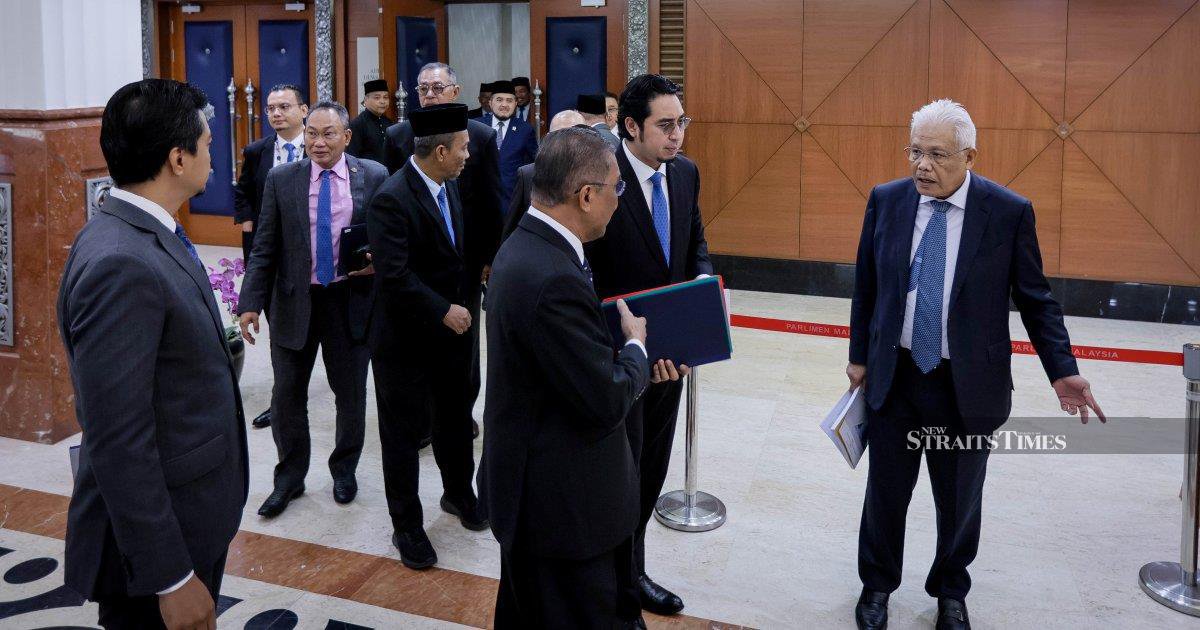
The decision by opposition lawmakers to leave Parliament in response to the Royal Commission of Inquiry's findings on Tabung Haji has once again thrown into sharp relief one of the most enduring paradoxes in Malaysian politics. When members from one coalition vacate their seats in protest, their supporters characterise the action as principled dissent against government overreach. When the same method is employed by their rivals, detractors swiftly dismiss it as theatrical posturing and an abdication of parliamentary responsibility. This selective moral framework undermines the broader conversation about what constitutes legitimate parliamentary protest and when walkouts serve a genuine democratic function versus mere spectacle.
The Tabung Haji situation provides a particularly instructive case study. The state-owned pilgrimage fund has long been a sensitive political issue, given its role in managing savings for Malaysian Muslims undertaking the Hajj. The commission's inquiry touched on matters of governance, investment decisions, and financial management that carry both technical and symbolic weight. For the opposition, the walkout signals profound disagreement not merely with the report's conclusions but with what they perceive as an inadequate governmental response to the fund's challenges. The dramatic exit from the parliamentary chamber transforms an otherwise routine procedural moment into a visible act of defiance, ensuring media coverage and public attention that routine speeches might never achieve.
Yet this very efficacy — the ability to capture headlines and force the national conversation toward the opposition's preferred narrative — is precisely what defenders of parliamentary decorum find objectionable. Critics argue that walkouts represent a failure of democratic deliberation. Rather than engaging substantively with arguments, opponents simply remove themselves from the chamber, depriving themselves of the opportunity to formally challenge the government through established parliamentary mechanisms such as debate, questioning, or the tabling of motions. From this perspective, the tactic prioritises theatrical impact over legislative influence, substituting visibility for actual political work.
The contradiction becomes apparent when historical context is examined. Governments currently criticising opposition walkouts have themselves staged similar departures during previous parliamentary sessions when they occupied the opposition benches. Similarly, opposition parties condemning such tactics when used against them have previously justified identical actions as principled stands. This partisan inconsistency suggests that judgments about parliamentary conduct are fundamentally contingent upon whether one's own side is benefiting from the action. The question of whether walkouts constitute legitimate protest or illegitimate theatricality appears to depend almost entirely on partisan affiliation rather than any coherent principle.
For Malaysian voters and observers seeking to understand parliamentary dynamics, this inconsistency creates genuine confusion about institutional norms and expectations. If walkouts are inherently incompatible with responsible representation, they should be uniformly condemned regardless of which coalition stages them. Conversely, if they represent valid expressions of parliamentary dissent, their legitimacy should not fluctuate based on which party's supporters approve of the message being conveyed. The current situation, where both major coalitions selectively invoke standards according to their immediate political interests, corrodes public confidence in the integrity of parliamentary procedures and the evenhandedness with which different actors are judged.
The Tabung Haji walkout also reflects deeper frustrations within the opposition about their capacity to influence government policy. When lawmakers believe themselves unable to effect change through conventional parliamentary channels, walkouts become an outlet for expressing anger and drawing public attention to their grievances. This dynamic is particularly acute for opposition parties that lack the numerical strength to block legislation or force substantive amendments through voting alone. The walkout thus becomes a mechanism for manufacturing political drama when institutional leverage is limited. Understanding this context does not necessarily validate the tactic, but it does illuminate why opposition politicians resort to it.
From a Southeast Asian perspective, Malaysia's experience with parliamentary walkouts aligns with broader regional patterns. Legislatures across the region periodically witness similar scenes of protest-driven absences, whether in the Philippines, Thailand, or Indonesia. These incidents typically reflect deeper institutional challenges common to many Asian democracies: the struggle between majoritarian government and meaningful minority representation, the tension between formal parliamentary procedures and extra-institutional forms of pressure, and the question of how dissent should be legitimately expressed within democratic frameworks. Malaysia's experience offers both cautionary lessons and insights into how parliamentary systems navigate these tensions.
The implications for Malaysian governance extend beyond questions of parliamentary etiquette. Frequent walkouts and the accompanying accusations of illegitimacy from opposing sides suggest a broader erosion of institutional consensus. When major political actors cannot agree on basic standards of parliamentary conduct, they signal that politics is increasingly governed by tactical advantage rather than shared procedural norms. This fragmentation makes legislative cooperation more difficult and can contribute to governmental paralysis when critical issues require cross-party agreement. The Tabung Haji case, therefore, represents not merely a moment of parliamentary drama but an indicator of deeper institutional strain.
Moving forward, establishing clearer and more consistent standards for parliamentary protest would benefit Malaysian democracy. These standards should distinguish between different forms of dissent, recognising that some walkouts may serve legitimate purposes — such as protesting procedural violations or expressing categorical opposition to specific government actions — while others constitute primarily symbolic gestures. Additionally, both government and opposition would benefit from applying these standards consistently regardless of partisan advantage. Such coherence would strengthen parliamentary institutions by clarifying expectations and reducing opportunities for opportunistic accusations of hypocrisy.
The ultimate challenge facing Malaysian parliamentarians is whether they can develop a shared framework for evaluating parliamentary conduct that transcends partisan calculation. Until both government and opposition demonstrate willingness to judge similar actions by similar standards, walkouts will remain not merely protests against specific policies but symptoms of a broader democratic condition in which the rules of engagement themselves are perpetually contested.

