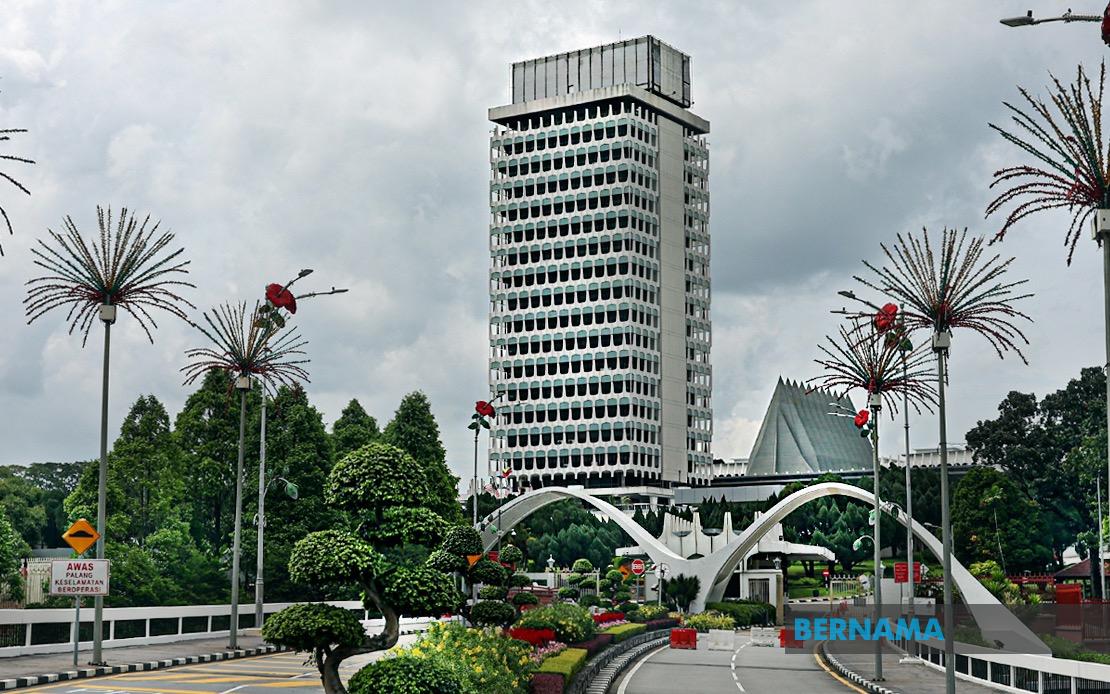
Parliament's second sitting week proved consequential for government policy clarification and legislative advancement, with Prime Minister Datuk Seri Anwar Ibrahim addressing longstanding concerns about equitable resource distribution across Malaysia's states. During Tuesday's Ministers' Question Time, the Prime Minister provided a detailed defence of the Federal Government's allocation system, emphasising that the vast majority of states actually receive funds substantially exceeding their tax contributions to federal coffers. This represents an important rebuttal to periodic claims from certain state administrations that they face funding discrimination, a narrative that gains traction during state-level political campaigns. Anwar's intervention underscores the federal government's commitment to equitable development, framing resource distribution as a function of demonstrable development needs and public welfare requirements rather than partisan considerations.
The funding clarification extended to procedural matters affecting state governments seeking additional resources for ongoing projects. Anwar outlined that when states petition for supplementary allocations tied to changes in project scope—formally documented through a Notice of Change—such requests necessitate comprehensive renegotiation. This mechanism prevents ad-hoc budget expansion and ensures that additional loans or allocations receive proper scrutiny and parliamentary oversight. The distinction matters considerably for state-level administrators and federal treasury management, establishing clear boundaries for budget flexibility while maintaining fiscal discipline. For Malaysian observers and regional analysts tracking federal-state dynamics, this procedural clarity signals the government's desire to depoliticise infrastructure funding and ground decisions in technical assessment rather than electoral calculation.
Significantly, Anwar also reminded lawmakers and the public that the Election Offences Act 1954 explicitly prohibits announcement of new projects or policies during election campaign periods, citing Section 24B. This cautionary statement, though procedurally routine, reflects ongoing concerns about maintaining electoral integrity and preventing incumbents from gaining undue advantage through strategically timed policy announcements. The constraint applies uniformly across federal and state-level contests, though enforcement consistency remains a matter for electoral observers and the Election Commission. For Malaysian voters and political analysts, this serves as a useful reminder of the regulatory guardrails surrounding campaign conduct, even as political parties occasionally test the boundaries of permissible activity during campaign seasons.
Parliament advanced the legislative agenda considerably by passing three significant bills addressing distinct policy domains. The Sexual Offences Against Children (Amendment) Bill 2026 strengthens protections for minors, reflecting international standards and domestic imperatives to prosecute predatory behaviour with greater severity. Simultaneously, amendments to the Employment Insurance System (Amendment) Bill 2025 modernise worker protections in an evolving labour market. Most prominently, the Cybercrime Bill 2026 introduces comprehensive provisions targeting digital forgery—colloquially termed deepfakes—and criminalises the non-consensual dissemination of manipulated intimate images through computational systems. This legislation addresses an escalating threat: as artificial intelligence technology democratises synthetic media creation, bad actors increasingly weaponise fabricated imagery for harassment, extortion, and reputational damage. The law's passage signals Malaysia's determination to address emerging digital harms in tandem with technological development, aligning domestic law with regional and international norms.
Minister in the Prime Minister's Department (Law and Institutional Reform) Datuk Seri Azalina Othman Said provided important context regarding contract law modernisation, announcing that a comprehensive reform study has been completed and presented to Parliament for consideration. The Study of Contract Law Reform in Malaysia encompasses policy recommendations, comparative jurisdictional analysis, and draft legislation designed to recognise third-party rights and modernise the commercial agency framework. Critically, the reform incorporates provisions addressing artificial intelligence's growing role in contractual relations. This proactive legislative architecture acknowledges that conventional contract law, developed largely before computational systems became central to commerce, requires updating to address AI-generated obligations, liability allocation for algorithmic errors, and the legal status of machine-generated agreements. For Malaysian businesses, particularly those engaging in cross-border trade or technology-intensive operations, such reforms carry substantial implications for compliance and contractual certainty.
Beyond parliamentary proceedings, government ministers addressed pressing consumer concerns regarding essential goods availability and price stability. Economy Minister Akmal Nasrullah Mohd Nasir disclosed that the government maintains daily surveillance of supply chains and pricing for critical commodities, working coordinatively with Petroliam Nasional Berhad and private sector participants to preserve energy supply reliability and protect household consumption patterns. This emphasis on supply-side intervention and coordination reflects the government's conviction that price stability requires active monitoring rather than purely market-driven mechanisms. For Malaysian households contending with inflationary pressures, particularly affecting food and fuel costs, such assurances provide some confidence that authorities are engaged in real-time monitoring and intervention. However, the effectiveness of such measures ultimately depends on enforcement consistency, coordination with state authorities managing certain price-controlled items, and alignment between federal announcements and ground-level retail conditions.
Education remained a priority focus, with Deputy Education Minister Wong Kah Woh announcing that the MADANI Book Voucher programme 2026 will distribute RM221.6 million across more than 2.2 million students under the Ministry of Education's purview. The e-voucher redemption scheme, providing RM100 per eligible student, commenced last Wednesday and continues through October 31. This initiative represents continued government investment in educational equity, addressing student access to reading materials and learning resources. For parents managing household budgets, the voucher programme materially reduces out-of-pocket expenditure for school supplies, while for educational publishers and booksellers, the guaranteed demand stimulus shapes inventory and marketing decisions. The programme's scope—spanning over two million students—constitutes substantial fiscal stimulus for the educational materials sector.
Digital regulation emerged as another substantive focus, with Communications Minister Datuk Fahmi Fadzil reporting that the government is finalising the regulatory framework implementing the Online Safety Act 2025. Notably, the framework includes an additional regulatory instrument specifically addressing private messaging features, clarifying digital platforms' obligations regarding harmful content moderation. This distinction matters considerably: while public social media content receives greater scrutiny and user reporting, private messaging systems have historically escaped regulatory attention, creating spaces where harassment, disinformation, and exploitation can flourish with minimal oversight. By extending regulatory reach into private messaging, Malaysian authorities are addressing a genuine regulatory gap, though implementation raises questions regarding platform compliance costs and end-to-end encryption implications.
The Malaysian Communications and Multimedia Commission is furthermore exploring deployment of agentic artificial intelligence technology to enhance complaint management efficiency and reduce bureaucratic workload. Simultaneously, social media platforms receive encouragement to leverage AI systems for detecting and removing community guideline violations more expeditiously. This two-pronged approach—deploying AI for regulatory administration while incentivising platform-level AI implementation—reflects pragmatic recognition that content moderation at scale requires computational assistance. Malaysian platforms and international social media firms operating domestically will require investment in compliance infrastructure, potentially raising operational costs that may eventually be reflected in service pricing or advertising models. The regulatory framework's effectiveness ultimately depends on technical sophistication of detection systems, consistent enforcement, and platforms' good-faith cooperation.
The current parliamentary sitting, spanning 16 days from June 22 through July 16, continues providing the legislative forum for such policy clarifications and bill passages. This sitting extends sufficient duration for substantive debate and deliberation across diverse policy domains, from federal-state fiscal relations through emerging digital governance challenges. For Malaysian stakeholders monitoring government direction—whether business operators requiring regulatory clarity, civil society organisations evaluating legislative progress, or ordinary citizens affected by policy implementation—the parliamentary calendar provides structured visibility into the government's priorities and legislative achievements. The second week's emphasis on fiscal transparency, digital safety, educational investment, and consumer protection suggests a government attempting to address simultaneously inherited structural concerns while confronting emerging technological governance challenges. How effectively such legislative and administrative measures translate into tangible improvements in Malaysians' lived experience—whether through demonstrable price stability, verified cybercrime reduction, or enhanced educational access—will ultimately determine their political significance and policy success.

