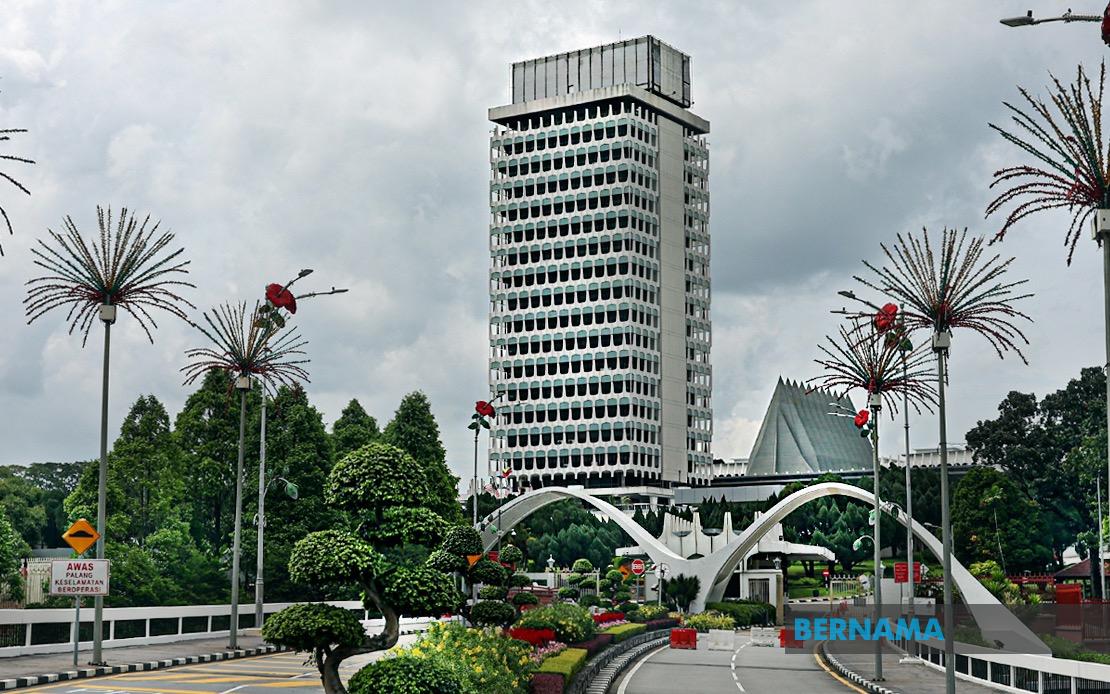
Parliament's third week of proceedings concluded with substantive progress on legislative reform and policy scrutiny, as lawmakers advanced measures to modernise competition law and strengthen regulatory oversight across critical economic sectors. The sitting featured parliamentary passage of two interconnected competition bills designed to address emerging challenges posed by the digital economy, alongside initial readings of agricultural regulation overhaul and extended consideration of governance and human rights accountability matters.
The Competition (Amendment) Bill 2026 and Competition Commission (Amendment) Bill 2026 represent the government's response to evolving market dynamics where digital platforms and e-commerce have fundamentally altered traditional competitive landscapes. These amendments strengthen the enforcement toolkit available to authorities investigating anti-competitive conduct, reflecting international best practices in jurisdictions grappling with similar issues. For Malaysian businesses and consumers, the legislation signals clearer boundaries around permissible commercial conduct while providing regulators with modernised powers to investigate digital monopolies and unfair trading practices that increasingly characterise online marketplaces.
Equally significant was the introduction of the Control of Padi and Rice (Amendment) Bill 2026, which Parliament received for first reading on Tuesday. The legislation dramatically escalates penalties for malpractice within Malaysia's agricultural supply chain, raising maximum fines to RM1 million and overhauling the regulatory framework governing padi cultivation and rice processing. For Malaysian rice consumers and farmers, this reform addresses longstanding concerns about product quality, pricing transparency, and market manipulation that have periodically destabilised this essential commodity sector. The government's emphasis on tougher enforcement reflects recognition that the domestic rice industry requires strengthened oversight to ensure food security and fair trading practices.
Parliament devoted substantial time to examining the Human Rights Commission of Malaysia's 2024 annual report, with MPs advancing recommendations following comprehensive debate. The motion and discussion provided a formal mechanism for parliamentary oversight of SUHAKAM's work investigating alleged violations and promoting human rights awareness across government agencies and private entities. This annual accountability ritual allows elected representatives to assess whether constitutional safeguards protecting Malaysian citizens remain adequately resourced and whether government departments are responding appropriately to commission findings.
Prime Minister Datuk Seri Anwar Ibrahim used his ministerial question time appearance to address two separate but strategically important themes affecting Malaysia's economic and political trajectory. Regarding the MSME sector, which comprises the overwhelming majority of Malaysian enterprises, he committed to ensuring that financial institutions process lending applications with greater efficiency and prudence. For small business operators struggling to access working capital, the Prime Minister's emphasis on streamlined financing mechanisms signals renewed government focus on addressing persistent credit constraints that inhibit growth and employment creation in this crucial economic segment.
The press freedom discussion during question time proved particularly revealing about government thinking on media regulation boundaries. Acknowledging Malaysia's decline in international press freedom rankings, Anwar attributed this partly to enforcement actions against certain media organisations, yet characterised such interventions as narrowly targeted rather than suppressive. He framed government action as confined to content involving religious matters, racial sensitivities, and royal institution references—the traditional "3R" restrictions embedded in Malaysian law—along with material potentially threatening national security. This calibrated explanation attempts to distinguish between content regulation grounded in existing constitutional frameworks and broader censorship.
Significantly, the Prime Minister announced that the government no longer automatically investigates complaints against journalists from recognised media organisations. Instead, such grievances must first be referred to the Malaysian Media Council for assessment. This procedural change, while modest, represents an attempt to reduce enforcement pressure on newsrooms and provide a buffer mechanism between government complainants and investigative authorities. For Malaysian journalists, the announcement suggests a move toward self-regulatory mechanisms rather than direct state intervention, though the practical effectiveness of this shift remains to be demonstrated.
Two parliamentary special select committees presented reports addressing distinct but equally pressing national concerns. The health committee examined organ donation and transplantation policies, contributing evidence-based recommendations to government policy formulation. Simultaneously, the committee addressing women, children and community development highlighted an alarming trajectory in abuse and violence cases over the six-year period since 2020. This data-driven scrutiny by parliamentary committees provides lawmakers with factual baselines against which to measure government responses to these social challenges.
Defence and security matters featured prominently during the week's debates, particularly discussion surrounding the replacement of the Naval Strike Missile system aboard Malaysia's Littoral Combat Ships. This procurement discussion reflects broader questions about maritime capability development and defence modernisation aligned with evolving regional security challenges in Southeast Asia. Similarly, government authorities reported on efforts to interdict vape products containing prohibited synthetic drugs, signalling enforcement priorities around substance abuse prevention amid growing youth engagement with these products.
Healthcare system digitalisation emerged as another priority theme, with MPs scrutinising government efforts to accelerate the modernisation of information systems across public health facilities. For Malaysian patients and healthcare workers, technological advancement in hospital and clinic infrastructure promises improved service delivery, reduced administrative burdens, and better clinical decision-making capabilities. However, successful implementation requires sustained funding, workforce training, and cybersecurity protections to ensure patient data confidentiality.
Deputy Finance Minister Liew Chin Tong's disclosure regarding 1Malaysia Development Berhad liabilities provided stark quantification of legacy debt burdens confronting the government. The revelation that total liabilities arising from the scandal-plagued company amount to RM51.4 billion—encompassing both settled and outstanding obligations—underscores the fiscal constraints within which the government formulates economic and social spending policies. For Malaysian taxpayers and budget watchers, this figure represents a considerable allocation of government resources to addressing consequences of historical mismanagement, resources that might alternatively address contemporary priorities in education, healthcare, or infrastructure development.
Finally, Dewan Rakyat Speaker Tan Sri Dr Johari Abdul's reminder to MPs regarding regular health screening, prompted by a colleague's cardiac hospitalisation, introduced a note of personal wellness concern into parliamentary proceedings. For a legislature where most members are in advancing age groups, systematic health screening represents not merely individual prudence but also institutional necessity, ensuring legislative capacity and continuity of governance.
With one week remaining before Parliament concluded this sitting on July 16, the third week's outcomes demonstrated substantive engagement with governance modernisation, economic regulation, human rights accountability, and long-term fiscal reckoning, establishing a foundation for parliamentary work addressing Malaysia's evolving policy challenges.

