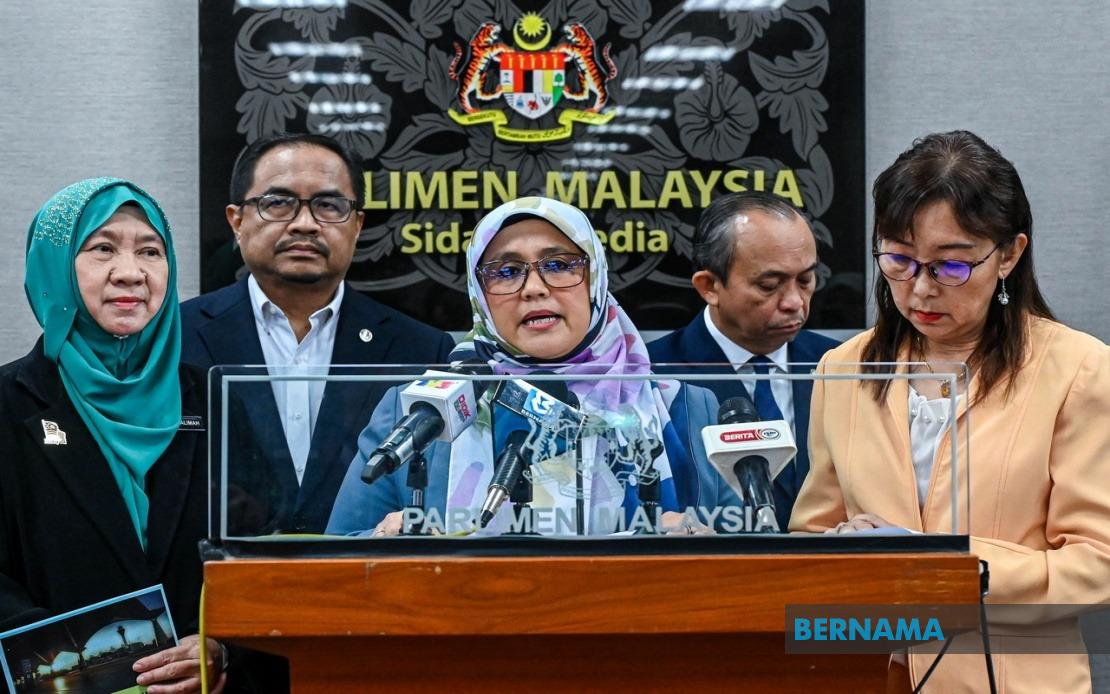
Malaysia's Public Accounts Committee has drawn a firm line on national control of the country's airport operations, recommending that state institutions retain at least 70 percent of Malaysia Airports Holdings Bhd to safeguard strategic sovereignty. The PAC chairman, Datuk Mas Ermieyati Samsudin, outlined the committee's position following concerns about shifting ownership structures at the major airport operator, emphasising that Khazanah Nasional Bhd and the Employees Provident Fund must together maintain this minimum threshold to preserve Malaysia's grip on critical aviation infrastructure.
The recommendation arrives at a pivotal moment for MAHB, which has undergone significant changes in recent years. By anchoring local institutional ownership at 70 percent, the committee seeks to prevent a scenario where foreign investors or private entities could accumulate sufficient stakes to influence strategic decisions affecting the nation's transport infrastructure. This threshold serves as a constitutional-style guardrail, ensuring that regardless of market conditions or corporate restructuring pressures, Malaysian public entities retain controlling influence over an asset deemed essential to national interests.
Beyond the equity floor, the PAC has prescribed a governance architecture requiring Cabinet-level oversight of any future ownership changes or asset disposals. This recommendation acknowledges that ownership percentages alone cannot guarantee strategic protection; formal approval mechanisms must embed national decision-making at the highest governmental levels. The proposed transparency requirement transforms what might otherwise be routine corporate transactions into matters of public record subject to parliamentary scrutiny, reflecting an institutional concern about privatisation creep in critical sectors.
The committee has also stressed the importance of collaborative coordination across multiple government agencies, bringing together the Finance Ministry, Transport Ministry, Tourism Ministry, Investment and Trade Ministry, the National Security Council, and Communications Ministry. This whole-of-government approach recognises that airport infrastructure intersects with national defence, economic development, tourism promotion, and public safety considerations. By institutionalising regular consultation forums, the PAC aims to ensure that MAHB's capital expenditure and strategic initiatives reflect the cumulative interests of the nation rather than narrow commercial imperatives.
Operational governance represents another dimension of the PAC's recommendations. The committee has urged MAHB to establish structured consultation mechanisms with major airlines, shifting away from unilateral development planning toward collaborative infrastructure design. This addresses a recurrent tension in Southeast Asian aviation: airport operators, focused on maximising revenue through passenger volume, sometimes construct facilities misaligned with airline operational requirements. By formalising stakeholder engagement, the PAC seeks to improve capital efficiency and user satisfaction simultaneously, recognising that infrastructure built without genuine operational input often requires costly retrofitting.
Transparency requirements extend beyond ownership structures to operational accountability. MAHB has been directed to continue publishing regular reports on operational performance and key performance indicators even following its delisting from public equity markets. This recommendation is particularly significant because delisting often reduces disclosure obligations and public scrutiny; the PAC has effectively rejected this logic, arguing that infrastructure controlling national gateways warrants ongoing transparency regardless of corporate status. The requirement ensures that Malaysian citizens and businesses can evaluate airport performance through objective, published metrics rather than relying on management assertions.
The Finance and Transport Ministries must establish formal reporting channels for high-impact projects including the Aerotrain replacement, baggage handling system upgrades, and terminal expansions. These progress reports must flow to Parliament and relevant PAC committees, creating structured check-and-balance mechanisms. This recommendation reflects lessons from Southeast Asian infrastructure projects where cost overruns, delays, and quality issues have previously attracted critical public and parliamentary attention. Regular reporting transforms abstract capital budgets into concrete accountability measures.
Procurement integrity emerged as a critical concern in the PAC's analysis. The committee has recommended enhanced collaboration with the Malaysian Anti-Corruption Commission and the Malaysia Competition Commission to eliminate cartel practices and ensure contractor quality. This recommendation acknowledges that strategic infrastructure projects attract sophisticated corruption schemes—collusive tendering, bid-rigging, and quality substitution—that can compromise both project outcomes and public value. By embedding integrity oversight into procurement processes, the PAC attempts to protect public investment from capture by organised private interests.
For Malaysia's regional position, maintaining strategic control over MAHB carries broader implications. As Southeast Asia's major aviation hub, Kuala Lumpur International Airport influences regional connectivity, pricing, and service standards affecting the entire region's travel and logistics sectors. Foreign-majority ownership could theoretically expose Malaysia to pressure prioritising distant shareholders' returns over regional economic development or passenger welfare. The 70 percent threshold functions as a protective measure, ensuring decisions about hub investment, route development, and capacity expansion reflect Malaysian and broader regional interests rather than isolated financial goals.
The PAC's comprehensive recommendations reflect sophisticated institutional thinking about infrastructure governance in emerging markets. Rather than imposing crude ownership restrictions, the committee has designed a layered system combining equity thresholds, Cabinet approvals, inter-agency coordination, stakeholder consultation, ongoing transparency, regular reporting, and procurement integrity oversight. This approach acknowledges that strategic protection requires sustained institutional engagement rather than one-off policy decisions. For other Southeast Asian nations grappling with infrastructure privatisation, the Malaysian model offers a template for maintaining public interest in critical sectors without rejecting necessary private capital or expertise.
Implementation will prove crucial. Regulatory frameworks must be updated to formalise the recommended approval processes and reporting obligations. Government agencies must establish genuine coordination forums rather than perfunctory meetings. Airlines and other stakeholders must receive meaningful influence over planning rather than symbolic consultation. The test of the PAC's recommendations will be whether they generate substantive changes in MAHB's governance or remain high-minded ideals without operational consequence.

