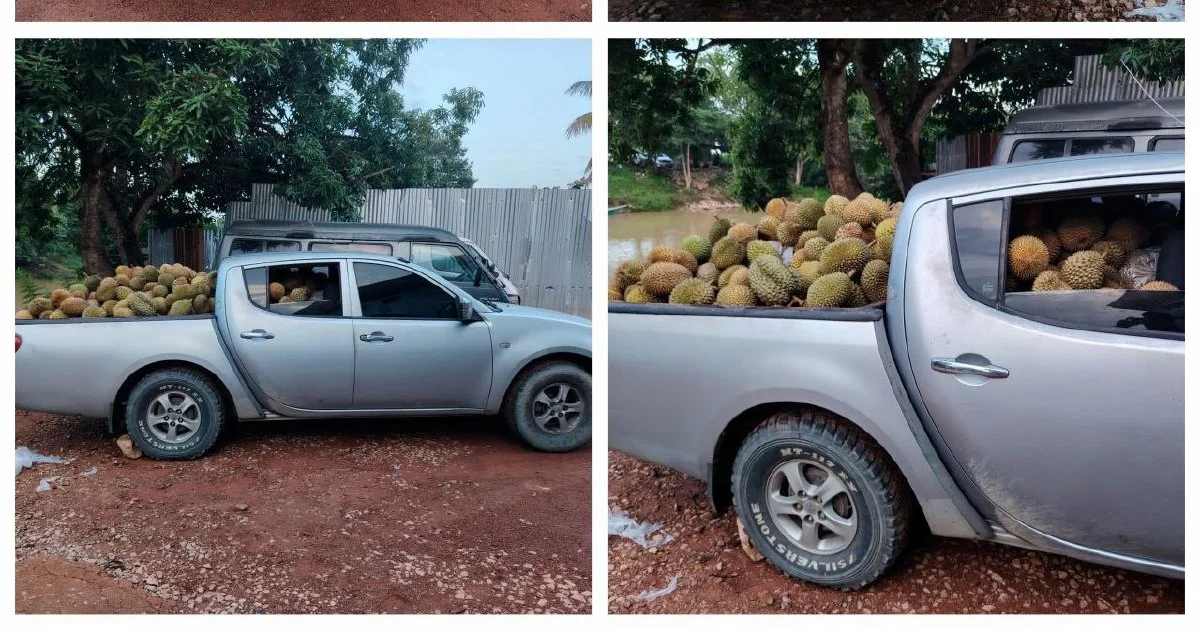
A part-time driving job promising modest daily earnings of RM60 to RM70 has resulted in serious criminal charges for a 22-year-old man apprehended at Rantau Panjang with a substantial haul of contraband fruit. The arrest, made during an overnight operation, revealed approximately 700 kilograms of suspected smuggled durians loaded into the vehicle the young driver was operating. The discovery highlights how smuggling networks exploit young workers seeking supplementary income, often keeping them unaware of the full scope and legal implications of their activities.
Rantau Panjang, located in Kelantan's northeastern region near the Thai border, has long been a critical enforcement zone for customs and border control authorities. The strategic position makes it a natural transit point for illicit agricultural goods moving between Thailand and Malaysia. The area experiences consistent trafficking attempts, ranging from high-value contraband to bulk agricultural commodities. Durian smuggling specifically represents a growing concern for Malaysian authorities, given the fruit's premium value in regional markets and its vulnerability to tax evasion and regulatory circumvention through informal cross-border channels.
The scale of this particular seizure—700 kilograms—demonstrates the operational capacity of smuggling rings that utilize informal distribution networks. This volume suggests the operation involved more than opportunistic petty trafficking; instead, it points to an organized system with established supply chains, transportation logistics, and distribution mechanisms. Enforcement officials likely view this arrest as a significant disruption point in a larger supply network. The quantity indicates multiple transactions or deliveries may have occurred prior to this interception, raising questions about how much contraband successfully reached markets before law enforcement intervention.
Durian smuggling has emerged as a particular challenge for Southeast Asian customs agencies due to several converging factors. Thailand produces substantial durian exports, many destined for international buyers, but informal channels undercut official trade through tax avoidance and quality control circumvention. Malaysian consumers represent an enormous market for premium durians, creating strong profit incentives for smugglers. The fruit's perishability means time pressure drives transportation at high speeds along border routes, increasing accident risks and complicating enforcement operations. Additionally, durian's distinctive odor can mask or obscure detection by some conventional inspection methods, though modern technology has improved interception capabilities.
The decision to employ young, part-time workers as drivers reflects how smuggling organizations deliberately insulate themselves from direct liability. By recruiting workers through intermediaries and offering minimal daily compensation, these networks create expendable operational layers. If arrested, individual drivers face serious consequences while those orchestrating the broader operation remain insulated. The 22-year-old's circumstances typify this exploitation pattern: seeking straightforward part-time work, likely without full comprehension of the legal ramifications or the actual value of goods being transported. This structural vulnerability continues despite repeated law enforcement warnings about such recruitment tactics.
The broader implications for Malaysia's border security extend beyond this single seizure. Durian smuggling represents just one component of transnational agricultural trafficking affecting the region. Similar patterns occur with other high-value commodities, from exotic vegetables to controlled agricultural products. The success of interdiction efforts at places like Rantau Panjang depends on sustained resource allocation, intelligence networks monitoring smuggling trends, and effective coordination between customs, police, and military personnel. Any gaps in surveillance or communication provide opportunities for trafficking organizations to recalibrate routes and methods.
For Malaysian consumers, smuggled durians present hidden quality and safety risks that regulatory oversight prevents. Official channels impose food safety standards, traceability requirements, and pest management protocols that informal trade bypasses entirely. Durians entering without inspection could carry pest species damaging to Malaysia's agricultural sector or contain residues from pesticides applied under uncontrolled conditions in neighboring countries. The price differential between smuggled and legitimate fruit—which smugglers pass to consumers as savings—represents a cost externalized through foregone quality assurance and increased biosecurity risks.
The arrest also underscores resource allocation challenges facing Malaysian enforcement agencies. Thousands of vehicles cross Kelantan's borders daily, and comprehensive inspection of every vehicle remains technically and practically impossible. Authorities must rely on intelligence, pattern recognition, and strategic checkpoint positioning to intercept trafficking attempts. This particular operation apparently succeeded through either actionable intelligence or routine interdiction procedures, but such successes remain frustratingly inconsistent given the volume of border traffic and the sophistication of smuggling logistics.
Looking forward, this case illustrates how comprehensive approaches must address demand-side dynamics alongside supply interdiction. Aggressive marketing of legally imported premium durians, transparent pricing that reflects actual quality and regulatory compliance costs, and consumer education about risks associated with informal procurement channels can reduce smuggling incentives. Simultaneously, increasing penalties for employing workers in smuggling operations—directing liability upstream toward organizers rather than exploited drivers—could disrupt the economic model underlying these networks. Until employment in smuggling operations becomes genuinely risky for the architects rather than merely for expendable workers, recruitment of vulnerable young people will likely continue along border routes throughout Southeast Asia.

