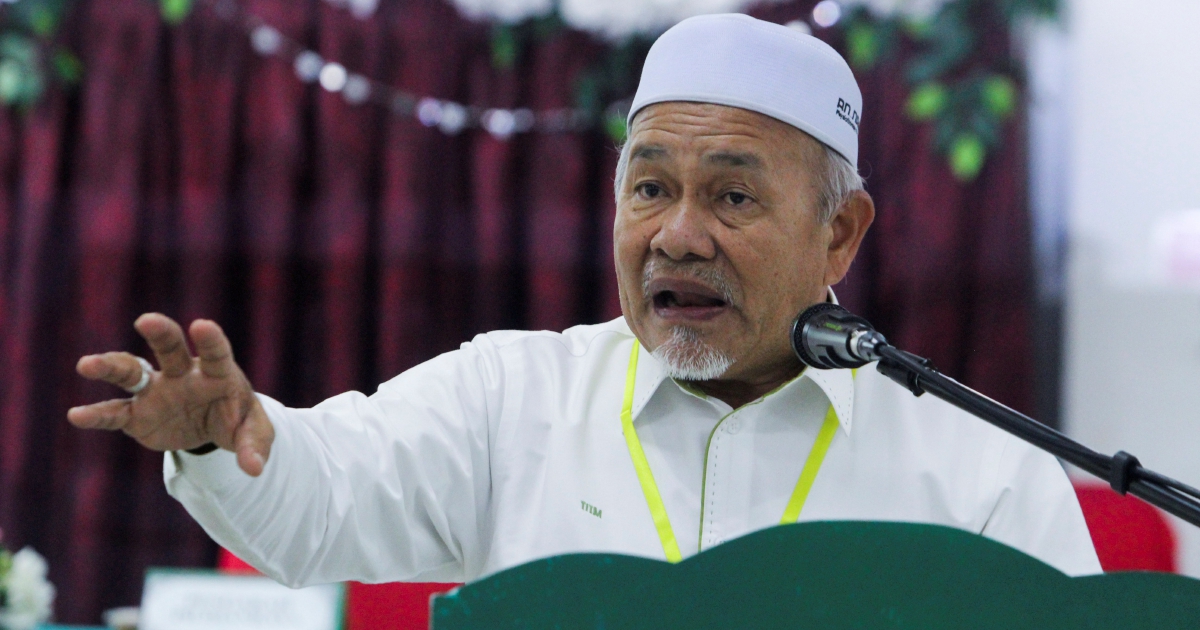
Datuk Seri Tuan Ibrahim Tuan Man, the deputy president of the Islamist opposition party PAS, has stepped back from direct involvement in managing his response to a defamation action initiated by Prime Minister Datuk Seri Anwar Ibrahim, instead placing complete reliance on his legal representatives to conduct the defence. Speaking in Kota Baru, the senior PAS figure indicated that he has transferred all responsibility for the case to his lawyers, effectively removing himself from the strategic and procedural decision-making process surrounding the dispute.
This development represents a notable tactical shift for Tuan Ibrahim, who previously held a more visible public stance on various political controversies. By delegating the matter entirely to his legal counsel, he appears to be adopting a strategy of distancing PAS leadership from what could be a protracted and divisive legal battle. The decision underscores the sensitive nature of the case, which pits a sitting prime minister against an influential opposition figure at a time when Malaysian politics remains fractious and polarised.
The defamation suit itself emerges within the broader context of Malaysia's turbulent political landscape, where the boundary between legitimate political discourse and actionable defamation often becomes contested terrain. Such cases frequently attract intense public and media scrutiny, particularly when senior government and opposition leaders are involved. By formally stepping away from the case's management, Tuan Ibrahim may be seeking to avoid further inflaming tensions or inadvertently making statements that could complicate his legal position.
From a strategic perspective, the deployment of professional legal counsel represents standard practice in high-stakes defamation disputes. Malaysian defamation law, rooted in both common law principles and statutory provisions, demands careful navigation of complex procedural rules and evidentiary standards. A dedicated legal team can manage discovery, draft pleadings, coordinate testimony, and advise on settlement possibilities—technical tasks that require specialist expertise beyond what even politically experienced figures typically possess.
The timing of this announcement carries particular significance given the domestic political climate. Malaysia's government, formed through the Anwar-led Pakatan Harapan coalition, has struggled to maintain cohesion while managing parliamentary arithmetic and regional tensions. PAS, which withdrew from the federal coalition in 2018 and now operates as part of the opposition PN alliance with UMNO, represents one of the strongest competing power centres. Any high-profile legal contest between Anwar and Tuan Ibrahim risks becoming weaponised in the broader political struggle for dominance.
Tuan Ibrahim's decision to entrust the matter entirely to lawyers also reflects awareness that personal statements or public defences could be misinterpreted or used against him in court proceedings. Legal privilege and litigation strategy often demand absolute discretion; anything he says publicly about the case might be discoverable in litigation or used to undermine his credibility. By maintaining silence through institutional channels, he protects his legal interests while avoiding the appearance of desperate justification.
For Malaysian readers and the regional audience, this case represents a microcosm of how defamation law intersects with high-stakes political competition. Unlike some democracies where such disputes are rarer, Malaysia sees periodic legal confrontations between rival political figures seeking to protect their reputations or inflict reputational damage. These cases often reveal tensions between free political expression and protections against harmful falsehoods—a balance the Malaysian courts must strike with care.
The involvement of a serving prime minister in a defamation action against an opposition deputy leader also raises questions about the appropriate use of state resources and judicial mechanisms in political disputes. International observers and civil society advocates periodically scrutinise Malaysia's approach to such matters, monitoring whether the courts maintain independence and whether defamation law is weaponised to suppress legitimate political opposition.
Tuan Ibrahim's delegation to his legal team suggests PAS recognises the necessity of a professionalised, careful response. Given the stakes involved—potential reputational damage, financial liability, and the precedent set for future political disputes—relying on specialist counsel rather than pursuing a public relations or political campaign approach appears prudent. The approach also allows PAS to maintain organisational focus on its electoral and policy priorities rather than becoming consumed by a lengthening legal dispute.
Looking ahead, the case's trajectory will likely unfold through established Malaysian legal procedures, with substantive developments emerging through court filings and hearings rather than public statements. This suits both parties' interests, as protracted public feuding through media channels could entrench positions and foreclose settlement possibilities. Tuan Ibrahim's withdrawal from public management of the case effectively signals that PAS is willing to let the courts determine the matter rather than contest it in the political arena.
The defamation action itself remains emblematic of Malaysia's complex political ecosystem, where intense rivalry coexists with established institutional mechanisms for dispute resolution. As the case proceeds, it will test both the robustness of Malaysia's legal system and the maturity of its political actors in respecting judicial determinations even when outcomes are unfavourable. Tuan Ibrahim's hands-off approach at least demonstrates willingness to trust the legal process rather than amplify grievances through political channels, a constructive stance in an otherwise heated political environment.

