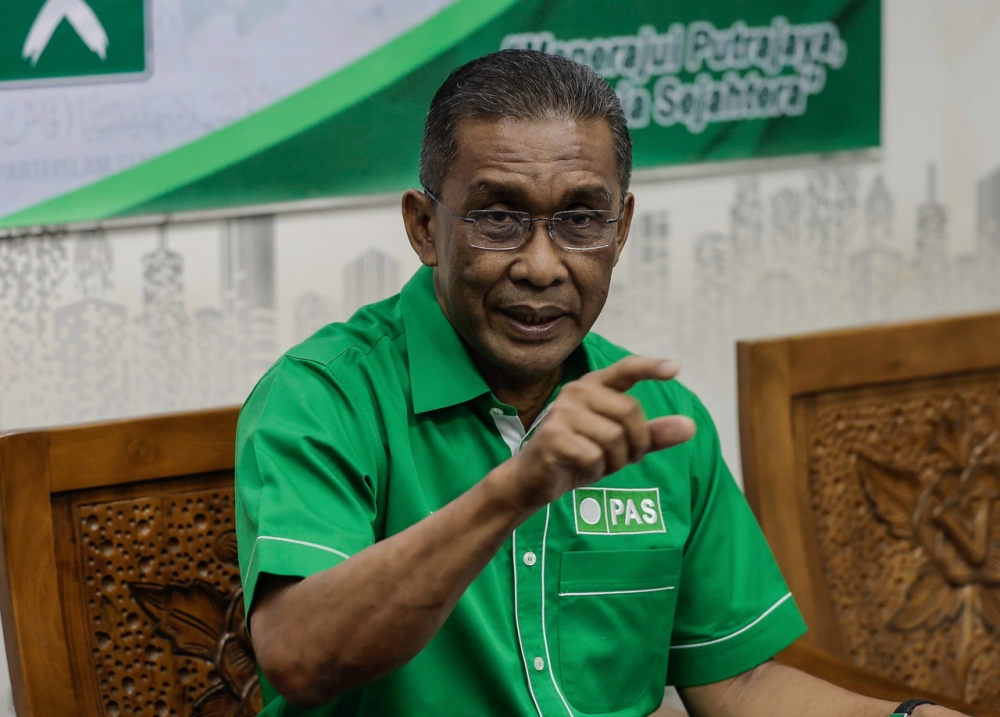
The Pan-Malaysian Islamic Party (PAS) has formally instructed its membership to support candidates fielded by Barisan Nasional in Negeri Sembilan, extending a pattern of electoral coordination that the two political entities established in the neighbouring state of Johor. The directive emerged from party leadership discussions in Tampin, underscoring a strategic alignment that has reshaped Malaysia's political landscape since the 2022 general election.
This mandate represents a calculated move by PAS to consolidate influence within the peninsula's heartland while avoiding direct competition with BN's traditional power base. Rather than fielding its own candidates across all contested seats, PAS has opted for a collaborative framework that allows the Islamic party to maintain organisational presence and leverage without fragmenting the conservative voter coalition that both organisations have historically competed to control. The arrangement reflects broader shifts in Malaysia's post-2022 political dynamics, where informal pacts and seat-sharing agreements have become increasingly common as parties seek electoral efficiency.
The Johor precedent that preceded this Negeri Sembilan decision demonstrated the practical benefits of such cooperation for both parties. When PAS agreed to back BN candidates in Johor's state elections and later in federal by-elections, the arrangement produced results that satisfied leadership on both sides. BN retained dominance in a state crucial to its national narrative, while PAS secured tangible political voice and the ability to influence governance priorities without bearing electoral risk. The Negeri Sembilan extension suggests that both organisations view this model as sustainable and replicable across other states where their memberships overlap geographically.
For Malaysian observers, this development carries implications beyond simple vote-pooling arithmetic. The BN-PAS understanding touches on fundamental questions about how Malaysia's two major coalitions—BN and Pakatan Harapan—will compete for power in the approach to the next general election. PAS's departure from PKH during the 2022 cycle fundamentally altered federal politics, and its ongoing alignment with BN signals that any future realignment will depend partly on whether Pakatan can rebuild trust with the Islamic party or whether PAS leadership remains committed to the conservative bloc.
Negeri Sembilan carries particular symbolic weight in this calculation. The state has historically been competitive terrain where BN's grip has weakened in recent elections, particularly in urban constituencies where younger voters and Chinese-Malaysian communities have shifted toward opposition parties. By securing PAS cooperation in Negeri Sembilan, BN effectively neutralises a potential rival on its right flank and consolidates Malay-Muslim voter preferences. PAS members who might otherwise contest BN candidates will instead channel organisational energy toward supporting BN's broader campaign messaging.
The timing of this announcement also warrants attention from analysts tracking Malaysia's internal political calendar. With Negeri Sembilan's state assembly elections potentially approaching within the next two years, party leadership needed clarity on candidate selection and campaign deployment well in advance. The formal directive ensures that grassroots PAS activists receive unambiguous guidance, reducing the prospect of rogue candidates or factional disputes that could undermine the coalition's effectiveness. In Malaysian politics, where party discipline varies considerably and informal networks often rival official hierarchies, such explicit mandates serve as crucial coordination mechanisms.
For PAS, the arrangement offers another strategic benefit: access to BN's superior financial and logistical resources. Barisan Nasional's machinery, funded by decades of federal patronage and corporate connections, provides canvassing networks, media reach, and ground organisation that PAS alone could not replicate. By supporting BN candidates rather than fielding competing candidates, PAS gains implicit access to these advantages while maintaining its separate party identity and the ability to claim credit for outcomes within its constituency base.
Regional observers should note that similar arrangements between PAS and BN exist or have been proposed in other states, though Negeri Sembilan's formalisation represents the clearest articulation yet of a general pattern. The broader implication is that Malaysia's post-2022 politics is characterising itself less by ideological polarisation than by pragmatic coalition-building among parties comfortable with conservative governance. This contrasts sharply with the narrative of contestation that dominated 2018 and 2022, when PKH explicitly positioned itself as a reformist counterweight to BN's establishment dominance.
The directive also illuminates internal PAS decision-making, which often reflects tensions between grassroots Islamist activists and leadership pursuing state-level power consolidation. The formalisation of the BN cooperation mandate signals that party president Tan Sri Abdul Hadi Awang and his allies retain sufficient authority to enforce such arrangements, even among members who might prefer independent candidacies. This maintenance of top-down party discipline strengthens BN's confidence in PAS as a reliable coalition partner rather than an unpredictable force prone to factional disruption.
Looking ahead, the success or failure of this Negeri Sembilan arrangement will likely influence whether BN pursues similar formal agreements with PAS in additional states, and whether PAS attempts to expand its influence within BN's existing governance structures. Should joint campaigning produce strong results and smooth cooperation at the state government level, both parties will have incentive to deepen their understanding before the next federal election cycle. Conversely, if cooperation generates friction—whether through disagreements over development priorities, allocation of state resources, or implementation of religious policies—the arrangement could unravel and prompt reassessment of coalition viability.

