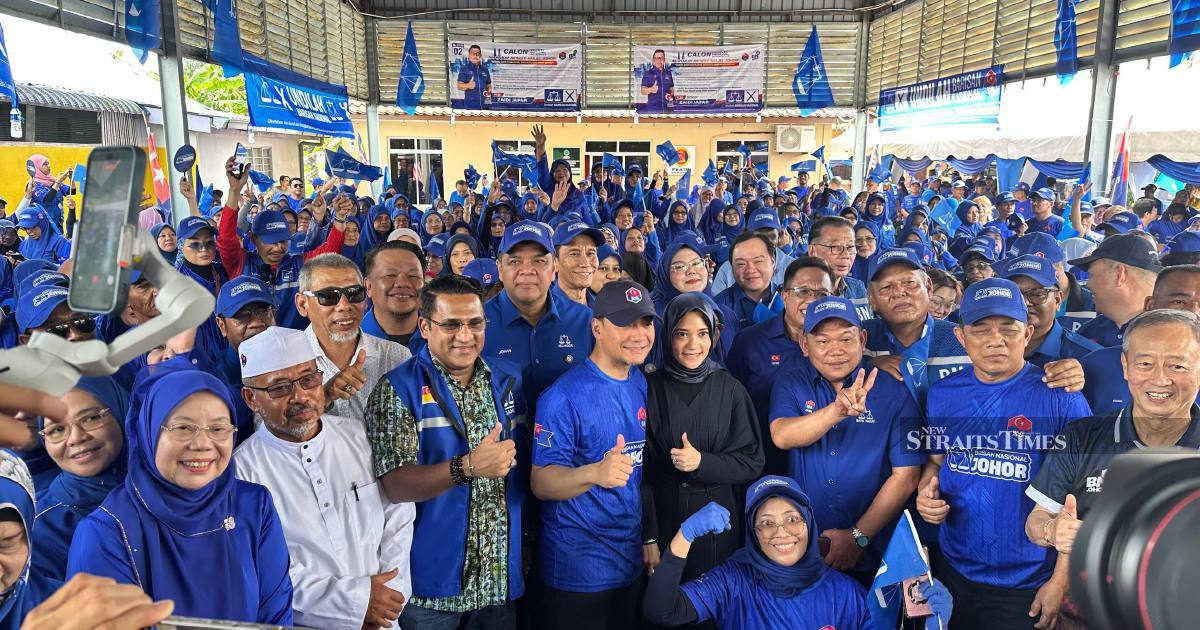
The attendance of two Pas division leaders at a Barisan Nasional gathering in Batu Pahat underscores intensifying efforts to solidify political cooperation between Umno and other Malay-based political organisations as the Johor state election draws near. The move represents a notable step in consolidating the broader coalitional landscape within Malaysia's Malay-Muslim political spectrum, where traditional rivals have increasingly found common ground on electoral strategies and governance objectives.
The visible presence of Pas representatives at such an event carries symbolic weight in Malaysian politics, where party participation in rival coalition functions often signals substantive shifts in inter-party relations. Batu Pahat, a significant constituency in Johor's political geography, has historically been a contested area where the performance of Malay-based parties proves decisive. The choice of venue for this particular gathering thus reflects strategic awareness of battleground constituencies where coalition unity could translate into electoral advantage.
Umno and Pas, historically positioned as competitors for Malay-Muslim support, have navigated complex relationships over several election cycles. Recent years have witnessed increasing pragmatism in their interactions, with both parties recognising that electoral competitiveness requires managing their ideological differences for the sake of broader political objectives. The forthcoming Johor election represents another opportunity for such pragmatic alignment to yield concrete results at the state level.
The timing of this event, scheduled approximately one month before polling day, aligns with standard electoral campaign rhythms when coalitions typically intensify their coordination and visibility. Batu Pahat constituents stand to witness heightened political activity across all major coalitions as parties compete for voter attention and party loyalists mobilise their respective ground networks. Such events also serve to energise grassroots supporters and reinforce coalition messaging ahead of the formal campaign period.
Johor's electoral significance extends beyond its state boundaries. Malaysia's largest state by population represents a crucial testing ground for national coalition strategies. The Johor outcome traditionally influences perception of both Umno's electoral strength and the stability of broader Malay-Muslim political arrangements. A successful demonstration of cooperation between Umno and Pas in the state could establish templates for similar arrangements elsewhere, whereas a fractious campaign might signal underlying tensions within Malaysia's right-wing political bloc.
For Pas, participation in Barisan Nasional activities carries different implications than for Umno. The Islamist party has undergone significant organisational transitions and strategic recalibrations in recent years, particularly as it has sought to stabilise its electoral base following internal divisions. Division-level leaders attending BN events may signal that local party structures perceive benefits in closer alignment with the broader coalition framework, even as national party leadership maintains formal organisational autonomy.
The broader context of Malaysian politics suggests that such cooperation reflects practical rather than ideological convergence. Both Umno and Pas face electoral challenges from other political forces, including from within their own traditional constituencies. Opposition parties have worked to position themselves as alternatives to what they characterise as entrenched establishment politics. In this environment, demonstrations of cooperation between major Malay-based parties may aim to reinforce their combined electoral dominance rather than represent fundamental shifts in their competing visions for Malaysian governance.
Johor's particular political economy adds another dimension to this calculation. The state economy, its resource allocation, and the distribution of political patronage positions represent significant incentives for parties to participate in collaborative arrangements. Division leaders, typically embedded within their local communities and sensitive to constituency-level concerns, may perceive direct benefits in participating alongside Barisan Nasional partners, particularly if such participation translates into enhanced campaign resources or improved positioning for subsequent political appointments.
The presence of these Pas representatives also reflects generational factors within Malaysian political parties. Younger division-level leaders, often more pragmatic than their senior counterparts, may view coalition cooperation differently than party founders who operated during periods of sharper ideological competition. Such leaders frequently balance loyalty to party identity with recognition that electoral viability increasingly depends on forming effective coalitions across Malaysia's fractionalised political landscape.
Regional implications extend to Southeast Asia's broader political trajectory. Malaysia's system of inter-party negotiations and coalition management offers instructive lessons for other democracies in the region grappling with similar challenges of political fragmentation and the need for stable governing arrangements. The ability of parties with distinct ideological identities to cooperate for electoral purposes reflects sophisticated political adaptation, though observers disagree whether such arrangements ultimately strengthen or complicate democratic accountability.
The Johor election thus serves as a significant indicator of Malaysia's current political temperature. The harmony or discord demonstrated by Malay-based parties during this campaign will provide important signals regarding the stability of existing coalitional arrangements and the likely shape of Malaysian politics in the medium term. Division leaders' participation in such events represents one measurable indicator of these deeper dynamics.

