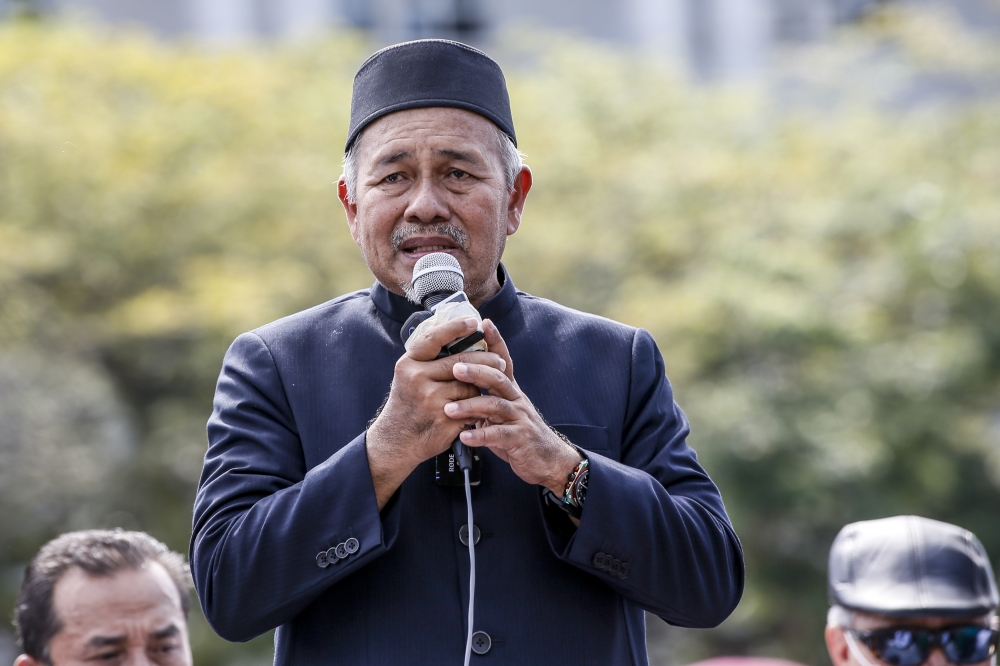
PAS president Tuan Ibrahim Tuan Man has indicated that the Islamic party stands ready for negotiations to expand its partnership with Barisan Nasional beyond current arrangements, potentially extending cooperation to cover Melaka state and even federal-level governance. The statement suggests a significant policy shift that could reshape Malaysia's political landscape, particularly if formalized through concrete agreements at multiple levels of government.
The readiness to negotiate represents a notable development given that PAS and BN have operated under distinct political frameworks in recent years, with Perikatan Nasional serving as the overarching coalition structure for PAS's federal role. Any expansion would require careful coordination between competing interests within both coalitions, as well as clarity on the terms of such cooperation, including ministerial allocations, policy alignment, and electoral support arrangements.
Melaka holds particular strategic significance in this context. The state has emerged as a testing ground for various political configurations, with its electoral dynamics influencing broader national political calculations. A unified BN-PN approach in the state could signal consolidation of support among Malay-Muslim voters, traditionally a core constituency for both organizations, while potentially fragmenting the opposition vote. This would carry implications for the state's governance priorities, which currently include economic diversification and urban development.
At the federal level, expanded cooperation could address longstanding coordination challenges between BN and PN-aligned parties in parliamentary votes and policy implementation. Malaysia's recent political history has demonstrated the instability that results from unclear alliance structures, minority governments, and shifting support coalitions. Formalizing broader cooperation frameworks could provide greater predictability for the government's legislative agenda and economic policymaking.
However, such expansion presents substantial tactical challenges. PAS must balance its commitment to Islamic governance principles with BN's more diverse coalition structure, which includes parties with secular-oriented agendas and non-Muslim constituencies. Similarly, BN leadership would need to navigate concerns from its own members, particularly UMNO, regarding PAS's growing political influence and the potential impact on BN's historical positioning as a multi-communal coalition.
The timing of this announcement carries significance within Malaysia's political calendar. With several states approaching their own electoral cycles and federal-level politics remaining fluid following recent parliamentary dynamics, parties are actively repositioning themselves for advantage. PAS's public openness to negotiations may be designed to demonstrate flexibility while strengthening its bargaining position in future discussions with BN leadership.
Regionally, the development reflects broader trends across Southeast Asia where Islamist parties are increasingly mainstreaming into conventional political alliances rather than operating as oppositional forces. This integration, while potentially moderating certain ideological positions, also raises questions about representation and whether such arrangements adequately serve the broader Malaysian public interest across all communities.
Successful expansion would require addressing several practical matters. Electoral cooperation mechanisms would need clarification, including seat-sharing arrangements and candidate selection processes. Policy coordination frameworks would be essential, particularly regarding sensitive issues where BN and PN components historically held divergent positions. Additionally, power-sharing arrangements at both state and federal levels would require transparent negotiation to prevent future disputes over resource allocation and decision-making authority.
UNMO and other BN components will likely conduct internal assessments before responding formally to PAS's overture. The DAP and other opposition parties may interpret expanded BN-PN cooperation as a threat to their electoral prospects, potentially galvanizing opposition mobilization. Civil society observers and non-Malay constituencies may express concerns about the direction of such cooperation, depending on its specific terms and implementation.
PAS's initiative must also be understood within the party's internal dynamics. As the largest PN component and increasingly influential in Malaysian Islamist circles, PAS faces pressure to demonstrate political gains for its supporters while also appearing pragmatic and governance-focused rather than purely ideological. Negotiating expanded cooperation with BN allows the party to project both strength and reasonableness simultaneously.
The broader implications extend to Malaysia's system of governance and federalism. Enhanced coalition cooperation could strengthen executive authority and reduce legislative volatility, benefits that proponents of stable governance would welcome. Conversely, critics may argue that deeper BN-PN integration could marginalize alternative political voices and concentrate power excessively within a narrower coalition structure, potentially affecting democratic contestation and accountability mechanisms.
As negotiations potentially proceed, several indicators will reveal the substantive direction of any agreement. The scope of cooperation—whether limited to Melaka or genuinely extending to federal arrangements—will signal how serious both parties are about deeper integration. The visibility and transparency of these negotiations will affect public perception and potential opposition responses. Finally, the specific allocation of benefits and responsibilities within any expanded framework will determine whether such cooperation can endure or whether internal tensions might eventually undermine the arrangement, as has occurred with previous Malaysian political alliances.

