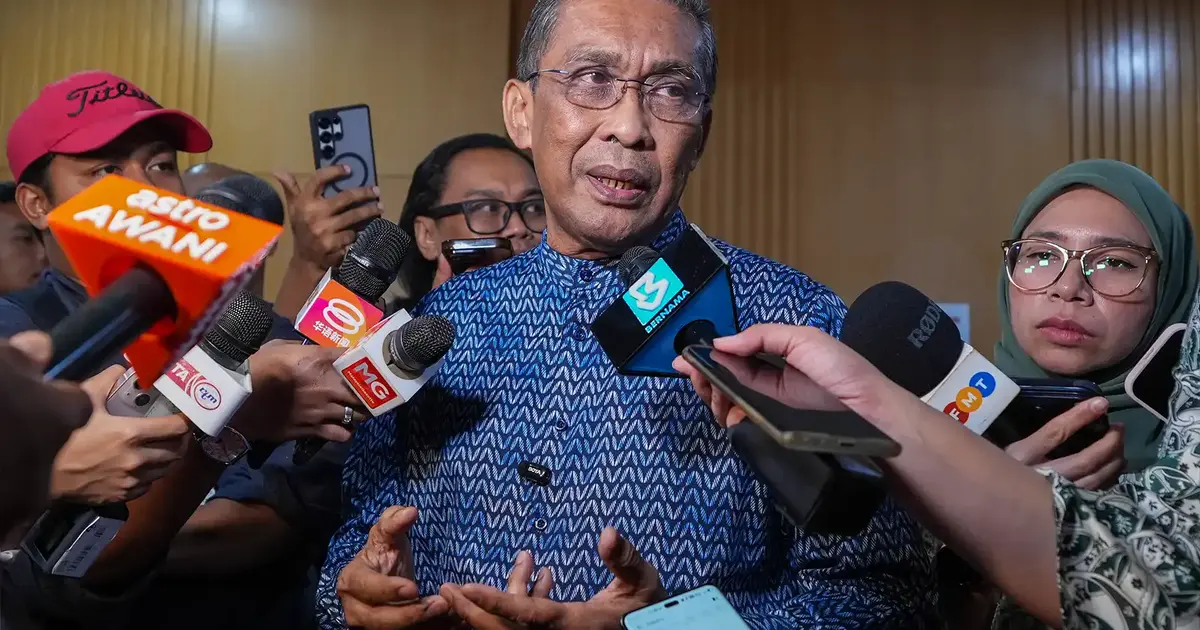
The Islamic Party of Malaysia (PAS) is set to formalise its partnership arrangements with the United Malays National Organisation (Umno) through a formal motion at its annual muktamar assembly, according to party secretary-general Takiyuddin Hassan. The move represents a deliberate step to institutionalise the working relationship between the two conservative political organisations, which have increasingly aligned their electoral and legislative strategies in recent political cycles.
Takiyuddin's announcement signals that the muktamar—traditionally a platform where PAS grassroots members debate party direction and policies—will serve as a formal endorsement mechanism for the party's strategic engagement with Umno. This procedural approach ensures that the cooperation framework receives the backing of the broader party membership rather than remaining solely an executive decision. For Malaysian political observers, the timing and prominence of such a motion underscores how central the Umno-PAS axis has become to contemporary peninsular Malaysian politics.
Beyond the specific cooperation motion, the PAS secretary-general highlighted that Muslim unity will constitute a significant theme throughout the muktamar's deliberations. This emphasis reflects PAS's self-positioning as the primary custodian of Islamic interests within Malaysia's political landscape. The party intends to use the assembly as a venue for articulating its vision of religious solidarity and institutional cooperation, translating these broader themes into concrete policy directions that will guide its parliamentary and state-level operations.
The framing of Muslim unity as a central muktamar topic demonstrates how both PAS and Umno have sought to mobilise religious and communal identities as organising principles for their political coalition. This approach carries particular resonance in Malaysia's constitutional and electoral system, where Islam's special position and the Bumiputera framework remain foundational elements of the federal compact. By anchoring their cooperation explicitly within Islamic unity rhetoric, the two parties are appealing to their respective constituencies and claiming moral authority for their partnership.
For the broader Malaysian political ecosystem, the PAS-Umno consolidation represented by this formalised motion has significant implications. The coalition between these two conservative organisations has gradually shifted the ideological centre of gravity in Malaysian politics, influencing parliamentary priorities and state-level governance. Where previously coalition-building involved more diverse political actors, the current configuration increasingly reflects a dominant conservative bloc anchored by Umno's traditional support base and PAS's grassroots mobilisation capabilities.
The muktamar motion also reflects internal party management within PAS, ensuring that senior leadership decisions enjoy formal democratic legitimacy. PAS has historically used its assemblies to debate contentious issues and generate consensus around leadership directions. By elevating the Umno cooperation question to muktamar level, party officials demonstrate commitment to inclusive decision-making processes, even as they advocate for specific strategic outcomes. This balancing act between leadership direction and grassroots participation characterises how Malaysian political parties navigate internal democracy.
Regionally, the deepening Umno-PAS partnership carries implications for Southeast Asian political dynamics. Malaysia's internal political alignments influence ASEAN relationships and the broader regional balance. The consolidation of a conservative Islamic-Malay political bloc affects how Malaysia engages with neighbouring countries and how regional power configurations evolve. These domestic political motions therefore have reverberations extending beyond Malaysia's borders.
The emphasis on Muslim unity discourse also reflects contemporary pressures within Malaysia's Islamic community and broader Muslim-majority regions. Both parties have sought to position themselves as responsive to concerns about Islamic representation and interests in an increasingly pluralistic and secular policy environment. The muktamar debate will provide venues for articulating these concerns and demonstrating organisational commitment to Islamic principles and community welfare.
Historically, PAS assemblies have served as important moments for internal party education and policy refinement. The inclusion of Muslim unity and Umno cooperation motions suggests the party leadership intends to use this muktamar as a moment for resetting internal narratives and ensuring party members understand the strategic rationale for the coalition direction. This educational function extends beyond mere formalisation, creating spaces for members to engage substantively with party positioning.
Looking forward, the formalisation of Umno cooperation through muktamar motion may also signal the parties' confidence in their political trajectory and their desire to institutionalise arrangements that might otherwise remain subject to shifting circumstances. By securing explicit party assembly endorsement, PAS leadership insulates the Umno relationship from potential future challenges or internal dissent. This represents a calculated political strategy to consolidate gains and create durable institutional frameworks for cooperation.
The muktamar motion process also reflects how Malaysian political parties balance internal democracy with strategic imperatives. While members will formally debate and vote on cooperation frameworks, the outcomes are largely predetermined by leadership consensus. This dynamic—where assemblies appear to offer genuine democratic participation while actually ratifying leadership decisions—characterises much of Malaysian party politics and reflects the tension between institutional form and political reality.

